B2B Lead Generation: From Prospecting to Qualified Pipeline
by Stella L
A guide to building systematic B2B lead generation.
B2B lead generation is one of those functions that every sales organization has but few have examined as a connected system. Most teams have assembled their process one tool at a time: a contact database here, an enrichment service there, a sequencing platform for outreach, a scoring model for prioritization. Each tool solves a specific problem. But the decisions that connect them, which companies to target, what data to trust, when to reach out, how to measure whether any of it is working, are still largely driven by assumptions rather than evidence.
This series examines B2B lead generation from end to end, treating it not as a collection of independent tools and tactics but as a process in which each stage's decisions shape the next stage's outcomes. It begins with the foundational questions: where does guesswork enter the lead generation process, and what does it actually cost? From there, it moves through AI-powered prospecting, data enrichment, buying signals, multi-channel outreach, process auditing, lead scoring, scalable system design, and the economics of lead generation at scale. Each article takes one stage or dimension and explores what it looks like to replace assumption-driven decisions with data-driven ones.
Lead generation is where the strategic challenges of global outbound sales meet the execution capabilities of AI sales agent platforms. Strategy determines which markets and segments to pursue. Tools provide the automation and intelligence layer. But the process that connects them, how targets are identified, how data is gathered and validated, how outreach is timed and sequenced, is where pipeline quality is actually determined. That process is the focus of this series.
Why Most B2B Lead Generation Still Runs on Guesswork
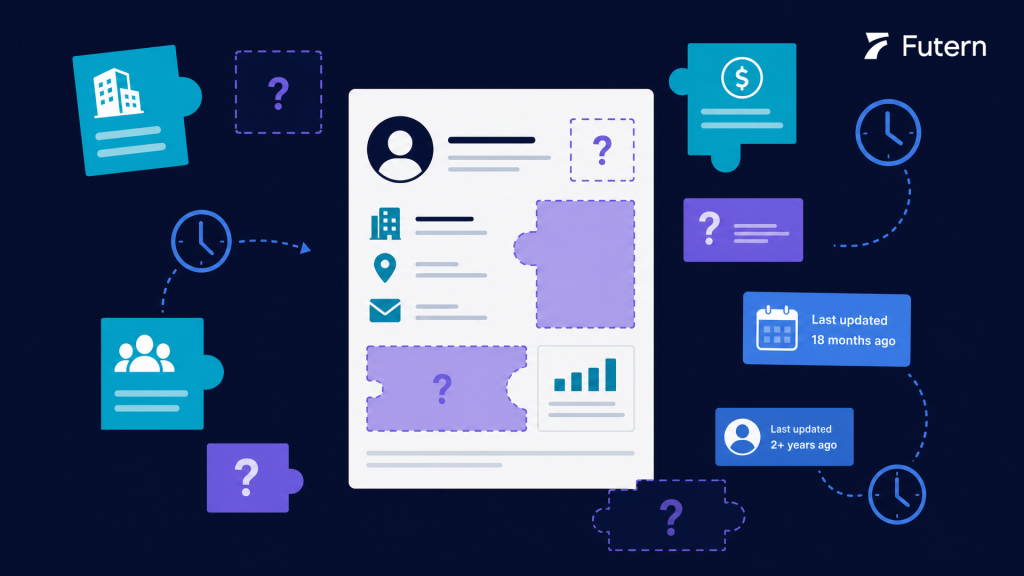
Most B2B sales teams have tools for every stage of lead generation, from contact sourcing through sequencing and measurement. But the decisions driving those tools are largely based on assumptions rather than data. Targeting relies on demographic proxies that approximate buying behavior without measuring it. Research is manual and inconsistent, producing prospect profiles that are simultaneously overloaded with irrelevant details and missing the information that matters. Scoring systems trained on historical patterns confirm existing targeting rather than testing new segments. And volume metrics report output without revealing whether that output is any good. Each assumption compounds downstream, meaning a small targeting error at the top produces significantly wrong outreach in the middle and misleading pipeline numbers at the bottom. This article traces where guesswork enters at each stage and what it costs.
Read the full article here.
The Real Cost of Low-Quality Leads in B2B Sales
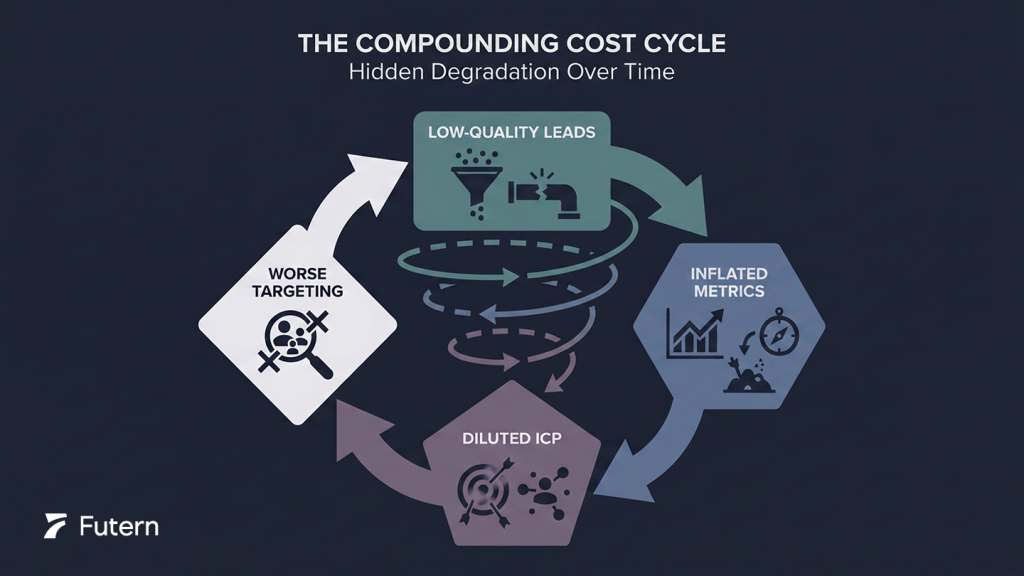
Most sales teams quantify the cost of bad leads as wasted SDR time and unproductive meetings. That visible layer is real but represents the smallest portion of the total damage. The larger costs get attributed to other causes: conversion rates that decline and get blamed on messaging, forecasts that miss and get explained by market conditions, sales cycles that lengthen with no clear diagnosis. Beyond these misattributed costs are the ones no dashboard tracks. ICP definitions gradually absorb the characteristics of bad-fit prospects through contaminated pipeline data and marginal wins pushed through under quota pressure. Account executive bandwidth gets consumed by deals that will never close, displacing attention from the ones that might. And these costs compound rather than stay flat, creating a degradation cycle in which each quarter's targeting inputs are slightly worse than the last. This article maps the full cost structure across all three layers.
Read the full article here.
How AI Prospecting Works
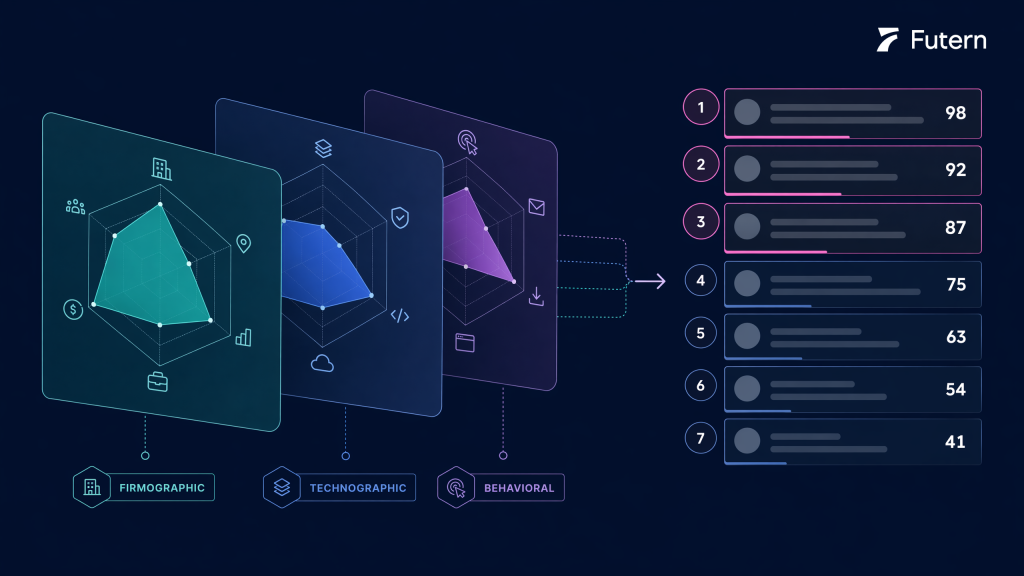
Most sales teams start prospecting from a purchased list and spend weeks researching contacts, verifying information, and figuring out who to prioritize. AI prospecting replaces this manual cycle with a systematic process that starts from the market itself. Instead of filtering a static database, the system maps the addressable market across geographies and languages, identifies relevant contacts within target organizations, and verifies their information through multi-source cross-referencing in real time. B2B contact databases lose accuracy at roughly 30% per year, making continuous verification essential for outreach efficiency. Beyond identification and verification, AI prospecting introduces dynamic fit scoring that evaluates firmographic, technographic, and behavioral signals simultaneously, and timing optimization that monitors buying signals to determine when a prospect is most likely to be receptive. The system also learns from engagement outcomes, feeding conversion data back into targeting criteria with each cycle.
Read more here.
Buying Signals and Intent Data
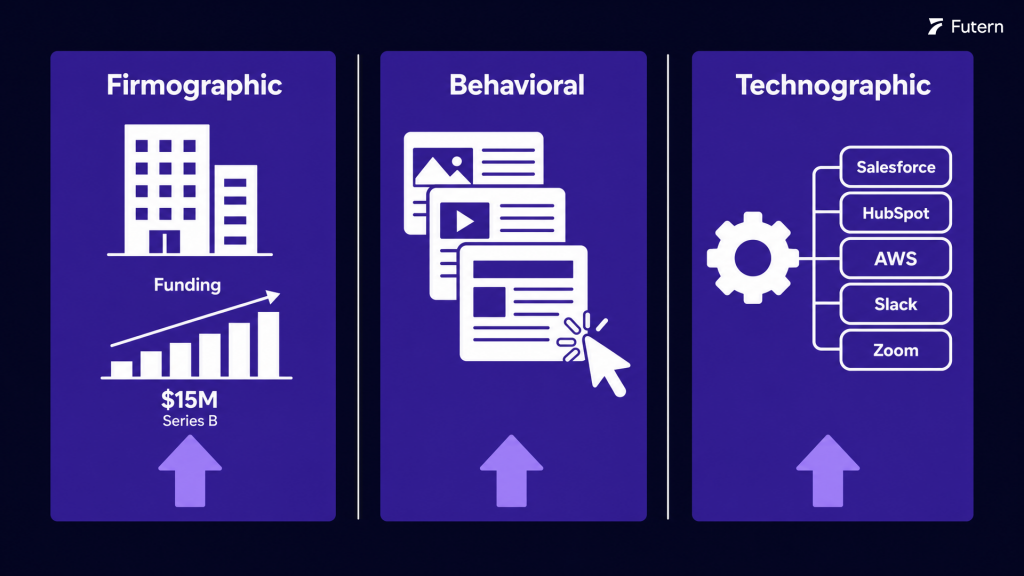
Not all buying signals carry equal weight, and treating them as interchangeable is one of the most common mistakes in B2B prospecting. Firmographic signals like funding rounds and executive hires are public and verifiable but arrive with unpredictable delay and offer only indirect evidence of purchase intent. Behavioral and content signals measure where prospects are spending their attention, though third-party intent data often operates at the account level with variable attribution accuracy and freshness. Technographic signals from technology stack changes tend to be more reliable because they reflect actual purchasing decisions rather than inferred interest. The real predictive value emerges when multiple signal types converge within a compressed time window, creating a composite picture far more reliable than any individual data point. Understanding what each signal category can and cannot tell you is the foundation for building prospecting decisions around evidence rather than assumption.
Read the full article here.
Data Enrichment for Sales Teams
A prospect record with a company name, a contact name, and an email address is enough to send a message but not enough to send a relevant one. Data enrichment adds the context that makes personalized outreach possible. Contact-level enrichment ensures the right person can be reached through multiple channels rather than depending on a single email. Organizational context reveals where the contact sits within their company and what language will resonate based on their role and decision-making authority. Firmographic and technographic data shapes how the value proposition is framed for the company's specific situation and technology environment. Equally important is enrichment timing: B2B contact data decays at roughly 30% per year, making continuous refreshes essential rather than treating enrichment as a one-time batch operation. The boundary between useful enrichment and diminishing returns falls where the team has enough context to act with relevance.
Read more here.
Multi-Channel B2B Outreach
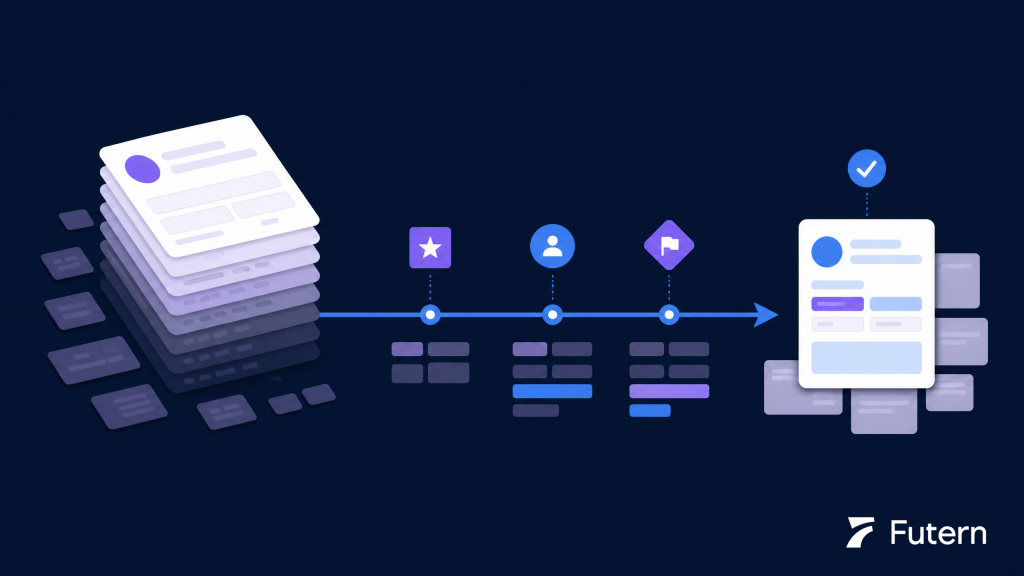
Most sales teams treat multi-channel outreach as a volume strategy: add more channels, create more touchpoints, increase the chances of a response. The buyer's experience tells a different story. When email, LinkedIn, and WhatsApp sequences run independently, the prospect does not see a coordinated effort. They see fragmented, repetitive messages that feel like noise across every platform. This article examines multi-channel outreach from the receiver's perspective, analyzing why channel coordination consistently outperforms channel count. It covers how geographic and industry factors shape channel preferences, why adaptive sequencing based on prospect behavior produces better results than fixed cadences, and how prospect-level measurement reveals cross-channel effects that per-channel metrics miss. The practical conclusion: fewer channels, well coordinated, almost always outperform more channels running in parallel.
Read more here.

How to Audit Your Lead Generation Process
A structured lead generation audit is the bridge between knowing the process has problems and understanding which problems to fix first. Rather than walking through every component in sequence, an effective audit starts from the symptoms the team is already experiencing and traces each one back to its root cause. Four failure modes account for most B2B lead generation breakdowns: volume that does not convert to pipeline, qualified leads that never close, results that fail to scale with increased effort, and performance gaps that persist because the team lacks visibility into its own data. Each failure mode has distinct root causes and specific diagnostic questions. An audit built around these patterns finds the most expensive problems first and produces a prioritized action plan rather than an overwhelming list of recommendations.
Read the full diagnostic framework here.

B2B Lead Scoring That Actually Predicts Revenue
A lead scoring model that produces high MQL counts without predicting revenue is worse than no model at all, because it creates false confidence in pipeline quality. The root cause in most cases is that scoring criteria were built on assumptions about what a good lead looks like rather than on analysis of what actually closed. A revenue-first approach starts from closed-won data: extracting the firmographic attributes and behavioral sequences that preceded actual wins, comparing them against losses to isolate genuine differentiators, and using those patterns to set every weight in the model. Beyond the initial build, effective scoring requires intent-weighted engagement criteria that distinguish awareness activity from evaluation behavior, thresholds derived from score distributions rather than arbitrary cutoffs, and a quarterly calibration loop that uses sales rejection data to catch model drift before it compounds.
Read the full framework here.

Lead Generation Automation
Lead generation automation solves a structural problem that hiring cannot. People-driven prospecting scales linearly at best: each new SDR adds a fixed increment of capacity while coordination costs rise with every hire. Automation shifts the boundary between what systems handle and what people do, moving high-volume repetitive work to automated processes so the team can focus on judgment and relationships. Most B2B teams move through three maturity stages in this transition. Stage one teams run on manual research with pockets of automation. Stage two teams have automated their data layer but still execute outreach manually. Stage three teams operate an integrated pipeline where sourcing, scoring, outreach, and follow-up run as a coordinated system. The practical question is not which stage to aim for but which layer of the current process is the bottleneck worth automating next.
Read the full maturity framework here.

The Real Cost of B2B Lead Generation
The economics of lead generation are simpler to measure than most teams realize and more expensive than most teams expect. The standard cost per lead calculation captures the visible layer of direct expenditure but misses two additional layers that typically double or triple the true cost. The hidden layer includes SDR time allocated to research and data management rather than prospect engagement, the quality tax from leads that pass scoring thresholds but never had a realistic chance of converting, and the ongoing cost of maintaining data freshness as contact information decays. The opportunity layer includes revenue lost to slow response times, markets left unworked due to capacity constraints, and high-judgment human capacity spent on tasks that do not require it. A three-layer analysis that measures all of these produces the metric that matters for investment decisions: cost per qualified opportunity.
Read the full economics framework here.

Read More
AI Sales Agents: Complete Buyer's Guide
Global Outbound Sales in 2026: What Actually Scales and What Doesn't
Explore more Selling Skills insights here.