How AI prospecting finds, verifies, and prioritizes sales-ready contacts.
Most B2B sales teams still prospect the same way they did five years ago. Someone downloads a list, filters by industry and company size, finds contacts that seem relevant, and starts reaching out. The list gets stale within weeks. Half the contacts have changed roles. The filtering criteria reflect assumptions rather than data. And the team burns hours researching prospects who were never going to buy.
The shift that AI brings to prospecting is not about doing the same research faster. It is about starting from a different place entirely: the market itself, rather than a purchased list. An AI prospecting system scans available market data, identifies organizations that match a defined profile, locates the right contacts within those organizations, verifies their information in real time, and assesses readiness before a single outreach message is sent.
That sequence sounds simple, but each stage involves decisions and data processing that would take a human researcher hours per prospect. This article walks through each stage of the AI prospecting workflow, explaining what happens at every step and why it matters for the quality of pipeline that comes out the other end.
Starting with the Market, Not a List
The most fundamental difference between traditional and AI-driven prospecting is the starting point. Traditional prospecting begins with a list. A team purchases a contact database, applies some filters, and starts working through the results. The quality ceiling is set the moment that list is generated, because every prospect the team will ever reach came from that single snapshot of data.
Instead of filtering a static list, an AI prospecting system maps the addressable market based on a set of criteria. It scans company databases, public business registries, professional networks, and industry directories across geographies and languages. The output is not a fixed list but a continuously updated view of which organizations in the market meet the defined parameters.
This distinction matters for three reasons. First, coverage becomes dramatically wider. A team selling to manufacturing companies across Southeast Asia does not need to find and purchase separate databases for each country. The system identifies relevant organizations across the entire region simultaneously, including markets the team may not have considered.
Second, the results are not frozen in time. When new companies form, existing companies expand, or market conditions shift, those changes show up in the prospecting pool without requiring a new data purchase. Third, the criteria themselves can be more sophisticated than what a static database filter supports. Instead of just industry code and employee count, the system can factor in technology adoption patterns, growth trajectories, hiring activity, and organizational structure.
For teams running global outbound across dozens of markets, this market-first approach eliminates the logistical burden of assembling and maintaining separate prospect lists for each region. The system produces a unified, multilingual view of the addressable market that updates as the market itself changes.

Finding and Verifying the Right Contacts
Identifying target organizations is only the first step. Within each organization, the team needs to reach specific people with decision-making authority or influence over the purchase. This is where traditional prospecting consumes the most time and produces the most waste.
Manual contact research typically follows a predictable pattern. A rep identifies a target company, searches LinkedIn for relevant titles, cross-references with the CRM to check for existing records, and manually verifies email addresses using a separate tool. Each contact takes anywhere from ten to thirty minutes to research properly. When the team needs to prospect into hundreds of companies, this process creates a bottleneck that limits how many new opportunities the team can pursue.
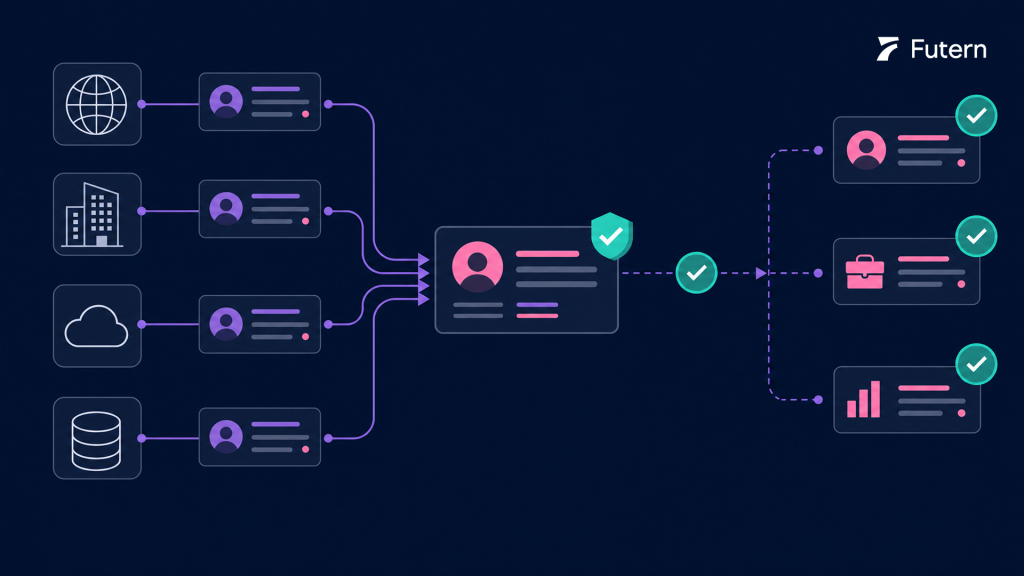
Automated prospecting compresses this entire cycle. The system identifies relevant contacts by analyzing organizational structures, title hierarchies, and reporting relationships across the target companies. In a mid-market software company, the right contact might be a VP of Sales or a Head of Revenue Operations. In a family-owned manufacturing business, it might be the owner or a general manager who handles both operations and commercial strategy. These structural differences are parsed automatically, and the system surfaces contacts most likely to be relevant to the specific offering.
The Verification Problem
Finding a name and title is straightforward. Knowing whether the information is current is the harder problem. Contact data decays at a rate that most teams underestimate. Industry research consistently shows that B2B contact databases lose accuracy at roughly 30% per year. Job changes, company restructurings, email migrations, and departures mean that a list purchased in January may be 15% inaccurate by July.
Multi-source verification addresses this directly. Rather than relying on a single database, the system cross-references contact information across multiple data sources in real time. Email addresses are validated against mail server records. Professional profiles are checked for recent activity. Company directories and public filings are scanned for organizational changes. The result is a verification accuracy rate that static databases cannot match, because the verification happens at the point of use rather than at the point of data collection.
The impact on outreach efficiency is direct. Every email that bounces, every LinkedIn message that goes to someone who left the company six months ago, and every phone call to a disconnected number represents wasted effort and damaged sender reputation. These are the kinds of hidden costs that compound silently across a sales organization. When verification runs continuously rather than at the point of purchase, these failure rates drop significantly.
Scoring Fit and Setting Priorities
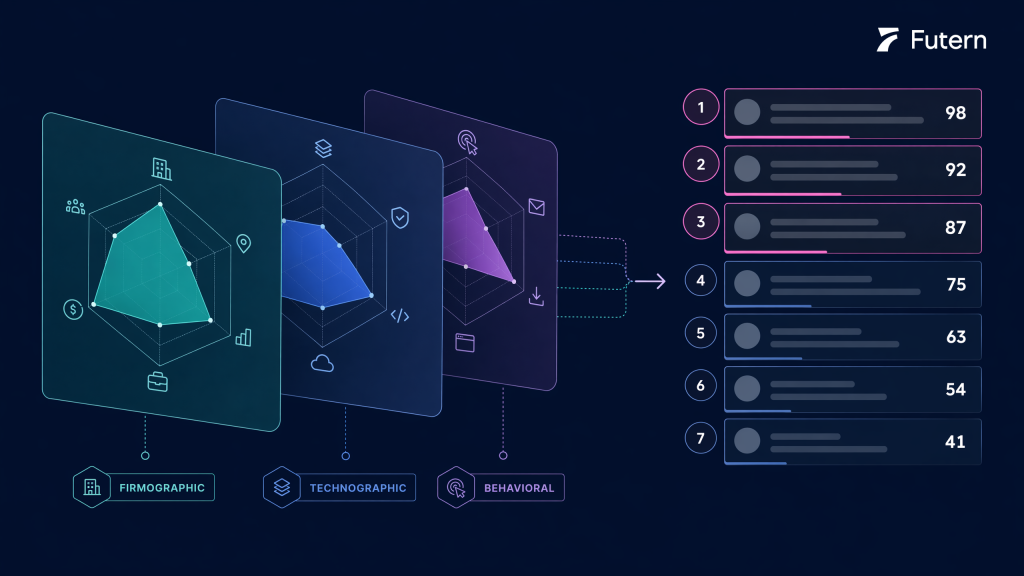
Once the system has identified and verified relevant contacts, the next question is sequencing. Not every qualified contact should be approached at the same time or with the same level of effort. The prioritization layer that AI introduces goes beyond the binary "qualified or not" assessment most teams use.
Traditional lead scoring tends to rely on a small number of demographic criteria. A company with more than 200 employees in the manufacturing sector gets a score of 80. A company with fewer than 50 employees in a non-target vertical gets a 30. The problem with this approach is that it treats fit as a static attribute rather than a multidimensional assessment. A 200-person manufacturer that just completed a digital transformation initiative is a fundamentally different prospect from a 200-person manufacturer that is still running paper-based processes, even though they receive the same score under a conventional model.
Modern AI systems evaluate fit across multiple dimensions simultaneously. Firmographic data provides the baseline: industry, size, geography, growth rate. Technographic signals reveal what tools the organization already uses, indicating both technology maturity and potential compatibility. Behavioral indicators such as hiring patterns, content consumption, and public statements about strategic priorities add context about where the organization is heading. Together, these dimensions produce a composite assessment that reflects not just whether a company looks right on paper, but whether the timing and circumstances suggest an actual opportunity.
Dynamic Prioritization
The more important shift is from scoring to prioritization. A static score assigns a number and moves on. Dynamic prioritization continuously reassesses which contacts deserve attention based on changing signals. A contact who scored moderately last month might become a high priority this month because their company announced a new market expansion, posted a job listing for a role that typically precedes a tool purchase, or engaged with relevant industry content.
This continuous reassessment means the sales team's prospecting queue is always ordered by current opportunity potential, not by a number that was assigned weeks or months ago. For teams managing large prospect pools across multiple markets, this difference translates directly into how effectively they allocate their limited selling time.
Timing and Engagement Readiness
Knowing who to contact is necessary. Knowing when to contact them determines whether the outreach actually produces a conversation.
Most sales teams treat timing as a function of their own calendar. Outreach campaigns launch on Monday mornings. Follow-up cadences run on a fixed schedule. The assumption is that consistent activity will eventually catch prospects at the right moment. This approach generates high volumes of outreach but low conversion rates, because the timing is optimized for the seller's workflow rather than the buyer's readiness.
What changes with AI is the introduction of timing as an independent optimization layer. Instead of following a fixed schedule, the system monitors signals that indicate when a prospect may be moving into a buying window. Job postings for roles that typically precede a technology purchase suggest the organization is building capability in a relevant area. Public announcements about expansion plans, funding rounds, or strategic shifts signal changing priorities. Engagement patterns with industry content, webinars, or research reports indicate active interest in a topic.
No single signal is definitive. A company posting a job listing for a RevOps manager does not guarantee they are about to purchase a sales tool. But when multiple signals converge, the probability of receptivity increases substantially. The system monitors these signals across the entire prospect pool continuously, surfacing contacts whose signal patterns suggest elevated readiness.
The practical benefit is straightforward. Instead of reaching out to everyone on a schedule and hoping the timing works, the team focuses its energy on contacts showing signs of active interest or organizational change. Response rates improve because the outreach arrives during a window when the prospect is actually thinking about the problem the message addresses.
How the System Gets Smarter Over Time
One of the most significant differences between AI prospecting and traditional methods is the feedback loop. When a sales rep works through a prospect list manually, the learning stays with the individual. A rep might notice that CTOs at mid-market fintech companies respond better than VPs of Engineering, and adjust their approach accordingly. But that insight lives in one person's head, applies to one person's territory, and disappears when the rep moves to a different role.
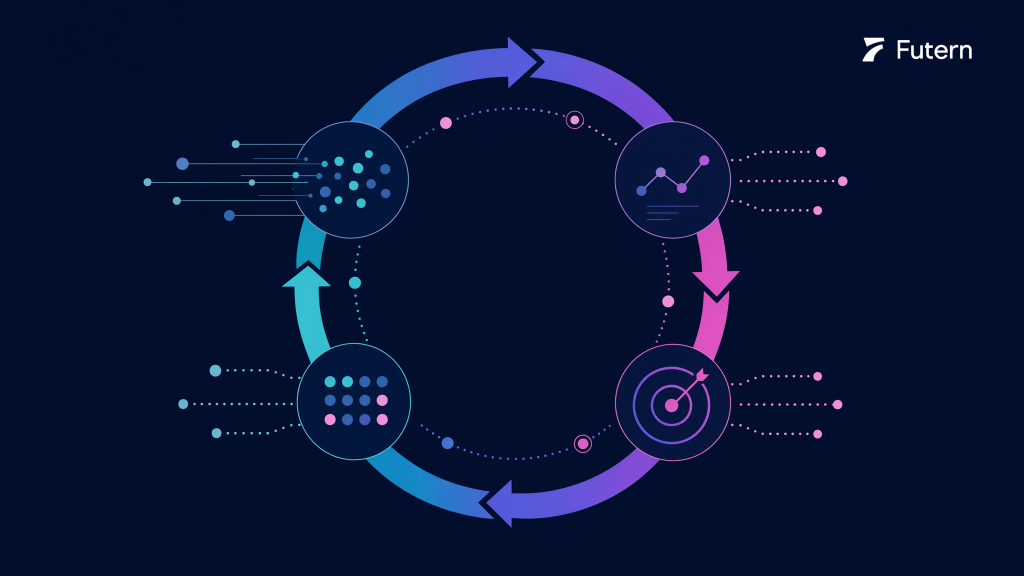
A systematic feedback mechanism changes this equation. Every outreach interaction generates data: which prospects responded, which converted to meetings, which moved to pipeline, and which went nowhere. The system analyzes these outcomes against the characteristics of the prospects involved, identifying patterns that would be invisible at the individual rep level.
Over a period of months, these patterns compound. The system might identify that companies in a specific growth stage respond at three times the rate of companies outside that window. Or that contacts with a particular combination of title seniority and technical background convert to meetings at significantly higher rates than the average. Or that prospects in certain markets respond better to outreach initiated on different days of the week or through different channels.
These insights feed back into every upstream stage. Fit scoring adjusts to weight the characteristics that correlate with actual conversion, not just theoretical alignment. Timing models refine their signal weighting based on which signal combinations preceded successful engagements. Even the initial market mapping benefits, as the system learns which market segments produce the most valuable pipeline relative to the effort invested.
What makes this learning distinctive is that it is structural, not anecdotal. It applies across the entire team's prospecting activity, updates continuously as new data comes in, and does not degrade when team members change roles. For organizations that run prospecting at scale across multiple regions, this systematic learning compounds into a meaningful competitive advantage over time.
Where AI Prospecting Ends and Selling Begins
AI prospecting is powerful at the stages where pattern recognition, data processing, and systematic coverage create clear advantages over manual effort. But it operates within defined boundaries, and understanding where those boundaries fall helps teams design effective handoff points.
The system excels at identifying who to talk to, verifying that their information is current, assessing fit across multiple dimensions, and timing the initial engagement. These are tasks where the volume of data and the speed of change make human-only approaches inefficient. A team of five reps cannot manually monitor buying signals across ten thousand prospect organizations. An AI system can, and can do it continuously.
Where the system reaches its limit is at the point where context becomes judgment. It can tell a rep that a specific contact at a specific company is showing elevated buying signals and has a strong multi-dimensional fit score. It cannot tell the rep how to navigate that company's internal politics, how to position the conversation around the prospect's specific strategic priorities, or when to push and when to listen during a discovery call. These remain human skills that AI augments rather than replaces.
The most effective operating model treats AI as the system that ensures reps spend their time on the right conversations. Discovery, relationship building, deal strategy, and closing are where human expertise creates irreplaceable value. When prospecting is handled systematically, reps enter every conversation with a stronger foundation: verified contact data, a profile of organizational fit, and context about what signals triggered the outreach. The quality of the selling conversation improves because the quality of the prospecting process improved.
From Research Task to Operational System
The pattern behind most B2B lead generation problems is consistent: teams operate on assumptions about who to target, work with data that decays faster than they can refresh it, and invest selling time in prospects who were never likely to convert. AI prospecting addresses these problems by converting prospecting from a manual research task into a systematic operational process.
When prospecting starts from the market rather than a list, coverage expands without proportional cost. When verification runs continuously rather than at the point of purchase, data accuracy stays high as contacts change roles and organizations evolve. When fit assessment considers multiple dimensions simultaneously and updates dynamically, the team's prioritization reflects current reality rather than historical assumptions. And when the system learns from outcomes, every cycle of prospecting produces better targeting than the one before.
Prospecting quality determines pipeline quality. The stages that follow, from buying signal interpretation and data enrichment to multi-channel outreach execution, all build on the foundation that effective prospect identification and verification creates. Without high-quality targeting upstream, even the best outreach strategy and messaging will underperform.
Read More
AI Sales Agents: Complete Buyer's Guide
Global Outbound Sales in 2026: What Actually Scales and What Doesn't
Explore more AI & Automation insights here.