How Your ICP Readiness Affects AI Agent Selection and Performance
by Stella L
ICP readiness determines AI sales agent results and should guide platform selection.
When companies evaluate AI sales agents, the conversation almost always starts with platform capabilities. How many channels does it support? What languages can it handle? How autonomous is the prospecting workflow? These are important questions, and earlier articles in this guide covered structured frameworks for answering them. But there is a variable that shapes AI sales agent performance more than any feature comparison, and most buyers overlook it entirely: the quality and structure of their own Ideal Customer Profile.
ICP readiness is the degree to which your organization's customer definition is clear, structured, and actionable enough for an AI system to execute against. A team with a sharp, well-maintained ICP will see dramatically different results from the same AI platform than a team running on vague industry-and-size descriptions inherited from a strategy deck written three years ago. The gap is not about the technology. It is about what you feed it.
This matters for two reasons. First, your current ICP readiness level directly predicts the kind of results you will see in the first weeks and months after deployment. Second, and less obviously, your ICP readiness should actively shape which platform capabilities you prioritize during evaluation. A team with a mature, multi-market ICP has different selection criteria than a team still consolidating its first customer definition. Understanding where you stand changes what you should look for.
What ICP Readiness Actually Means for AI Execution
Most sales organizations have something they call an ICP. It might live in a strategy presentation, a shared document, or in the collective knowledge of senior sales leaders. In many companies, it consists of a few descriptive paragraphs about target industry, company size, geographic focus, and common pain points. For human salespeople, this level of definition often works well enough. Experienced reps fill in the gaps with intuition, pattern recognition, and years of conversational context.
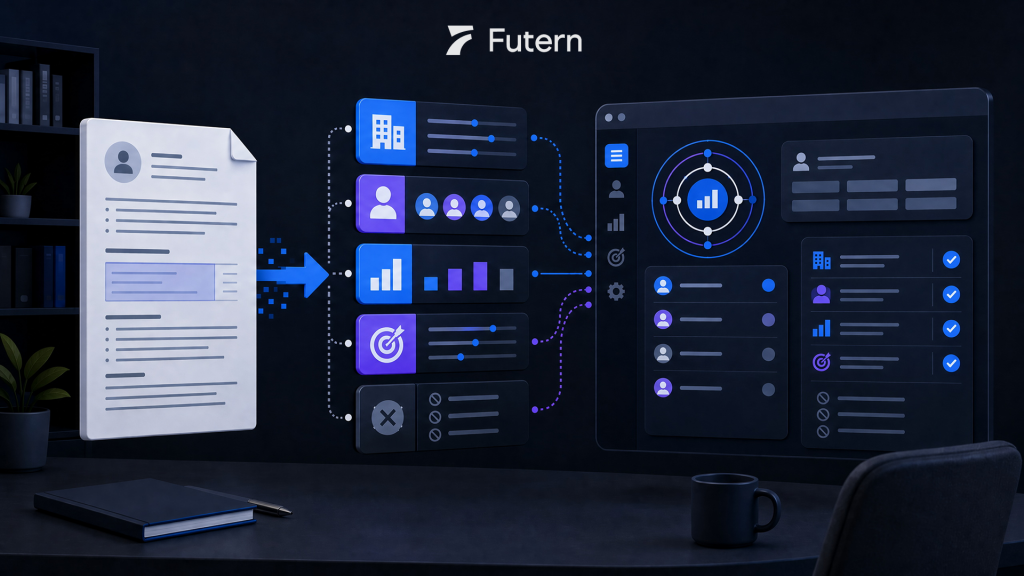
AI sales agents do not have that luxury. When an AI system prospects, qualifies, and engages on your behalf, it operates on explicit signals and structured criteria. It cannot infer what your best customers look like from a paragraph of narrative description. It needs parameters: firmographic attributes with defined ranges (e.g., manufacturing companies with 20-200 employees in Western Europe), behavioral signals with clear weighting (e.g., recently posted three or more sales hiring ads), disqualification criteria that are specific enough to act on, and engagement triggers tied to observable data points.
This is the core distinction between a human-readable ICP and a machine-actionable ICP. A human-readable ICP tells your sales team the story of your ideal customer. A machine-actionable ICP gives your AI agent the operating instructions. Both are valuable, but only the second one translates directly into AI execution quality.
ICP readiness, then, is not simply "do you have an ICP document." It is whether your customer definition is structured enough, specific enough, and current enough for an AI system to use as its decision-making foundation. Teams that recognize this distinction before selecting a platform make significantly better buying decisions, because they know what their ICP can and cannot support on Day 1.
The ICP Readiness Spectrum: Where Most Teams Actually Stand
ICP readiness is not binary. Teams fall along a spectrum, and understanding where you sit determines both your realistic expectations and your platform priorities.
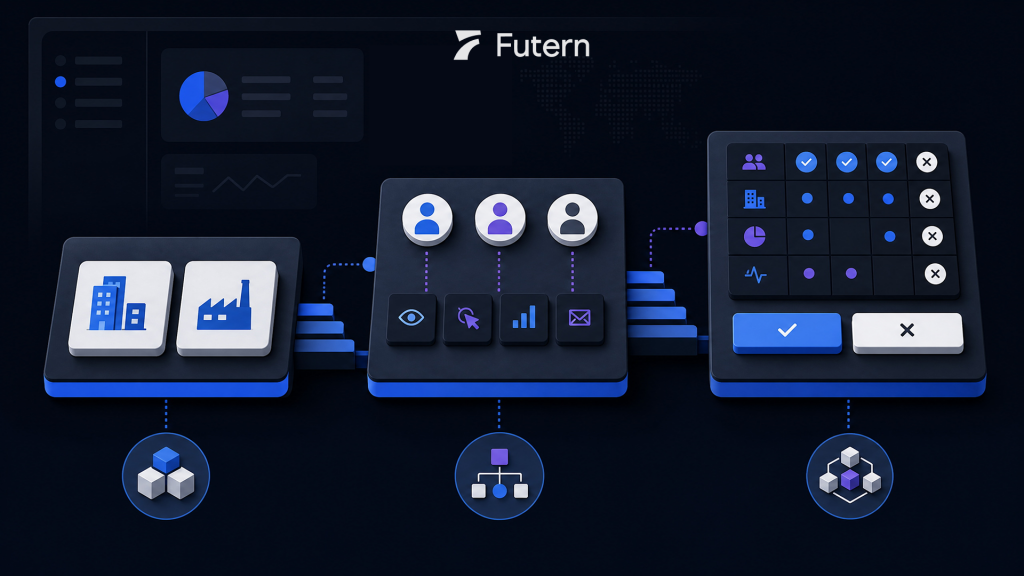
At the foundational level, a team has basic firmographic targeting in place. They know which industries they serve, what company size range is viable, and which geographies they currently sell into. Their ICP is primarily descriptive and often exists as a section of a go-to-market strategy document. This level is enough to get an AI sales agent running. Platforms with strong data enrichment capabilities can work with foundational ICPs because the AI supplements basic targeting criteria with its own lead intelligence. Results at this level tend to be broad: reasonable pipeline volume, but qualification rates that need time to improve as the system learns.
At the intermediate level, a team has added buyer persona depth to their firmographic foundation. They can articulate which roles within target accounts are decision-makers versus influencers, what common objections arise by persona type, and what purchasing timelines look like in different segments. Some behavioral signals are defined, such as technology adoption patterns, recent funding events, or hiring activity that indicates growth. The ICP may still be a single document, but it is organized enough that someone new to the team could use it to prioritize accounts without extensive coaching.
At the advanced level, the ICP is fully structured with quantifiable criteria across multiple dimensions. Disqualification rules are as clear as qualification rules (e.g., exclude companies with fewer than five outbound sales staff, or those mid-contract with a competing platform). Intent signals are mapped and weighted. Critically, the ICP has market-level differentiation, meaning the team maintains distinct profiles for different regions or segments rather than forcing one definition across all contexts. Update cadences are established, with regular review cycles that incorporate new win/loss data. Teams at this level can feed their AI agent highly specific instructions, and the agent's output reflects that precision from the start.
Most teams evaluating AI sales agents for the first time fall somewhere between the foundational and intermediate levels. This is not a problem. It simply means their platform selection criteria should account for where they are, and their performance expectations should be calibrated accordingly.
How ICP Gaps Show Up in AI Agent Performance
When there is a mismatch between ICP readiness and AI execution expectations, the symptoms are predictable but often misattributed. Teams blame the platform when the root cause is their own customer definition.
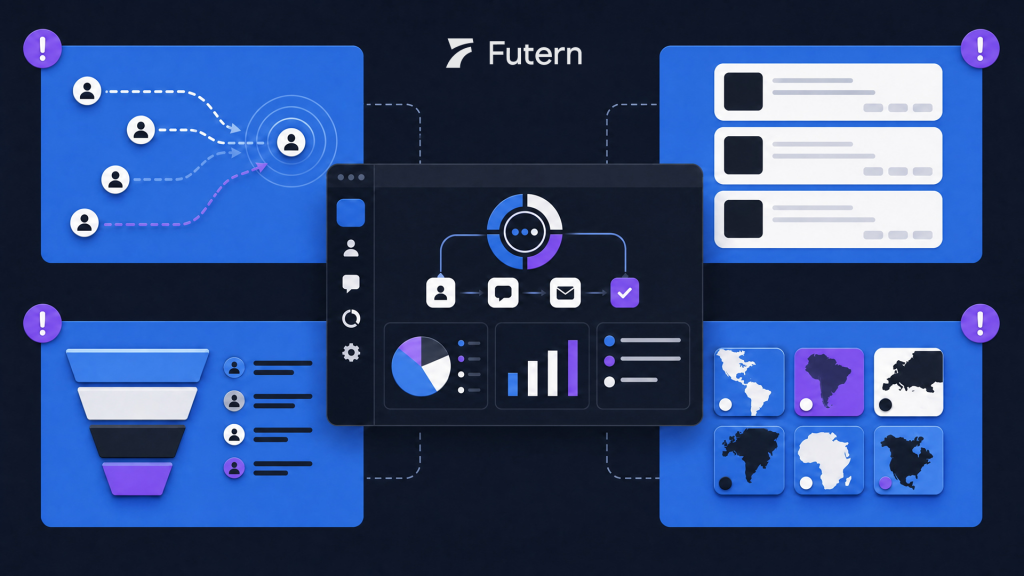
The most common symptom is prospecting drift. The AI agent generates a steady volume of outreach, but the leads it targets do not match the team's intuitive sense of "right fit." This happens when the ICP lacks specificity on disqualification criteria. Without clear signals for who is not a fit, the AI optimizes for volume within broad parameters. Sales leaders review the pipeline and feel something is off, but cannot pinpoint why because the ICP technically matches on basic attributes.
A second pattern is shallow personalization. The AI sends messages that are technically relevant to the prospect's industry and role, but lack the contextual depth that drives response rates. This traces back to ICP definitions that stop at firmographics without capturing buying triggers, pain point hierarchies, or situational context. When the AI does not know what specific problems your ideal customers are trying to solve right now, its messaging defaults to generic value propositions.
Third, teams with underdeveloped ICPs frequently see inconsistent pipeline quality. Some weeks produce strong qualified opportunities, and other weeks generate conversations that go nowhere. This volatility usually indicates that the ICP criteria are too broad, allowing the AI to prospect across a wide range of fit levels. Without tighter parameters, the agent cannot distinguish between a company that matches on surface attributes and one that matches on the deeper signals that predict conversion.
Finally, there is the market expansion gap. A team with a solid domestic ICP launches outbound into new international markets using the same profile and finds that results collapse. Response rates drop, qualification rates fall, and the pipeline stalls. The ICP was never designed for cross-border application, and the AI agent is executing faithfully against criteria that do not translate across markets.
Each of these patterns is solvable, and none of them require replacing the AI platform. They require improving the ICP. But the sequence matters: teams that understand their ICP gaps before selecting a platform can choose one that helps them close those gaps, rather than discovering the mismatch after signing a contract.
Five Dimensions of ICP Readiness That Shape Platform Selection
ICP readiness is not one-dimensional. Five specific aspects of your customer definition connect directly to platform capabilities, and mapping them helps you build a more targeted evaluation criteria list.
Market definition breadth is the first dimension. This measures how many distinct markets your ICP covers and how well-differentiated those market definitions are. A team selling exclusively in North America has simpler requirements than a team targeting prospects across Europe, Southeast Asia, and Latin America simultaneously. When your market definition spans multiple regions, the AI platform needs strong multilingual capabilities, localized data sources, and the ability to maintain separate targeting parameters by market. Teams with narrow market definitions can deprioritize these capabilities and focus evaluation elsewhere.
Buyer persona depth is the second dimension. This captures how thoroughly you have mapped the decision-making structure within target accounts. Some teams know exactly which titles they need to reach, what those individuals care about, and how their priorities differ from other stakeholders in the buying process. Others have a general sense of "we sell to VPs of Sales" without deeper persona modeling. Deeper persona definitions allow AI agents to execute more sophisticated multi-threading strategies within accounts, so teams with advanced persona mapping should evaluate platforms on their ability to manage differentiated outreach to multiple contacts within the same organization.
Intent signal clarity is the third dimension. This measures whether your ICP includes behavioral and contextual signals beyond static firmographic attributes. Intent signals might include technology adoption events, job postings that indicate growth in specific functions, funding rounds, leadership changes, or engagement with specific content categories. Teams with clearly defined intent signals can leverage AI agents' ability to monitor and act on real-time triggers. Teams without them are essentially asking the AI to prospect based on what a company is rather than what a company is doing, which limits targeting precision.
Data structure accessibility is the fourth dimension. Even a sophisticated ICP is only useful if the underlying data is accessible in a format the AI platform can consume. This dimension looks at whether your ICP criteria map to fields and data points that actually exist in your sales infrastructure. Some teams have rich ICP definitions on paper but discover that the signals they describe are not captured in any system they use (e.g., their ICP specifies "companies actively expanding into new export markets," but no field in their sales tools tracks market expansion activity). During platform evaluation, teams with strong data accessibility can focus on execution capabilities, while teams with data gaps should prioritize platforms that offer built-in enrichment and data sourcing.
Update cadence is the fifth dimension. An ICP that was accurate eighteen months ago may not reflect current market conditions, competitive dynamics, or your own product evolution. This dimension asks how frequently your ICP is reviewed and revised, and whether those updates are informed by actual pipeline and conversion data. Teams with established review cycles can maintain AI agent performance over time because they continuously refine the agent's targeting instructions. Teams without update routines risk performance degradation as their ICP drifts from market reality.
These five dimensions are not a scorecard. They are a lens for matching your current readiness to the platform capabilities that matter most for your situation. A team that scores high on all five can evaluate platforms primarily on execution speed and scale. A team with gaps in specific dimensions should weight their evaluation toward platforms that compensate for those gaps.
Using Your Readiness Level to Prioritize Platform Capabilities
The practical application of ICP readiness assessment is straightforward: your position on the readiness spectrum should change what you look for in a platform.
Teams at the foundational level benefit most from platforms with strong built-in lead intelligence and data enrichment. When your ICP provides directional guidance rather than precise specifications, you need an AI agent that can supplement your targeting criteria with its own data capabilities. Look for platforms that autonomously source and verify leads, enrich prospect records with firmographic and behavioral data, and progressively refine targeting based on engagement results. The platform's ability to operate effectively with minimal upfront configuration is essential at this readiness level, because you are asking the AI to compensate for ICP gaps rather than simply execute against a tight specification.
Teams at the intermediate level should focus evaluation on personalization depth and multi-channel execution quality. Your ICP provides enough structure for the AI to target correctly, so the differentiating factor becomes how effectively the platform converts good targeting into compelling engagement. Evaluate how the platform uses persona-level information to customize messaging, whether it can adapt outreach cadence and channel mix based on prospect behavior, and how well it maintains conversation quality across extended sequences.
Teams at the advanced level can prioritize scale, automation depth, and analytics sophistication. Your ICP is precise enough that execution quality is largely a function of volume and optimization. Look for platforms that can manage large prospect pools across multiple markets simultaneously, maintain consistent execution quality as volume increases, and provide granular performance analytics that feed back into your ICP refinement cycle. At this readiness level, the platform's reporting capabilities become a strategic asset because they supply the data you need to keep your ICP evolving.
Regardless of readiness level, every team entering global outbound should evaluate language coverage and cross-market execution capability. Even if your current ICP is domestic, the trajectory toward international expansion means that multilingual outreach, localized prospecting, and market-specific messaging capabilities are worth evaluating now rather than discovering you need them later.
The Global Dimension: Why Cross-Border Sales Demands ICP Rethinking
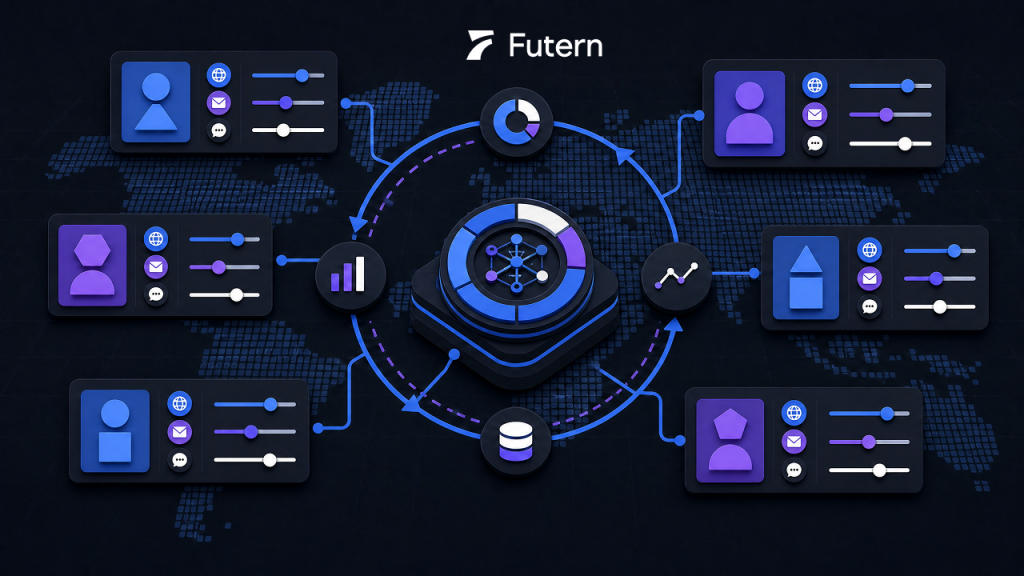
For teams running global outbound, ICP readiness takes on additional complexity that domestic-only teams do not face. The fundamental challenge is that a single ICP definition rarely translates across markets without significant adaptation.
Consider a B2B software company that has successfully sold to mid-market logistics firms in the United States. Their ICP includes company size ranges, specific job titles, technology stack indicators, and purchasing triggers. When they expand into German-speaking Europe, every one of these parameters needs re-examination. Company size thresholds may differ because market structure is different. Decision-making titles vary, as the same functional authority often carries different titles across countries. Technology adoption patterns diverge. Purchasing processes follow different timelines and involve different stakeholder configurations.
Teams that attempt global outbound with a single ICP typically experience exactly the market expansion gap described earlier. The AI agent executes with precision against criteria that simply do not apply in the new market. Response rates suggest the targeting is wrong, but the ICP technically checks out on paper.
The solution is market-level ICP segmentation. Rather than one master profile, advanced global teams maintain ICP variants for each significant market or market cluster. These variants share core elements like product-market fit criteria and value proposition alignment, but they diverge on specifics: target titles, engagement channel preferences, messaging tone, competitive landscape awareness, and qualification thresholds.
This is where ICP readiness connects directly to AI platform capabilities. An AI sales agent that can manage differentiated targeting and messaging across multiple market profiles is fundamentally different from one that applies a single targeting logic globally. For companies serious about cross-border outbound, the platform's ability to handle market-level ICP segmentation is an evaluation criterion that deserves significant weight. Teams that can articulate their multi-market ICP requirements during evaluation will make selection decisions that support their international growth trajectory.
ICP Readiness as an Ongoing Advantage
ICP readiness is not a box to check before purchasing an AI sales agent. It is a capability that compounds over time and becomes a genuine competitive advantage.
Every week of AI-powered outbound generates data: which prospects responded, which converted, which segments outperformed expectations, which markets showed unexpected potential. Teams that feed this data back into regular ICP refinement cycles create a virtuous loop. Their ICP gets sharper, the AI agent's targeting gets more precise, pipeline quality improves, and the next round of data is even more useful for further refinement.
This compounding effect means that the team's ICP readiness at the point of purchase is less important than their commitment to the ICP improvement process after purchase. A team starting at the foundational level with a clear plan for progressive ICP development will outperform a team that starts at the intermediate level and never revisits their customer definition.
The implication for platform selection is clear. Beyond the capabilities that match your current readiness, evaluate how well the platform supports your ICP evolution over time. Look for analytics that surface patterns in prospect engagement, reporting that breaks performance down by the segments and criteria that matter to your ICP, and data export or connectivity options that let you integrate AI-generated insights into your broader sales strategy.
Your AI sales agent is only as effective as the customer definition it operates against. Understanding your ICP readiness level is the foundation for setting realistic expectations, selecting the right platform capabilities, and building a roadmap for continuous improvement. The companies that treat their ICP as a living, evolving asset will consistently extract more value from their AI investment than those who set it once and move on.
This article is part of our AI Sales Agents: Complete Buyer's Guide, which walks through every stage of the evaluation and implementation process. Whether you are still assessing what AI sales agents can realistically do, building an evaluation framework, or planning your first 90 days after deployment, the guide covers the full journey from initial research through ongoing optimization.
Read More
Global Outbound Sales in 2026: What Actually Scales and What Doesn't
Explore more AI & Automation insights here.