AI Sales Agents: Complete Buyer's Guide
by Stella L
Everything you need to evaluate, compare, and select the right AI sales agent platform.
Deciding to bring an AI sales agent into your outbound process is one decision. Choosing the right one is a different challenge entirely.
The AI sales agent market has matured rapidly, and with that maturity comes a crowded landscape of platforms, capabilities, and vendor claims. For teams evaluating their options, the volume of information available makes it harder to reach a clear decision, not easier. Every vendor website tells a compelling story. The difficulty is knowing which story matches your actual needs.
This guide exists to give you a structured path through that process. Each article addresses a specific stage of the buyer's journey, from understanding what the technology can realistically do, through building an evaluation framework, to making a confident platform decision. The articles are designed to be read in sequence, but each one also stands on its own if you need to jump to the stage most relevant to your current situation.
If you are earlier in your research and want to understand how AI sales agents fit into a broader outbound strategy, we recommend starting with our previous series: Global Outbound Sales in 2026: What Actually Scales and What Doesn't. That series covers the structural shifts in global outbound sales and how execution models are evolving. This guide picks up where that series leaves off, focusing specifically on how to evaluate and select the right AI sales agent platform for your team.
Understanding What AI Sales Agents Actually Deliver
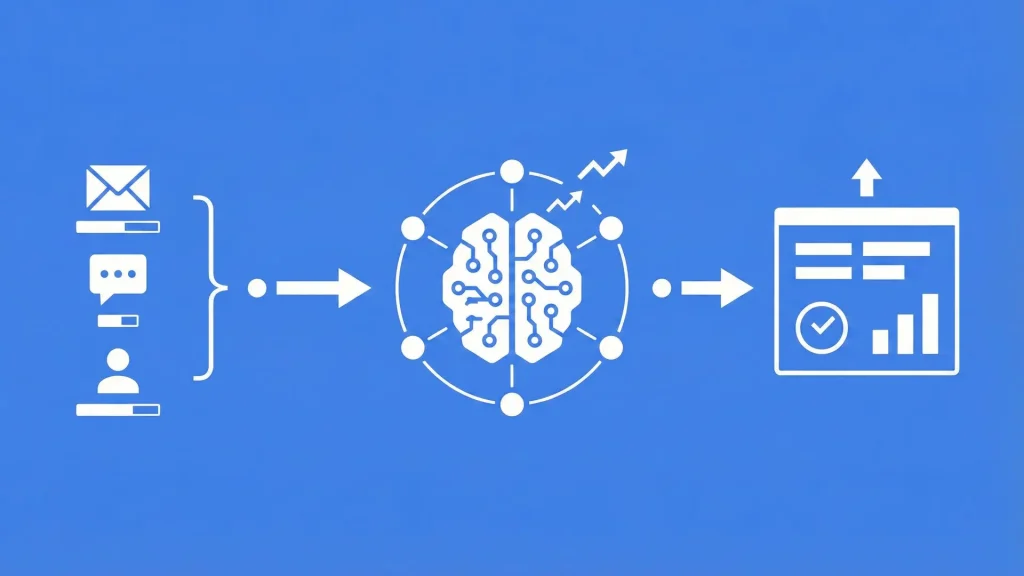
Every AI sales agent vendor in 2026 markets a similar set of promises: autonomous selling, multilingual coverage, self-learning optimization, and personalization at scale. The underlying technology has advanced significantly, and several of these capabilities deliver measurable results. Multi-channel orchestration, intent-based timing, and feedback-driven optimization are real and proven. The key for buyers is understanding where platform maturity varies. Multilingual quality depends on validation depth across specific languages. Autonomy levels differ based on conversation handling sophistication. Personalization depth scales with available prospect data. This analysis examines seven core capabilities individually, mapping what each one delivers today and providing a specific verification question for each. The goal is a working filter you can apply before entering vendor evaluation.
How to Evaluate AI Sales Agent Platforms
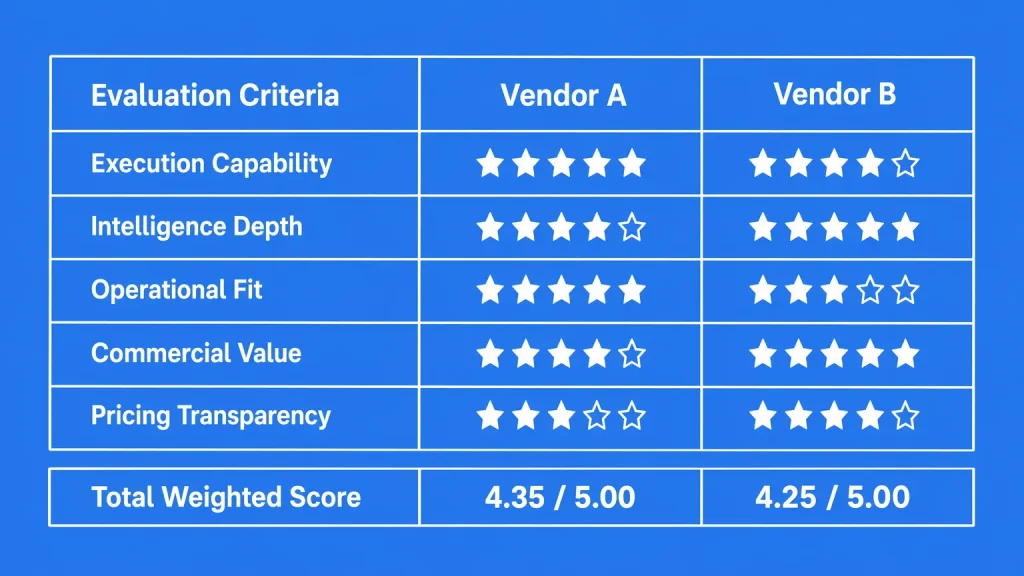
Most teams evaluate AI sales agents by sitting through demos and comparing feature lists. This approach evaluates vendors on their terms, and the vendor with the best presentation wins regardless of which platform fits your business. A structured evaluation process anchored to your own requirements produces a more defensible decision. This article provides a five-stage framework: define your business requirements profile, evaluate execution capability, assess intelligence depth, confirm operational fit, and validate commercial value. Each stage includes the specific questions to ask and the criteria that separate strong platforms from adequate ones. The framework also introduces a weighted scorecard that lets you assign priority levels based on your specific outbound model, so that every vendor conversation is measured against the same consistent standard.
Platform vs Custom Build: Making the Right Structural Decision
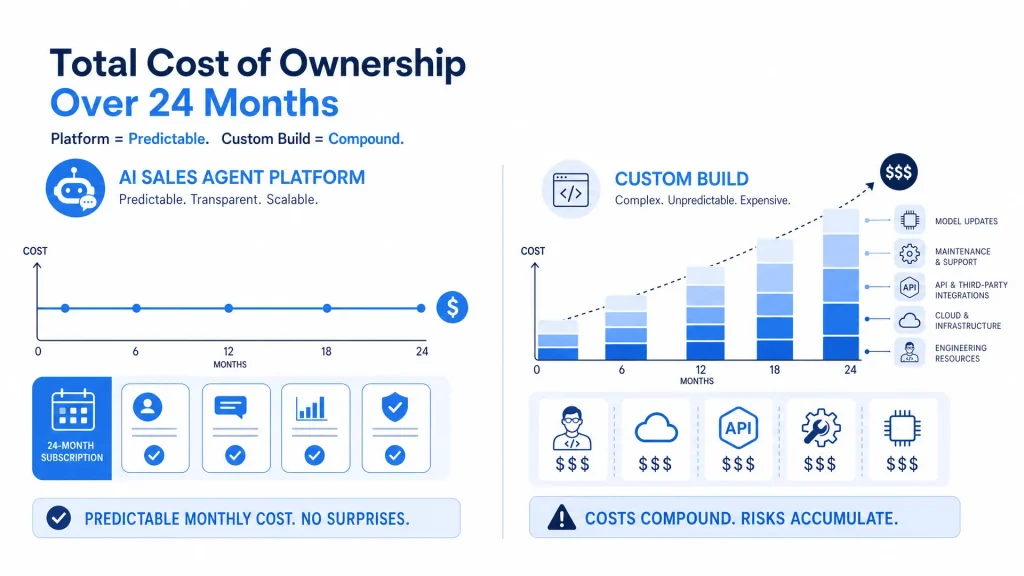
Before evaluating specific platforms, many teams with engineering resources face a more fundamental question: should we buy an existing platform or build our own? The appeal of a custom-built system is understandable, but the decision is less about technical capability and more about resource allocation. This article examines five variables that determine which path makes sense: total cost of ownership over 24 months, time to first results, capability breadth, maintenance and evolution burden, and team focus. Custom builds typically run three to five times higher in total cost, take six to nine months before first outbound execution, and create an ongoing maintenance burden that grows over time. The article includes a three-question decision test that helps teams reach a clear answer based on their specific engineering capacity, timeline expectations, and strategic priorities.
Building Your AI Sales Team — Roles That Change When AI Handles Outbound
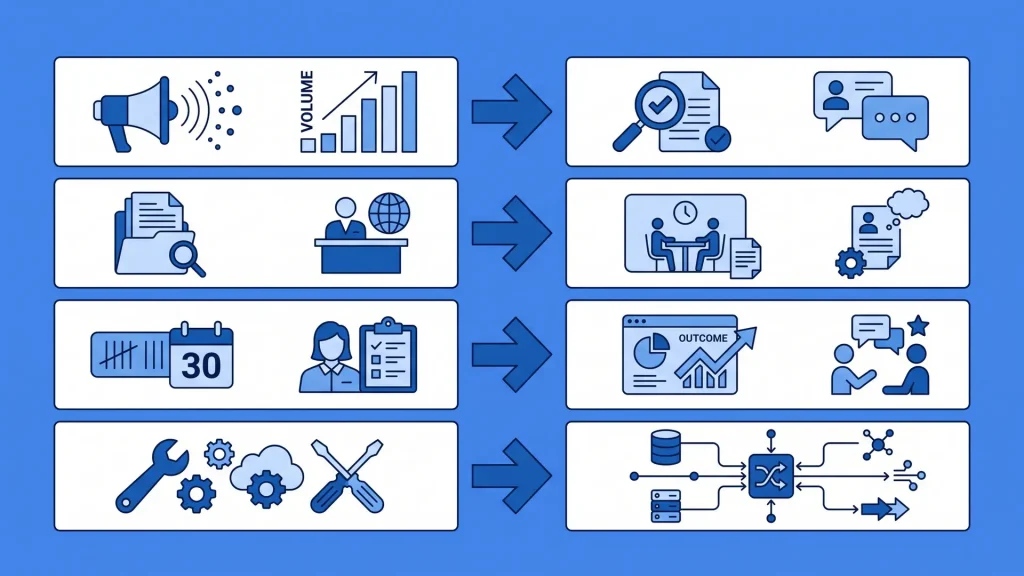
Adopting an AI sales agent changes how every role on your sales team operates. SDRs shift from high-volume outreach execution to quality review, escalated conversation handling, and market intelligence. AEs gain richer prospect context and spend less time on administrative preparation. Sales managers evolve from activity supervisors to strategic operators, coaching on complex conversations and managing blended AI-human performance metrics. RevOps gains strategic importance as the integration layer between the AI platform and existing sales infrastructure. This article maps each role transformation and provides practical transition guidance, including new success metrics, communication planning, and a 30-60-90 day transition framework to ensure the team change is as deliberate as the platform decision.
Read the full article here.
First 90 Days with Your AI Sales Agent
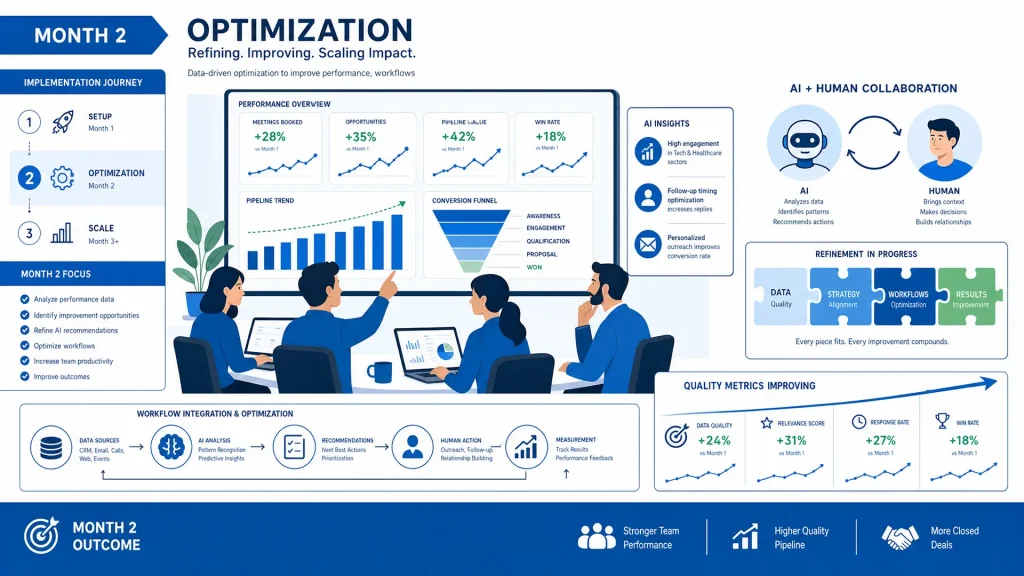
The first 90 days after launching an AI sales agent determine whether the investment delivers its full potential. Most implementations that underperform fail on structure, not technology. This guide provides a month-by-month framework for that critical period. Month 1 focuses on calibration: launching with focused scope, monitoring output quality, establishing a structured feedback rhythm, and collecting baseline performance data. Month 2 shifts to optimization: expanding based on data, refining messaging, and integrating AI-sourced pipeline into team workflows. Month 3 moves to scaling: adding markets and languages, increasing volume on proven configurations, and transitioning from daily oversight to periodic strategic review. The article also covers common implementation pitfalls and what a successful day-90 outcome looks like.
Read the full article here.
Measuring AI Sales Agent Performance: Metrics That Actually Matter
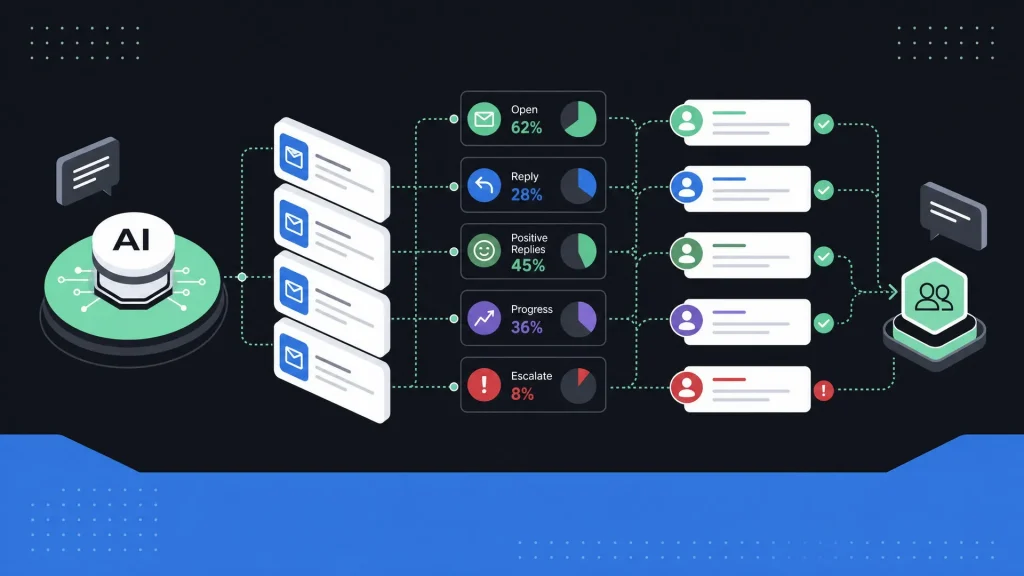
Traditional SDR metrics measure human effort. AI sales agents operate on different variables entirely, and evaluating them with the wrong framework produces misleading conclusions. This article introduces a four-layer measurement approach. Execution metrics confirm the system is running correctly. Engagement quality metrics evaluate whether outreach is generating meaningful prospect interaction, with improvement trajectory serving as a key indicator of AI optimization effectiveness. Pipeline impact metrics quantify business contribution through meetings booked, qualification rates, and AI-sourced pipeline value using first-touch attribution. Efficiency metrics validate the investment through cost per meeting, cost per qualified opportunity, and total ROI calculated on closed-won revenue. The article also maps which metrics serve which stakeholders and at what cadence, providing a practical structure for building your measurement dashboard.
Read the full article here.
How Your ICP Readiness Affects AI Agent Selection and Performance
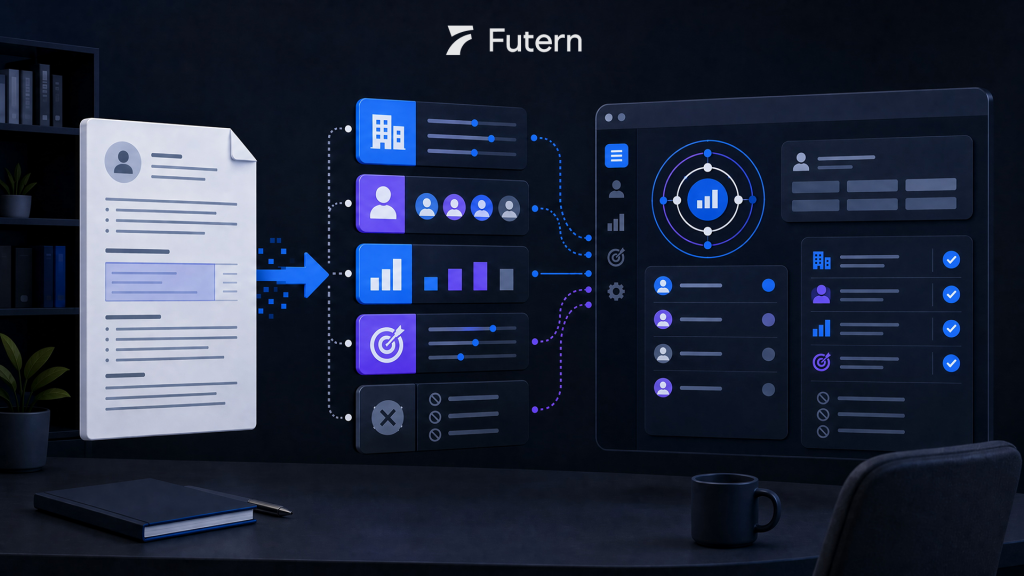
The quality of your Ideal Customer Profile shapes AI sales agent results more than any platform feature comparison. Most teams have a customer definition built for human sales conversations, but AI agents need something different: structured, quantifiable criteria they can execute against. The gap between a human-readable ICP and a machine-actionable one shows up in prospecting accuracy, personalization depth, and pipeline consistency. This article introduces an ICP readiness spectrum that helps teams assess their current maturity level, maps five dimensions of ICP quality to specific platform selection criteria, and examines why cross-border outbound demands market-level ICP segmentation. Your position on the readiness spectrum determines which platform capabilities deserve the most weight during evaluation and what kind of results to expect in the first months after deployment.
Read the full article here.
Data Requirements for AI Sales Agents
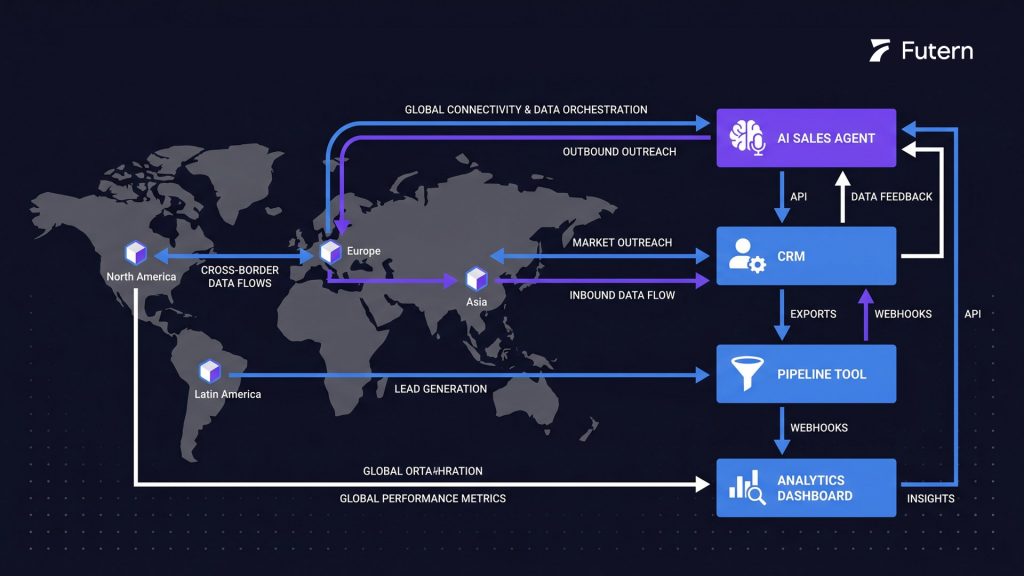
Most teams overestimate how much data preparation an AI sales agent requires. The reality is that modern platforms handle the bulk of data acquisition autonomously, from prospect discovery and contact verification to firmographic enrichment and real-time signal monitoring. What your team provides is strategic context: targeting parameters, messaging direction, and product positioning. These inputs sharpen results but are not prerequisites for getting started. This article maps the full data ecosystem behind AI-powered outbound, distinguishing between platform-sourced data, team-supplied inputs, and the engagement data that accumulates automatically during operation. It also addresses data flow architecture across your sales stack and the unique data challenges that come with running outbound across multiple international markets, where data availability, multilingual processing, and regional compliance all add layers of complexity.
Read the full article here.
AI Sales Agent Pricing Models Explained: Understanding the True Cost
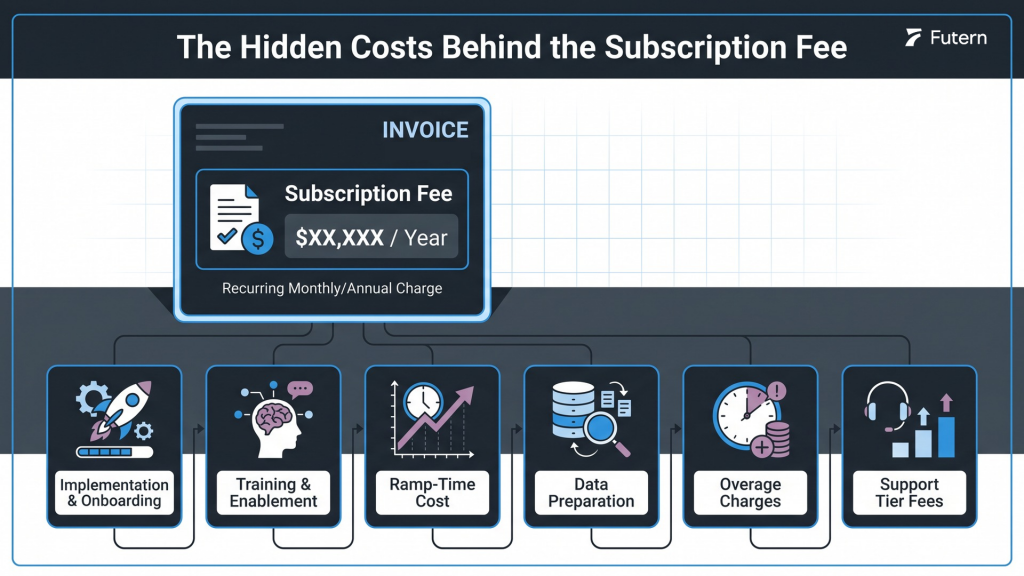
Subscription fees are the most visible component of AI sales agent pricing, but they rarely tell the full story. Implementation charges, training costs, ramp time delays, data preparation expenses, and overage fees can substantially change the total financial picture. This article maps the common pricing models in the AI sales agent market, identifies the hidden costs that inflate first-year spend, and builds a total cost of ownership framework that organizes all cost components into a structured comparison view. It also provides a detailed economic comparison between AI sales agents and traditional SDR teams, examining the structural cost differences in ramp time, attrition, management overhead, tool consolidation, and global market coverage. As the final article in this guide, it connects pricing evaluation back to the performance measurement and platform selection frameworks covered in earlier sections.
Read the full article here.
Read More: Global Outbound Sales in 2026: What Actually Scales and What Doesn't
Explore more AI & Automation insights here.