AI Sales Agent Capabilities: What's Real and What's Marketing
by Stella L
A capability-by-capability guide to separating real AI sales agent performance from vendor hype.
The AI sales agent market in 2026 is loud. Vendor websites promise autonomous selling, instant multilingual coverage, and personalization at a scale no human team could match. For buyers evaluating these platforms for the first time, the core challenge is not finding options. The challenge is knowing which capability claims reflect actual product performance and which ones are packaging ordinary automation in AI language.
This matters because buying decisions based on misaligned expectations lead to failed implementations. A company that purchases an AI sales agent without understanding where the technology excels and where it requires strategic input will measure success against the wrong baseline and declare failure within months, even if the tool is delivering genuine value.
This article examines seven capabilities that appear most frequently in vendor marketing. For each one, we break down what the technology can realistically deliver today, where the gap between marketing and reality sits, and what to ask a vendor to verify their specific claims. The goal is to give you a working filter before you enter the evaluation and selection process.
1. Multi-Channel Outbound Automation
What vendors say:
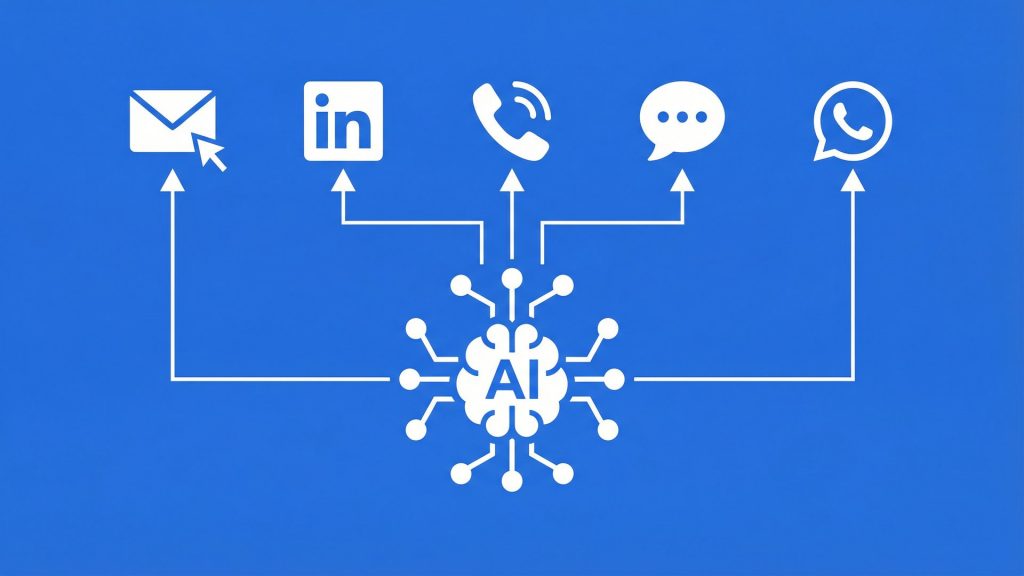
Our AI agent runs coordinated outbound campaigns across email, LinkedIn, phone, SMS, and WhatsApp simultaneously, with intelligent sequencing across every channel.
What the technology actually delivers: Multi-channel orchestration is one of the more mature capabilities in this space. Most established platforms can genuinely coordinate outreach across two to three channels with automated sequencing logic. Email remains the strongest channel for AI execution. LinkedIn automation works but operates within platform API constraints that limit daily action volumes. Phone and SMS capabilities vary significantly between vendors.
The real variable is coordination quality. Basic platforms run parallel sequences across channels with simple timing rules. More advanced systems adjust channel selection and sequencing based on prospect response patterns. If a prospect opens emails but never responds, the system might shift emphasis to LinkedIn or adjust messaging tone.
Where the gap shows up: "Simultaneous" coverage across five or more channels is technically possible but practically limited. WhatsApp Business API restrictions, LinkedIn connection request caps, and phone compliance requirements in different jurisdictions create hard ceilings that no AI can bypass. A system claiming seamless five-channel coverage in 30 countries is likely glossing over these constraints.
Verification question: Ask for channel-specific delivery rates and compliance limitations by region. A vendor confident in their multi-channel capability will have this data readily available.
2. Self-Learning and Self-Optimization
What vendors say:
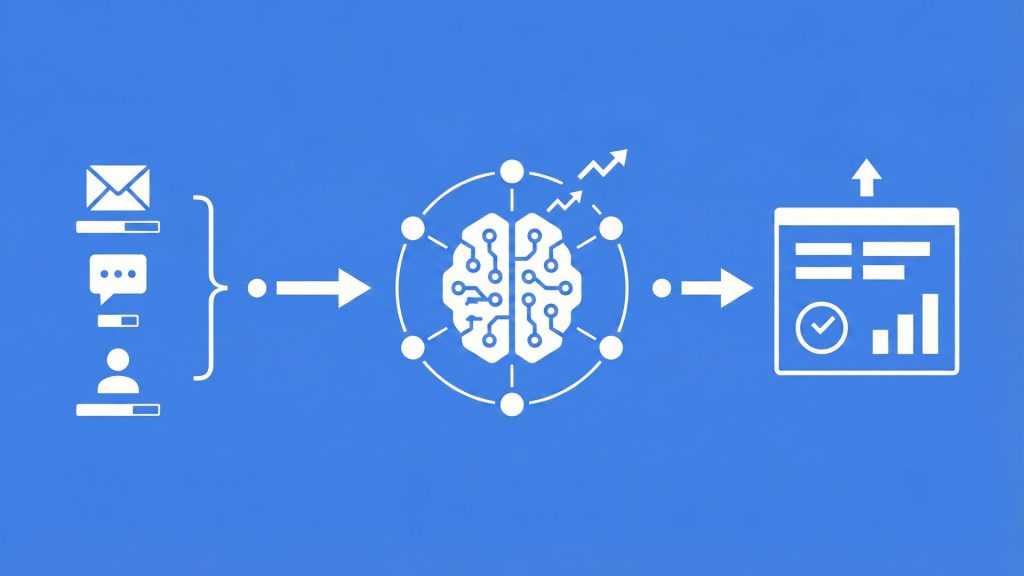
Our AI continuously learns from every interaction and automatically optimizes its approach, getting smarter with every email sent.
What the technology actually delivers: Modern AI sales agents do incorporate feedback loops. Open rates, reply rates, meeting booking rates, and objection patterns feed back into the system and influence future behavior. Subject line selection, send time optimization, and basic message variant testing can run with minimal human input once the system has sufficient data volume.
This is real and measurable. Over a three to six month period, a properly configured AI agent will show improvement in engagement metrics as its optimization cycles accumulate data.
Where the gap shows up: The word "self" in self-learning covers a wide spectrum across platforms. At one end, leading platforms with large underlying models and pre-trained industry data can deliver strong performance shortly after deployment. At the other end, less mature systems require significant manual configuration and longer ramp periods before optimization cycles produce meaningful results. The key variable is how much pre-existing knowledge the platform brings versus how much it needs to learn from your specific data.
Strategic decisions still benefit from human input regardless of platform maturity. Which market segments to prioritize, how to reposition messaging when competitive dynamics shift, whether a drop in response rates reflects a messaging problem or a market timing issue: these are judgment calls where human expertise adds clear value. The best implementations combine AI-driven optimization with periodic human strategic review.
Verification question: Ask what specific decisions the system makes autonomously versus what requires human configuration changes. Ask for a typical ramp timeline when entering a new market segment.
3. Multilingual Outreach
What vendors say:
Reach prospects in 50 or more languages with native-quality messaging across every market.
What the technology actually delivers: Large language models have made multilingual content generation dramatically more accessible. AI sales agents built on advanced LLM foundations can produce outbound messaging across dozens of languages at a quality level that is professional and effective for business communication. For widely spoken languages like Spanish, French, German, Portuguese, and Mandarin, the output quality is strong and well-validated through real campaign performance. Many platforms now support 30 to 50 or more languages with functional business communication quality.
Where the gap shows up: The meaningful distinction for buyers is between language coverage and cultural fluency. Three areas deserve attention as you evaluate.
First, business communication norms vary by culture in ways that go beyond language. Formality levels, relationship-building expectations before a business pitch, and appropriate follow-up cadences differ between markets. The best platforms account for these cultural patterns in their outreach logic. Less sophisticated systems translate the message accurately but apply a uniform communication style across all markets.
Second, industry-specific terminology in less common languages can produce occasional gaps. For major business languages this is largely solved. For niche languages combined with specialized industries, it is worth testing with native speakers in your target markets.
Third, ask about the difference between supported languages and validated languages. Some platforms have verified campaign performance data across their full language list. Others have strong validation in their core languages and rely on underlying model capability for the rest. Both approaches can work, but the distinction matters for your specific target markets.
Verification question: Ask for sample output in your specific target languages and have native speakers in those markets evaluate them. Ask which languages have been validated with real campaign performance data versus which are listed based on model capability alone.

4. Intent Signal Detection and Timing
What vendors say:
Our AI detects buying intent signals and reaches prospects at exactly the right moment, when they are actively looking for your solution.
What the technology actually delivers: Intent data aggregation is functional and valuable. AI agents can monitor and synthesize signals from multiple sources: job postings that indicate team expansion, technology stack changes visible through public data, funding announcements, leadership transitions, and content consumption patterns from third-party intent data providers. The ability to combine these signals into a composite score and trigger outreach based on signal clusters is a genuine capability.
When implemented well, intent-based timing can improve response rates by two to five times compared to untargeted outreach. This is one of the capabilities where the marketing claim, while somewhat dramatized, points to real measurable improvement.
Where the gap shows up: "Exactly the right moment" implies a precision that the technology does not have. Intent signals indicate elevated probability of relevance, not confirmed buying readiness. A company that just raised Series B funding and posted three SDR positions is more likely to be receptive to a sales infrastructure conversation than a random company. But that signal does not tell you whether they already selected a vendor last week, whether the budget holder is on leave, or whether internal priorities just shifted.
The accuracy of third-party intent data also varies considerably. Some providers offer strong coverage in specific industries and geographies while producing noisy data in others. An AI agent is only as good as its signal inputs.
Verification question: Ask for the specific intent data sources the platform integrates with. Ask for measured conversion rate differences between intent-triggered outreach and baseline outreach across their customer base.

5. Autonomous Selling
What vendors say:
Our AI agent handles the entire outbound process autonomously, from prospecting to booked meeting, with no human intervention required.
What the technology actually delivers: AI agents can autonomously execute significant portions of the outbound workflow. Prospect identification based on defined criteria, initial outreach sequence execution, basic reply handling, calendar scheduling for meetings, and follow-up cadence management can all run with minimal human involvement during steady-state operation.
For straightforward use cases, such as booking discovery calls with a well-defined prospect profile in familiar markets, the level of autonomy is genuinely high. A configured system can run for weeks generating booked meetings with only periodic human review.
Where the gap shows up: The meaning of "autonomous" varies significantly across the market. Leading platforms can genuinely manage the full outbound workflow from prospecting through meeting booking with minimal ongoing intervention. They handle reply classification, objection responses, scheduling, and follow-up sequences independently. For teams with well-defined prospect profiles and established markets, this level of autonomy delivers consistent results at scale.
Where platform maturity matters most is in edge cases. When a prospect raises a highly nuanced objection, when a conversation moves into negotiation territory, or when a high-value account requires a tailored approach, the system's ability to respond appropriately depends on its training depth and conversation handling sophistication. More advanced platforms manage a wider range of these scenarios independently. Less mature platforms escalate more frequently.
The practical question for buyers is how the platform handles the boundary between automated execution and human escalation. A well-designed system makes this boundary seamless, flagging conversations that benefit from human attention while continuing to manage the rest independently. The result is that your team focuses on strategic interactions while the AI handles volume and consistency.
Verification question: Ask how the platform handles complex or unexpected prospect responses. Ask for examples of what gets escalated versus what the system resolves independently, and how that ratio has improved over recent product iterations.
6. Personalization at Scale
What vendors say:
Every message is uniquely personalized to each prospect based on deep research, delivering one-to-one relevance at the scale of thousands.
What the technology actually delivers: AI-driven personalization has improved substantially. Modern systems can pull prospect-specific data points, including company information, role context, recent company news, technology stack details, and industry trends, and incorporate them into outreach messaging. The result is noticeably better than mail merge templates with a first name and company name swapped in.
At its best, AI personalization produces messages that reference a prospect's specific business context in a way that demonstrates genuine relevance. A message that references a company's recent expansion into a new market and connects it to a relevant operational challenge feels meaningfully different from generic outreach.
Where the gap shows up: The spectrum between "template with variables" and "genuinely researched personalization" is wide, and most AI agents operate somewhere in the middle. The personalization quality depends heavily on the data available for each prospect.
For prospects at companies with substantial public information, including press coverage, blog posts, job listings, and technology review profiles, the AI has rich material to draw from and personalization quality is high. For prospects at smaller companies with limited public presence, the system falls back to industry-level and role-level personalization that is less distinctive.
The "deep research" claim is also worth examining. AI agents scan available data sources quickly and efficiently, but they do not conduct research in the way a human SDR would. A human might notice a subtle connection between a prospect's career history and a current industry trend, or pick up on an unstated implication in a company's recent announcement. AI personalization is broad and consistent. Human personalization, when done well, can be deeper and more creative. The practical tradeoff is that AI delivers solid personalization to every prospect in your pipeline, while human SDRs deliver variable quality depending on workload and individual skill.
Verification question: Ask to see actual outreach examples sent to real prospects, not demo messages generated with curated data. Ask what data sources the system pulls from for personalization and what happens when prospect-specific data is limited.

7. Performance Metrics and ROI Projections
What vendors say:
Our customers see three to five times more meetings booked, 60 percent reduction in cost per meeting, and ROI within 30 days.
What the technology actually delivers: Strong AI sales agent implementations do produce significant performance improvements. Based on available industry data and published case studies, realistic ranges for well-implemented systems include: 1.5 to 3 times improvement in meetings booked compared to equivalent human effort, 40 to 70 percent reduction in cost per qualified meeting, and initial ROI typically visible within one to three months for companies with established outbound processes.
These are meaningful numbers that justify the investment for most companies running outbound at scale.
Where the gap shows up: Vendor metrics often represent best-case scenarios from their most successful implementations. The ranges above reflect averages across implementations. Your specific results will depend on your starting baseline, market dynamics, data quality, and how well the system is configured for your use case.
Several factors that vendors rarely highlight can significantly affect outcomes. Companies with no existing outbound process typically see a longer ramp period than those optimizing an established one. Industries with longer sales cycles may not see meeting-to-revenue conversion improvements within the timeframes vendors cite. And the "cost per meeting" metric can be misleading if meeting quality differs between AI-generated and human-generated meetings.
Verification question: Ask for performance data segmented by company size, industry, and implementation maturity. Ask specifically about results from companies similar to yours in size, market, and sales cycle length.
Building Your Capability Filter
Before entering vendor conversations, establish your evaluation baseline with three questions.
First, which two to three capabilities matter most for your specific outbound model? A company focused on one region with one language has different priority capabilities than a company selling across 15 markets. Rank capabilities by impact on your particular situation rather than evaluating every feature equally.
Second, what is your current baseline? The value of any AI capability is relative to what you are doing today. If your current outreach is already well-personalized by skilled SDRs, AI personalization may feel like a lateral move. If your team sends generic templates, the improvement will be dramatic.
Third, what level of strategic oversight do you want to maintain? Even with highly autonomous platforms, most teams benefit from periodic review of targeting strategy, messaging direction, and performance trends. Define in advance how much time your team wants to allocate to strategic oversight of the system. This will help you evaluate how each platform's workflow fits your operational model.
With these three reference points established, you can evaluate vendor capabilities against your actual needs and filter out marketing language that does not apply to your situation.
The next step is to move from understanding capabilities to evaluating specific platforms. That process requires a structured framework for comparing vendors on the dimensions that matter for your business.