Northern Virginia Data Center Operators: Five Supplier Paths
by Yu T
Compare five Northern Virginia operator models to qualify supplier fit before outreach.
Northern Virginia has enough data center density to make company discovery look easy. The harder task is deciding which facilities match a supplier's product, delivery model, technical credentials, and sales cycle.
Power, cooling, fiber, security, and maintenance suppliers should each read this market differently. Cloud owner-operators impose global engineering standards. Interconnection facilities support many tenants and frequent cross-connect activity. Wholesale platforms repeat designs across multiple buildings. Development companies create an earlier window during planning, construction, and commissioning, even when another party will operate the completed facility.
A Northern Virginia address does not reveal who specifies equipment, controls the budget, approves vendors, or manages an individual site. Sales teams need to connect geography with operating model, facility status, and project stage before building a prospect list.
Research information and company estimates were reviewed on July 17, 2026. The companies below are research examples selected for local relevance, operating model, company scale, infrastructure context, and possible supplier use cases. Public-company workforce figures use company disclosures where available; private-company figures are directional estimates based on Futern and other public signals. Verify facility details, project status, supplier requirements, and decision authority before outreach. Inclusion does not indicate confirmed purchasing activity.
Market Map: Four Northern Virginia Data Center Zones
Loudoun County and Ashburn form the established core. According to Loudoun County's 2026 Data Center Guidelines, the county had 209 completed data centers and 43 under construction as of January 1, 2026, representing 44.3 million square feet built and another 9.2 million square feet underway. Ashburn offers exceptional operator density, alongside mature qualification systems and established vendor relationships.
Prince William County, including Manassas and Gainesville, is a major operating and development area. Iron Mountain, Digital Realty, CloudHQ, Corscale, Microsoft, Google, AWS, and other platforms have facilities or projects in the county. Project status requires individual verification because an announced campus or approved proposal does not establish that procurement remains active.
Fairfax County, especially Reston, Herndon, McLean, and Chantilly, has a more connectivity-led profile. CoreSite, DataBank, and H5 point suppliers toward colocation, secure operations, hybrid infrastructure, retrofit work, and live-site services.
The outer development ring includes Fauquier, Culpeper, Stafford, and Spotsylvania. Land and planned power capacity support new campuses, but permits, utility delivery, construction schedules, and final operating responsibility remain fluid. Engineering and construction suppliers may enter earlier, while operations vendors need evidence that commissioning is approaching.
Geography identifies where activity sits. The five supplier paths below explain who controls standards, project delivery, operating work, and vendor access.
How five operator models shape supplier access. The same cooling unit, generator, security platform, or maintenance service enters each operator type through a different route. The market becomes easier to qualify when companies are separated into cloud owner-operators, interconnection hubs, established multi-campus operators, expansion-led wholesale platforms, and development platforms. These groups differ in standardization, tenant influence, project timing, and local decision authority.
Cloud Owner-Operators: Standards Sit Above the Local Facility
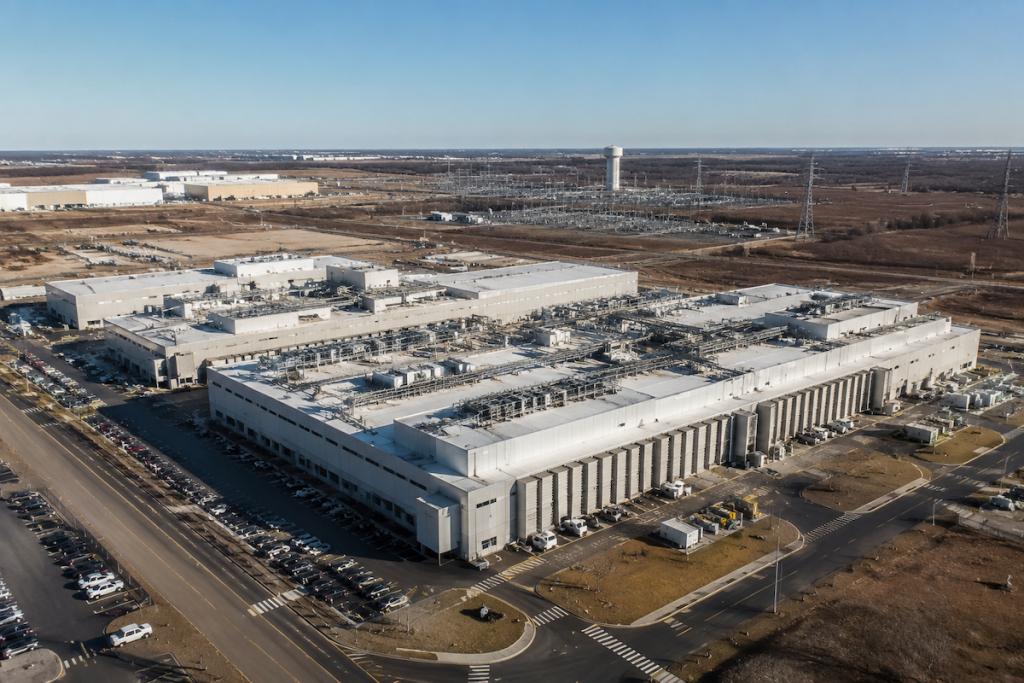
Cloud companies design infrastructure around internal compute platforms. Global engineering, capacity planning, sustainability, and supply-chain teams often shape equipment standards. Local critical-environment leaders influence installation, reliability, replacement timing, and contractor performance. Suppliers should expect long qualification cycles and strict technical documentation.
Amazon Web Services (AWS) belongs to Amazon, which employed approximately 1.576 million people at the end of 2025. AWS operates data center infrastructure across Fairfax, Loudoun, and Prince William counties, with current operating roles also advertised across Ashburn, Chantilly, Dulles, and Manassas. Its scale points suppliers toward approved-vendor pathways, repeatable equipment packages, and proof across multiple sites. Regional facility teams matter for execution, while global engineering and supply chain shape core standards.
Microsoft had about 228,000 employees at the end of fiscal 2025 and operates data centers in Fairfax, Loudoun, and Prince William counties. Projects around Manassas illustrate the boundary between global Azure engineering and local delivery. Power distribution, generation, water strategy, and high-density cooling are credible research areas only after the construction phase and supplier-registration route are confirmed. Capacity sourcing, critical environments, mechanical engineering, and regional operations represent different influence paths.
Google operates within Alphabet, which had 190,820 employees at the end of 2025. Google confirms a data center presence in Loudoun and Prince William counties, including a third Prince William facility opened in 2023. Power, cooling, controls, security, and critical-facility services fit its self-built model, but centralized engineering is likely to govern major specifications. Qualification should identify the campus, operating stage, approved-vendor route, and scope of local authority.
Corporate scale matters less here than technical entry conditions. Suppliers without hyperscale references may find a more realistic first route through engineering partners, contractors, or smaller operators before pursuing direct qualification with a global cloud platform.
Interconnection Hubs: Live-Site Risk Shapes the Buying Path

Colocation and interconnection facilities serve multiple customers, networks, and cloud connections. Their operating logic emphasizes uptime, security, cross-connect speed, capacity utilization, and controlled work inside live environments. Procurement may be centralized, while local teams influence installation windows, replacement work, and vendor performance.
Equinix, with approximately 15,000 employees worldwide, currently lists a dense set of operational Ashburn facilities with round-the-clock site coverage. Its network role creates research angles around power resilience, racks, physical security, fiber handling, remote hands, and work in active multi-tenant buildings. The buying path may lead through global procurement, regional engineering, or a specific facility team, so the campus and service scope should be named before contact research begins.
CoreSite, an American Tower company with a research-based workforce estimate near 600, operates three interconnected Reston data centers. VA1, VA2, and VA3 support colocation, cloud access, high-density computing, and dark-fiber connectivity. Critical power, cooling, secure access, cross-connect operations, and live-site modernization are the strongest supplier angles. The first qualification question is whether the work belongs to CoreSite, American Tower, a contractor, or facility leadership.
DataBank operates with roughly 1,500 employees and maintains an active three-building Ashburn campus plus a McLean facility. Its mix of colocation, edge, managed infrastructure, and hybrid-cloud services makes building-level capacity and customer density important. Maintenance, rack, security, network, and electrical-service suppliers should distinguish the large Ashburn campus from the smaller McLean interconnection site and verify preferred-vendor relationships.
H5 Data Centers, a business of about 200 employees, currently lists facilities in Ashburn, Herndon, and Chantilly. Its smaller organizational scale may provide a clearer route to regional operations, sales engineering, or facility leadership than the largest global platforms. Retrofit experience, flexible service coverage, physical security, connectivity, and operational support are more credible openings than a generic hyperscale pitch.
Interconnection operators reward precision. Effective outreach names the building context, the live-environment risk being addressed, and the role responsible for that issue.
Established Multi-Campus Operators: Repeatability Drives Procurement

Large operators balance development, leasing, engineering, and continuous operations. They repeat infrastructure patterns across buildings, making reliability, delivery capacity, lifecycle cost, and standardization central supplier criteria. A regional brand name still needs to be divided into individual campuses and project phases.
Digital Realty operates at a global scale of roughly 4,500 employees and has facilities across Ashburn, Sterling, Reston, and Manassas. In June 2026, it increased its ownership in two Manassas hyperscale data centers and one Sterling asset, reinforcing the difference between established colocation sites and newer wholesale capacity. Suppliers should match their offer to the campus type, then map regional engineering, construction, operations, and centralized mechanical-electrical procurement.
NTT DATA Global Data Centers sits within the wider NTT organization, with its data center workforce estimated at nearly 10,000. Its official Ashburn portfolio includes multiple operating buildings on a campus planned for 224 MW. Power equipment, controls, cooling, fire detection, security, and maintenance services all require evidence of performance at campus scale. Research should identify the building, available phase, and whether the requirement concerns operations, fit-out, or later expansion.
Iron Mountain Data Centers sits within a parent company of more than 25,000 employees, while its data center division has a research-based workforce above 1,000. The Manassas campus has multiple operating facilities, planned capacity above 400 MW, and a further VA-9 phase scheduled for completion in late 2026. Compliance-sensitive operations, physical protection, critical power, cooling, and campus expansion provide distinct supplier angles. Group-wide sourcing and data center division requirements should be recorded separately.
Vantage Data Centers, with more than 1,000 employees, currently lists three Ashburn-area campuses totaling substantial planned capacity. Its wholesale and build-to-suit model makes construction sequencing, tenant delivery dates, and scalable mechanical-electrical design important. Development and construction teams influence delivery-stage choices, while campus operations and critical-facilities leaders become more relevant after handover.
These operators suit suppliers able to support repeated deployments and formal qualification. Multi-site potential raises the value of standardization but also increases the proof, capacity, and documentation expected from a vendor.
Expansion-Led Wholesale Platforms: Timing Controls Access
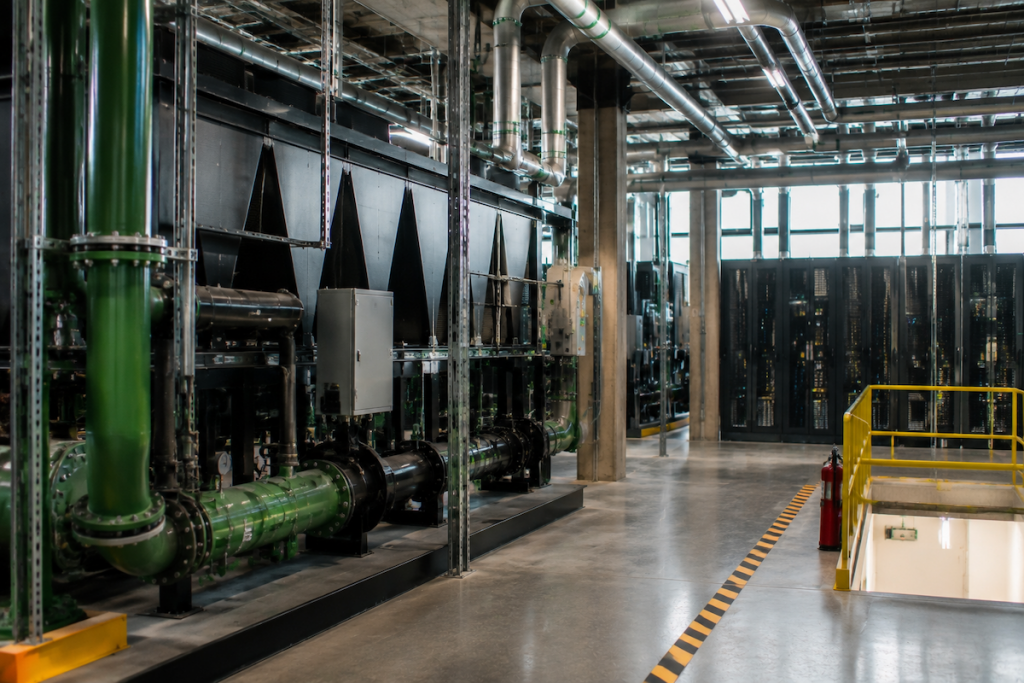
Wholesale operators serving cloud and large enterprise customers work across powered shells, turnkey delivery, phased capacity, and continuous operations. Supplier access changes as land, power, design, construction, commissioning, and operating responsibility progress.
CyrusOne, with a workforce near 1,200, currently lists multiple data centers in Sterling, from NVA1 through NVA9. Its concentration in one Northern Virginia submarket creates research value for repeatable power, cooling, controls, commissioning, and operational-service packages. Sales teams should determine whether a requirement follows a corporate standard or allows building-level variation; describing every site simply as “Ashburn” would hide the actual delivery location.
QTS, operating with around 2,500 employees, retains an active Ashburn facility and remains a valid wholesale-platform example. Its former Prince William Digital Gateway plan is no longer a current expansion signal after the 2026 project withdrawal. Local research should therefore separate Ashburn operations from any newly named and independently verified development. Maintenance and facility services fit an operating-site path, while project equipment requires a live permit, contractor, and delivery schedule.
STACK Infrastructure, at a scale of around 800 employees, lists active or planned Northern Virginia campuses in Sterling, Manassas, Leesburg, Stafford, and Arcola. The portfolio points suppliers toward medium-voltage systems, cooling architecture, commissioning, security, and scalable controls. Each location has a different status and power timeline, making the named campus more important than a statewide development announcement.
Sabey Data Centers employs around 500 people and operates two completed buildings at its Ashburn campus. A third building remains under development, with initial capacity still targeted for 2026 but no confirmed operating date as of July 17, 2026. The mix of operating infrastructure and final-phase delivery supports separate research paths for maintenance, remote hands, power and cooling systems, commissioning, and high-density deployments. The relevant building stage should drive contact selection.
Expansion signals are useful only when tied to a named site and stage. Planning approval, construction, equipment installation, commissioning, and steady operations point to different roles and supplier categories.
Development Platforms: Site Delivery Comes Before Operations

Some companies in the regional ecosystem develop campuses without necessarily controlling long-term operations at every completed building. Their buying influence is strongest in land, utility coordination, design, construction, financing, and tenant delivery. Sales teams should identify who will own and operate the finished facility before treating a developer as an operations prospect.
CloudHQ, with a workforce of about 300, develops and operates large-scale infrastructure across Ashburn and Manassas. Its current portfolio includes operating capacity, buildings under construction, and later phases. High-voltage power, cooling plants, controls, water systems, security, and commissioning are plausible research areas, but the active building and tenant influence must be established first. CloudHQ, an engineering firm, a contractor, and a tenant may each control different specifications.
Yondr Group employs roughly 400 people and operates a two-building hyperscale development in Loudoun County. Its first 48 MW building received initial power in 2023 and became operational in 2024. The second building delivered its first 12 MW ready-for-service tranche in December 2025, while the remaining capacity was still targeted for 2026 as of July 17, 2026. This split status helps separate live-site services from commissioning and later-phase delivery. Project directors and construction procurement matter before handover; facility leadership gains influence as each tranche enters service.
PowerHouse Data Centers, with a research-based workforce near 150, is an active development platform rather than a conventional multi-tenant operator. Its Northern Virginia work includes Ashburn and Arcola projects, including a 2026 hyperscale lease at PowerHouse Arcola. Supplier research should focus on the named development, tenant requirements, design responsibility, construction partner, and handover structure. Long-term maintenance outreach is premature until the operating party is confirmed.
Corscale, operating with a research-based employee estimate near 200, is a hyperscale developer affiliated with Patrinely and Affinius Capital. At Gainesville Crossing, the first building delivered 36 MW of network-ready capacity to its tenant in 2025. Buildings 2 and 3 had entered construction, and the third structurally topped out in 2025; later phases still require building-level power and operating-status verification. The company fits project-delivery research around power, cooling, sustainability, controls, commissioning, and contractor coordination. Sales teams should verify whether Corscale, the tenant, or another party controls operations after completion.
PointOne Data Centers has a directional workforce figure of roughly 100 employees and is currently relevant to Northern Virginia through the Remington Technology Park development in Fauquier County. Its official portfolio does not support describing Ashburn and Sterling as current PointOne operating facilities. The 234-acre Remington campus is designed for up to 304 MW of critical IT capacity, with longer-term utility expansion potential. A July 2026 rezoning amendment approved the on-site fuel-cell equipment yard and marked a construction milestone, while the wider campus remained in final development. This is a development-stage target for power, site infrastructure, construction, and commissioning suppliers, not an established operations prospect.
Development platforms can provide earlier access to project formation, accompanied by greater schedule and ownership uncertainty. The project should be qualified before the company enters an outreach sequence.
Build the First Prospect List Around the System You Sell
For power-equipment suppliers, expansion-led and development-stage companies provide a practical starting pool for research. Before prioritization, verify the design phase, approved manufacturers, utility schedule, contractor responsibility, and tenant standards. CloudHQ, STACK, PowerHouse, Corscale, and PointOne illustrate different project stages rather than confirmed purchasing activity.
A useful starting comparison for cooling, water-treatment, and controls suppliers is cloud campuses versus large wholesale operators. Workload density, cooling architecture, water strategy, retrofit scope, and building status determine whether the stronger route runs through engineering, sustainability, construction, or critical facilities.
For rack, cabling, fiber, and interconnection providers, Equinix, CoreSite, DataBank, and H5 offer relevant operating models to research because tenant environments, cross-connect activity, installation rules, and secure site access shape the offer. Fire protection, physical security, maintenance, testing, and field-service research fits operating facilities or buildings approaching service, with local response requirements and authority confirmed before outreach.
The largest names are strategic targets, but they are rarely the easiest starting point. Technical evidence, delivery capacity, certifications, and tolerance for a long qualification cycle should determine the first list.
Verify the Facility Before Contacting the Role

Start with a building-level research record: address, county, operating status, owner, operator, tenant model, project phase, and delivery partner. A regional office does not prove facility purchasing authority, and a planned capacity figure does not show that equipment selection is underway.
Next, trace specification influence. Global engineering may control hardware standards; a regional facility manager may own maintenance execution; a developer may select the design team; a contractor may manage bids; and a hyperscale tenant may impose approved products. Relevant roles include data center engineering, critical facilities, construction, capacity planning, sustainability, physical security, procurement, and regional operations.
Finally, document a defensible timing signal. Planning filings, permits, construction awards, equipment installation, commissioning milestones, new-building openings, and operations hiring each indicate a different stage. The outreach message should reflect that evidence and the supplier's exact use case without presenting the signal as confirmed demand.
Turning the Market Map Into a Futern Workflow
Futern helps sales teams move from a broad search for Northern Virginia data center operators to company groups organized by operating model and project stage. Researchers use company-size and location enrichment to separate headquarters, regional offices, operating facilities, construction sites, and planned campuses.
Website and LinkedIn review helps confirm local relevance and identify engineering, operations, development, construction, or procurement roles. Cooling suppliers narrow their research to high-density and expansion-oriented facilities. Maintenance providers prioritize operating campuses within their service radius. Power-equipment manufacturers track development stages where specifications are still forming.
Futern provides the research structure; sales teams still need to validate facility facts, supplier requirements, and decision authority before contact. The result is a focused prospecting workflow built around supplier fit rather than a mixed company directory.
Conclusion
Northern Virginia offers supplier opportunity across mature interconnection hubs, global cloud campuses, repeatable wholesale environments, and development corridors. Those environments follow different specification, construction, and operating paths.
A defensible first prospect list prioritizes companies whose facility stage, infrastructure model, local authority, and decision path match the supplier's technical evidence and delivery capacity. Grouping the market by supplier path makes those differences visible and gives sales teams a clear reason to prioritize each company.
Automotive Parts Manufacturers in Michigan: Five Supplier Gates
Southern California Handbag Manufacturers: A B2B Supplier Guide
Clothing Manufacturers NYC: How B2B Suppliers Should Read the Market