Houston Petrochemical Plants: A Supplier Research Guide
by Yu T
Research 20 Houston-area operators by process risk, supplier fit, purchase route, and site role.
The Office of the Texas Governor identifies Texas as home to the nation's largest petrochemical cluster and Houston as its main employment center. The Antwerp-Waasland Chamber ranks Antwerp second after Houston. Because global comparisons use different boundaries, this guide describes Houston petrochemical plants as the largest U.S. concentration of manufacturing capacity within one of the world's largest clusters.
That scale does not produce one uniform market. A steam cracker, chlor-alkali unit, specialty polymer plant, natural gas liquids (NGL) fractionator, and industrial-gas network expose suppliers to different failure costs, qualification evidence, purchasing routes, and decision makers. A strong prospect list therefore starts with production risk: uptime, corrosion, process safety, turnaround execution, environmental control, or utility reliability.
Research information and company estimates were reviewed on August 20, 2026. The companies below are research examples selected for local relevance, facility role, scale, process, and possible supplier fit. Inclusion does not indicate confirmed demand or purchasing intent. Sales teams should verify current operations, ownership, project status, supplier requirements, and decision-maker roles before outreach.
Read the Houston Petrochemical Map by Facility Role
The core market follows the Houston Ship Channel through Baytown, Channelview, Deer Park, Pasadena, La Porte, and Bayport. Mont Belvieu in Chambers County supplies the cluster with NGL fractionation, storage, and pipeline infrastructure. These locations often combine plant-level maintenance authority, corporate category management, and engineering, procurement, and construction (EPC) contractors on capital projects.
Four examples sit in the extended Brazoria County ring: INEOS at Chocolate Bayou and Dow, BASF, and Shintech at Freeport. Brazoria belongs to the Houston metropolitan area and shares its contractor, pipeline, port, and turnaround labor systems. This guide excludes Port Arthur, Port Neches, Orange County, and other distinct Gulf Coast submarkets, and separates refineries unless integrated with chemical production.
The following six operating lenses show how production conditions change supplier qualification. Each company appears under one primary lens even when several risks apply.
Continuous Uptime Shapes the First Qualification Test
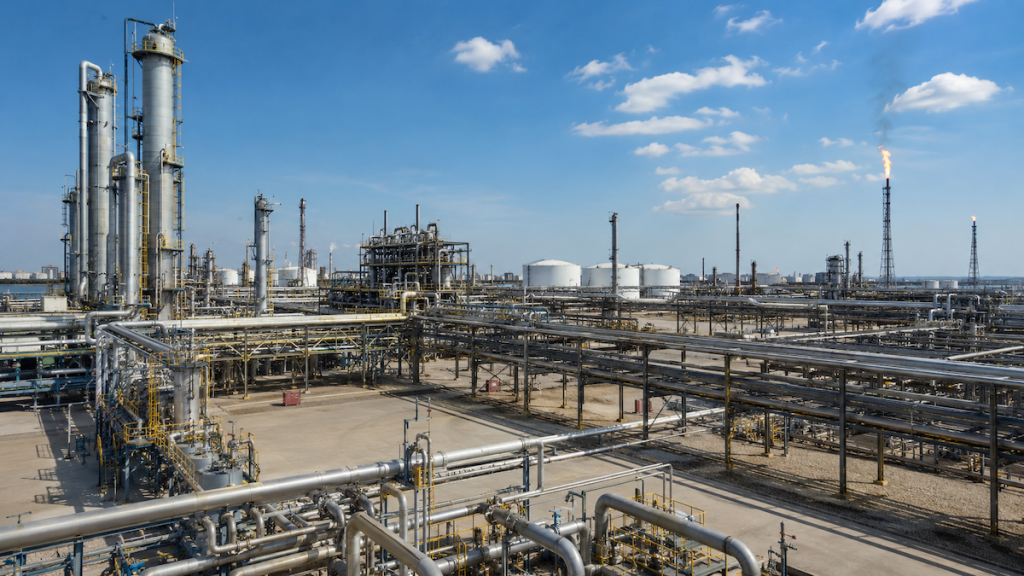
Olefins and polymer units run continuously, so an unplanned trip may disrupt downstream production, create flaring, and delay deliveries. Reliability suppliers need evidence tied to equipment performance, inspection quality, spare-parts availability, or restart discipline. Maintenance and reliability teams usually shape technical approval, while category buyers and project groups control larger commercial awards.
ExxonMobil – Baytown Complex
ExxonMobil's 3,400-acre Baytown operation spans refining, olefins, chemicals, plastics, and technology facilities, with an area workforce of roughly 7,000. Its integration makes interfaces between fired equipment, rotating assets, instrumentation, and downstream units especially important. A credible opening leads with one reliability outcome and distinguishes routine plant maintenance, a turnaround, and an EPC-managed project.
LyondellBasell – Channelview and La Porte
LyondellBasell's Channelview complex covers about 4,000 acres and supports roughly 2,000 employees and contractors. Its North and South operations connect olefins with propylene oxide, styrene, and derivatives, while La Porte adds acetyls and polymers. The operating sites remain active, although the separate Houston refinery stopped refining in 2025. Prospects should identify the exact plant and avoid contacts tied to the closed refinery.
Chevron Phillips Chemical – Cedar Bayou and Pasadena
The 2025 Cedar Bayou fact sheet lists 1,142 employees and 2,160 onsite contractors across a large olefins and polymers operation. Pasadena adds a 650-acre polyethylene complex with about 500 employees and contractors. Pumps, exchangers, analyzers, polymer-handling systems, and inspection services fit different workflows, so sales teams should separate unit-level technical influence from company-wide sourcing and contractor qualification.
INEOS – Chocolate Bayou Works
Chocolate Bayou covers roughly 2,400 acres and reports annual output of 3,293 kilotons across two crackers, polypropylene lines, and linear alpha olefin (LAO) and polyalphaolefin (PAO) plants. About 500 miles of connected pipelines add another integrity layer. The strongest opening depends on the affected system: cracker reliability, polymer production, specialty-fluid processing, pipeline maintenance, or turnaround execution. Site engineering and maintenance often define the problem while INEOS procurement controls onboarding.
Across these facilities, company size alone says little about entry difficulty. A narrower proposal backed by mean-time-between-failure data, service response, compatible materials, and Gulf Coast references gives reliability teams more to evaluate.
Corrosive Service Changes the Required Evidence

Chlorine, caustic, vinyl chloride, acetic acid, and wet chloride service place unusual pressure on metallurgy, linings, seals, piping, and inspection methods. Suppliers need chemical-compatibility evidence, traceable materials, documented service limits, and a credible maintenance plan. Technical approval often begins with materials, mechanical-integrity, process, or reliability engineers before procurement discusses price.
OxyChem – Houston-Area Vinyls Operations
OxyChem's Houston-area vinyls and chlor-alkali network spans five plants: Deer Park polyvinyl chloride (PVC), Deer Park vinyl chloride monomer (VCM), Battleground, La Porte VCM, and Pasadena PVC. A 2022 City of Deer Park profile reported capacity of about 550 million pounds of PVC per year at Deer Park. Berkshire Hathaway completed its acquisition of OxyChem on January 2, 2026. Supplier records need to reflect the new ownership and test whether approved-vendor or capital-project routes changed after closing.
Celanese – Clear Lake
Celanese operates a highly integrated acetyls complex at Clear Lake. Its Fairway Methanol joint venture has nameplate capacity of 1.62 million metric tons per year, and a new 1.3-million-ton acetic acid unit started in 2024. Corrosion-resistant equipment, catalysts, inspection, and carbon-reuse systems require different technical sponsors. The next qualification step is establishing whether Celanese, Fairway Methanol, or a project contractor controls the purchase.
Shintech – Freeport
Shintech's Freeport site contains three PVC plants plus compounding and packaging operations; industry estimates place resin capacity near 1.45 million metric tons annually. Corrosive-service components, water treatment, packaging systems, and maintenance support each follow a different qualification route. Feedstock contracts and major capital decisions may involve Shin-Etsu oversight, while daily maintenance, repair, and operations (MRO) and outage work usually require site-specific contacts and safety approval.
Qualification turns on proof of performance under the target unit's chemical, temperature, pressure, and upset conditions.
Hazardous Chemistry Raises the Contractor Threshold
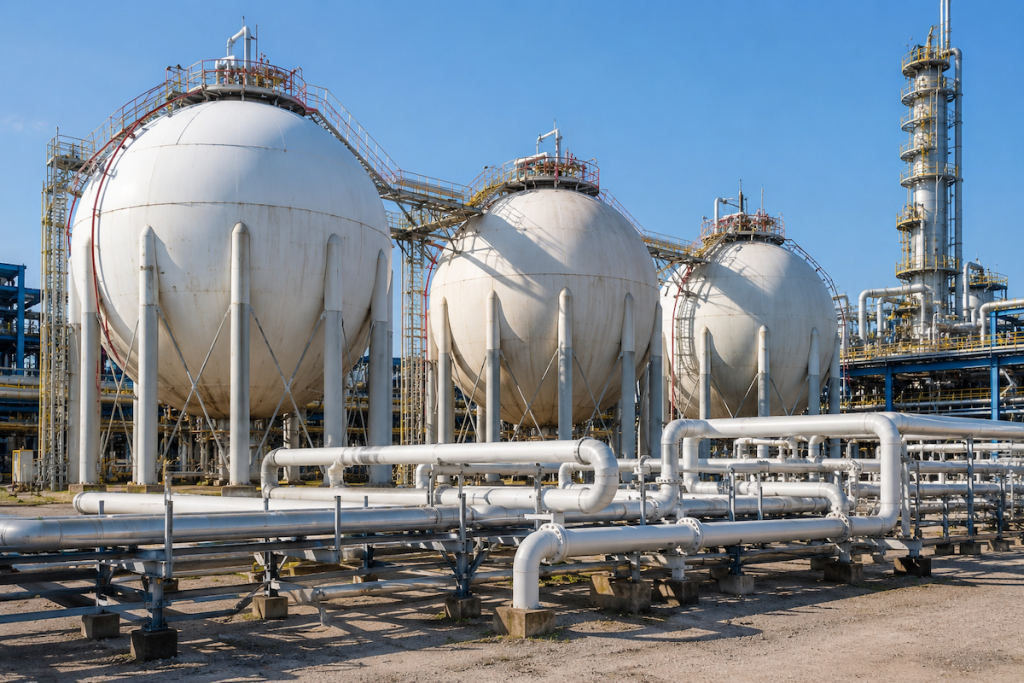
Facilities handling reactive monomers, isocyanate chemistry, high-pressure ethylene, or sulfur-based intermediates operate under Occupational Safety and Health Administration (OSHA) Process Safety Management requirements and, where applicable, U.S. Environmental Protection Agency (EPA) Risk Management Program (RMP) rules. EPA proposed changes to portions of its 2024 RMP final rule on February 24, 2026; as of the research date, the proposal was not final. Contractor safety history, management-of-change discipline, relief-system knowledge, and site training often matter before commercial terms.
Covestro – Baytown
Covestro's 1,700-acre Baytown site employs more than 1,000 people and produces methylene diphenyl diisocyanate (MDI), polycarbonates, polyurethanes, and related intermediates. XRG closed the transaction on December 10, 2025; the ADNOC group then controlled 95.1% of Covestro shares. Supplier angles center on hazardous-service valves and seals, process controls, mechanical integrity, and emissions monitoring. Regional procurement authority remains a verification point; the abandoned MDI expansion is inactive.
TPC Group – Houston Operations
TPC's 256-acre Houston plant processes crude four-carbon (C4) streams and reports more than 1.5 billion pounds of combined annual capacity, with roughly 300 employees and 125 contractors. On August 7, 2026, it announced a definitive ENEOS acquisition agreement; the companies expect approvals in October and remain separate until closing. Until then, prospect records need a transaction-status field and a named purchasing authority.
Kuraray America – Pasadena EVAL
Kuraray's Pasadena EVAL operation runs four production lines; a March 2026 Kuraray update places current ethylene vinyl alcohol (EVOH) resin capacity at 58,000 metric tons per year. Its December 2025 ISCC PLUS certification provides a recent operating signal. Relief systems, polymerization equipment, turnaround controls, and traceable feedstocks offer distinct research angles. Process safety, plant engineering, supply chain, and the EVAL business unit influence different approval stages.
Lubrizol – Deer Park
Lubrizol's 336-acre Deer Park additives site operates around the clock with more than 600 employees. Current 2026 recruiting for reliability and process-safety roles further supports its operating status. Specialty feedstocks, blending systems, leak detection and repair (LDAR) services, rail logistics, and maintenance support should be tied to a named process. The useful starting roles include reliability, process safety, environmental, plant operations, and category management.
Here, a polished product pitch carries less weight than evidence of safe execution in comparable hazardous service.
Turnarounds Separate Site Execution from Corporate Sourcing
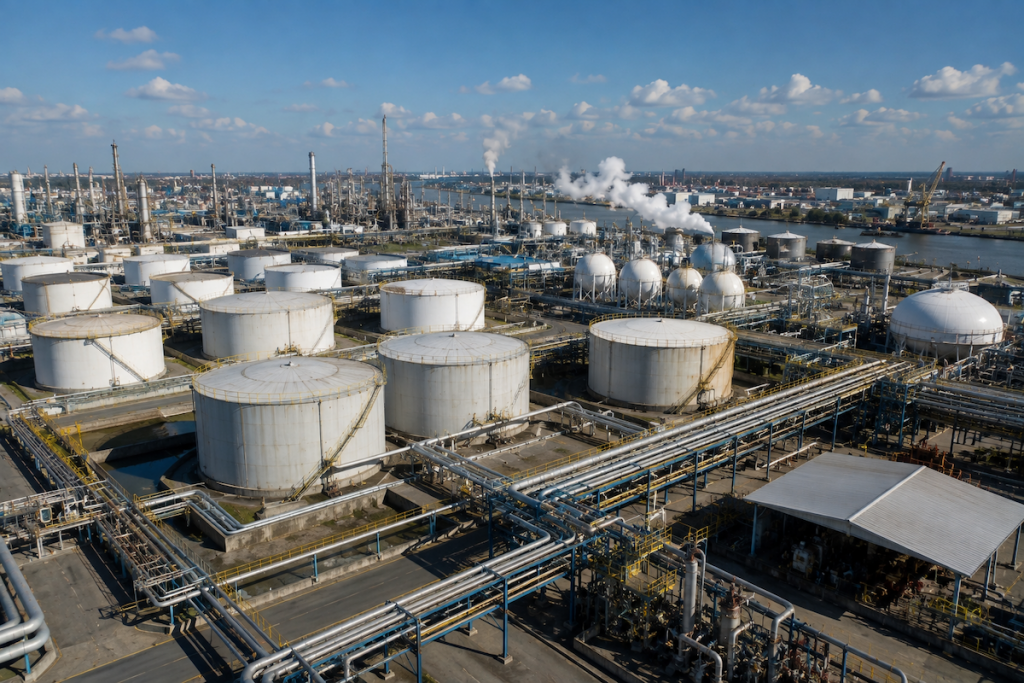
Turnarounds concentrate labor, equipment, permits, inspection, and logistics into a short outage window. Scaffold, insulation, cleaning, nondestructive testing (NDT), exchanger, valve, welding, crane, and waste-service providers need early qualification and realistic Gulf Coast staffing plans. Site teams manage execution, while corporate agreements or EPC packages may determine who is eligible to bid.
Shell – Deer Park Chemicals
Shell continues to own and operate Deer Park Chemicals as a standalone 24-hour operation; Pemex has owned the adjacent refinery since January 2022. Shell's 2025 turnaround involved around 700 contractors, illustrating the labor and onboarding scale behind a major outage. Qualification begins by confirming the contracting entity, chemical-unit scope, and current ownership instead of treating the entire Deer Park property as one Shell complex.
Dow – Texas Operations
Dow's Freeport operation spans 7,000 acres and is the company's largest integrated site. Its many interconnected production areas make outage sequencing, contractor capacity, inspection, water, and materials movement central concerns. Recurring MRO, scheduled turnaround packages, and capital work follow different purchasing routes. Dow's corporate procurement organization may govern category agreements, while Texas Operations teams define local execution standards and unit-specific performance needs.
BASF – Freeport
A BASF fact sheet using year-end 2024 data reported more than 980 employees, over 500 contractors, and 27 plants at the Freeport Verbund site. Shared utilities and linked value chains raise the cost of poor outage coordination. A supplier serving one unit still needs to understand site-wide entry rules, mechanical-integrity expectations, and service-contract administration. Plant maintenance and turnaround leaders shape execution; North American procurement influences broader agreements.
Turnaround timing is rarely a reliable public signal. Calendars require direct qualification, ideally before scopes, labor plans, and frame agreements are fixed.
Environmental Control Creates a Separate Buying Logic
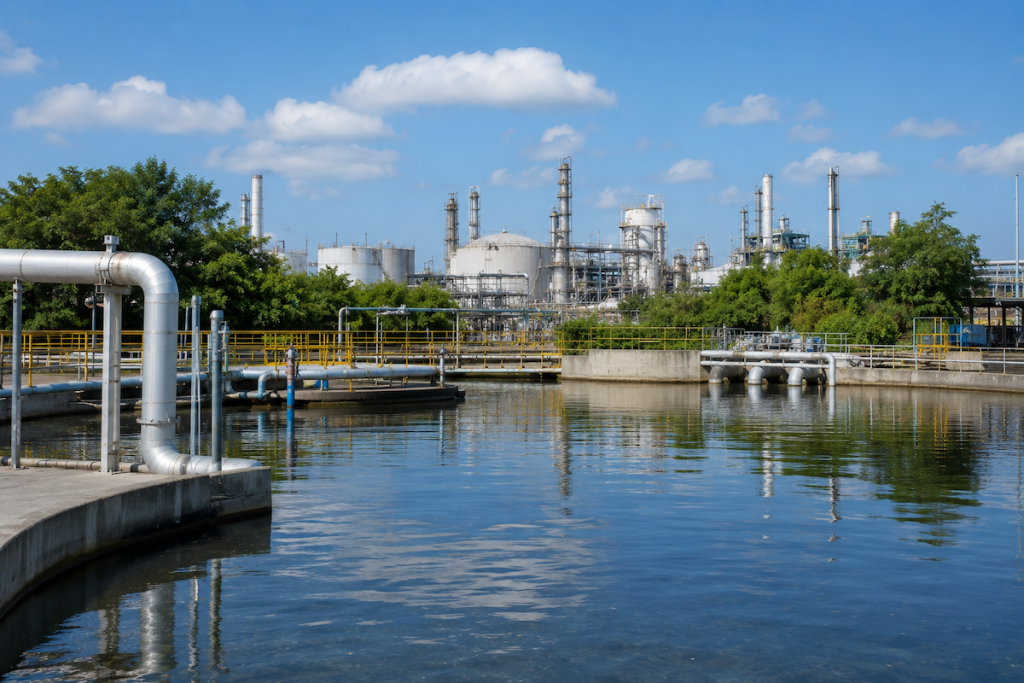
Title V operating permits, Texas Commission on Environmental Quality (TCEQ) New Source Review permits, wastewater requirements, hazardous-waste rules, and leak-detection programs influence both recurring services and capital controls. EPA's Toxics Release Inventory (TRI) and Greenhouse Gas Reporting Program are reporting systems, so their data should guide research without being described as site permits. Environmental suppliers need permit-level knowledge and a clear boundary between monitoring, reporting, engineering, and equipment work.
Indorama Ventures – Clear Lake
Indorama Ventures' Clear Lake site historically housed an integrated ethylene oxide and monoethylene glycol operation. At its 2012 acquisition, IVL disclosed about 435,000 metric tons per year of ethylene oxide design capacity, a historical nameplate figure rather than current output. IVL began a strategic review of its U.S. Integrated EO/EG business in August 2025. Its Q2 2026 disclosures indicate that the Clear Lake MEG assets were idle while management continued to assess reliability, operating economics, and strategic options. TCEQ records dated July 28, 2026 show continuing permitting activity at the site, but that does not establish that the MEG unit is producing. Sales teams should verify each unit's status and distinguish routine site-management requirements from possible production, restart, divestiture, or decommissioning work.
Arkema – Clear Lake
Arkema's Clear Lake site employs about 146 people and has acrylic acid capacity of roughly 270,000 metric tons per year. Its process profile points toward emissions control, mechanical integrity, water systems, feedstocks, and maintenance services. The separate Crosby location has only seven employees and functions as an organic-peroxide logistics depot, so it should not be presented as the current production plant behind the Clear Lake opportunity.
Kaneka North America – Pasadena
Kaneka's Pasadena site contains four manufacturing platforms: impact modifiers, polyimide film, chlorinated polyvinyl chloride (CPVC) resin, and MS Polymer. A Shimizu profile documents a 25,161-square-foot manufacturing facility completed in August 2008; it represents one project, not the current site total. Distinct chemistries make air, wastewater, material handling, and permit ownership unit-specific. Kaneka North America LLC is the current operator; Kaneka Texas Corporation is historical. Keep adjacent Kaneka Nutrients and its purchasing path separate.
These companies illustrate why environmental outreach works best when it names the regulated process, affected permit or control system, and operational owner.
Feedstock and Industrial Gases Sit Outside the Battery Limits
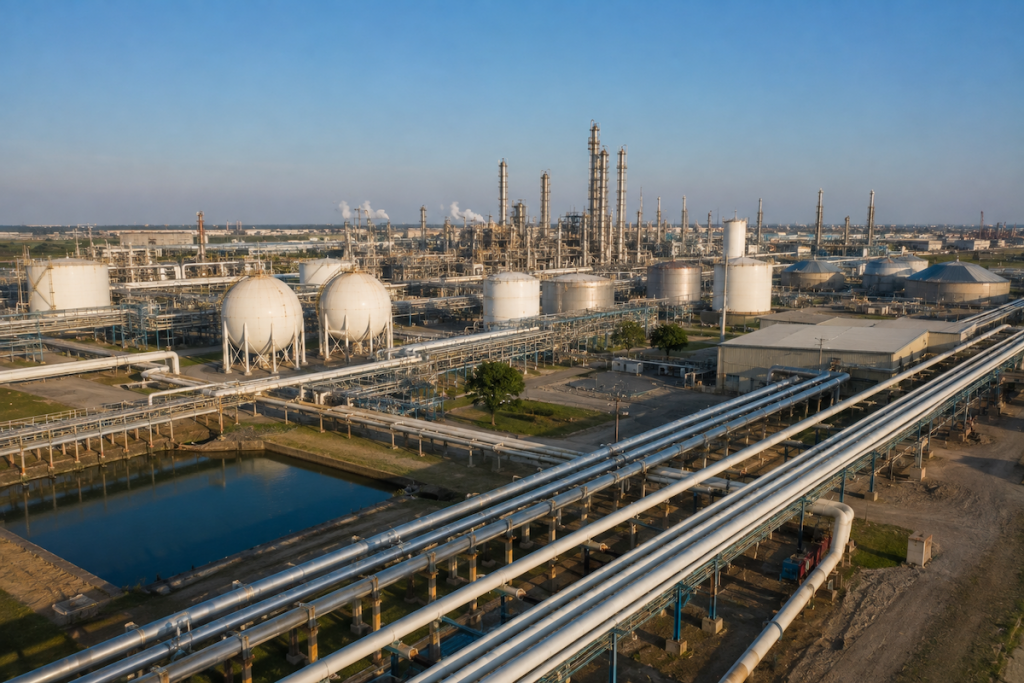
Petrochemical uptime also depends on NGL fractionation, salt-cavern storage, hydrogen, oxygen, nitrogen, steam, power, and pipelines. These operators support the cluster rather than manufacture the same downstream products. Their buying logic emphasizes supply reliability, compression, cryogenic equipment, pipeline integrity, measurement, and long-term service agreements.
Enterprise Products – Mont Belvieu
Enterprise's 2025 annual filing lists 1.335 million barrels per day of total nameplate fractionation capacity in the Mont Belvieu area and about 170 million barrels of underground storage. Frac 14 entered service in the fourth quarter of 2025. Compression, analyzers, rotating equipment, pipeline integrity, and modular capital work typically involve centralized supply chain teams, site maintenance, or EPC partners according to scope.
Air Liquide – La Porte and Bayport
Air Liquide commissioned its La Porte complex in 2011; a 2021 company profile listed capacity of up to 125 million cubic feet of hydrogen per day. A 2016 Bayport redevelopment disclosed 300 megawatts of cogeneration capacity and air-separation infrastructure. The $50 million Gulf Coast network investment announced in October 2025 is a current project signal, not evidence of open demand. Separate plant MRO, pipeline, electrical, compression, and long-term gas-supply routes.
Linde – La Porte and the Gulf Coast Network
Linde's 2021 Gulf Coast expansion release placed total regional hydrogen production capacity at about 1.5 billion cubic feet per day across an approximately 600-kilometer pipeline. Its La Porte assets also connect to oxygen and nitrogen networks serving the Ship Channel and Freeport. Cryogenic equipment, analyzers, compressors, pipeline integrity, and purification media follow demanding technical qualification. Regional engineering and category teams often carry more influence than a single plant contact.
Infrastructure companies therefore belong in a separate prospect group, with messages built around network reliability rather than downstream polymer output.
Match the Offer to the Purchase Route
Routine consumables and urgent repairs often begin with plant maintenance, reliability, storeroom, or local purchasing teams. A corrosion-resistant valve still needs technical acceptance from materials or process engineering. Environmental equipment typically requires an environmental, health, and safety (EHS) sponsor and permit review. Corporate category managers usually influence multi-site agreements, strategic raw materials, and larger service contracts.
Capital projects introduce another route. The plant defines the operating need, corporate teams approve investment and standards, and an EPC contractor may issue the actual package. Turnarounds create a fourth route, where schedules, craft capacity, safety records, and prequalified contractor lists matter months before fieldwork begins. Before selecting a contact, identify who specifies, who approves, who contracts, and who will use the offer.
The first prospect list should reflect the supplier's proof. A seal manufacturer with chlorine references might start with OxyChem or Shintech. An NDT provider with large-outage crews has a clearer reason to study Dow, BASF, or Shell. Pipeline-integrity specialists should prioritize Enterprise, Air Liquide, and Linde. A process-safety consultancy may find stronger alignment at Covestro, TPC, Kuraray, or Lubrizol.
What Sales Teams Must Verify Before Outreach
Confirm the legal operator, site, active process, ownership, and purchasing route. Classify the location as a plant, refinery, terminal, depot, headquarters, or project office, then distinguish MRO, consumables, capital work, and turnarounds. Date every incident or enforcement claim. Keep American Petroleum Institute (API), American Society of Mechanical Engineers (ASME), and Association for Materials Protection and Performance (AMPP) standards distinct from OSHA, EPA, and TCEQ rules. Finally, identify one operational problem and the role equipped to judge it.
Turn Houston Research Into a Futern Workflow
Futern helps sales teams organize this market by operating risk, process, facility role, ownership, and scale. Teams enrich company records, review current websites and LinkedIn profiles, check local relevance, identify likely maintenance, reliability, engineering, EHS, procurement, and project roles, and shape outreach around a specific use case.
The workflow starts with a supplier hypothesis, then narrows the company group, verifies the facility and purchase route, and maps technical and commercial influence. Futern supports the research and organization; final qualification still depends on current facility evidence and direct confirmation.
Conclusion
Houston's petrochemical market becomes more actionable when companies are grouped by operating risk. Suppliers that connect their proof to uptime, corrosion, process safety, turnaround execution, environmental control, or utility reliability gain a clearer shortlist and a more credible reason for outreach.
Data Enrichment for Sales Teams: What It Adds and Why It Matters
Houston Specialty Chemical Market: Buyer Segments Worth Researching