Restaurant Packaging Supplies in Greater Los Angeles: 8 Buyer Groups for B2B Sales Teams
by Yu T
Explore 8 Greater LA buyer groups for restaurant packaging supplies, with examples and sales notes.
Introduction
Greater Los Angeles is a practical market for restaurant packaging suppliers because foodservice demand is spread across many formats, from fast-casual restaurants and coffee shops to catering companies, ghost kitchens, campus dining programs, and prepared meal brands.
In this article, Greater Los Angeles mainly refers to Los Angeles County and nearby connected foodservice markets, including areas such as Pasadena, Long Beach, the South Bay, and selected nearby markets such as parts of Orange County or the Inland Empire when they are directly relevant to the foodservice opportunity. This broader view is useful for B2B sales teams because many foodservice operators do not fit neatly within the City of Los Angeles alone.
For suppliers, the opportunity is not limited to traditional restaurants. Relevant products may include bowls, lids, paper bags, hot cups, cold cups, sleeves, clamshells, sandwich boxes, trays, labels, tamper-evident seals, cutlery, catering platters, insulated packaging, and compostable foodware.
Local regulation also matters. Los Angeles County has adopted rules requiring many food facilities in unincorporated areas to use foodware that is recyclable, compostable, or reusable. In covered areas, full-service restaurants may also be expected to use reusable food service ware for dine-in service. These requirements can encourage restaurants and foodservice operators to review their packaging suppliers and look for compliant alternatives to conventional single-use plastic or foam packaging.
The companies mentioned below are not confirmed buyers. They are included as examples of businesses whose operating models may create relevant packaging needs based on public company information, scale, foodservice format, and likely packaging use cases.
How to Read the Greater Los Angeles Foodservice Map
Greater Los Angeles is not one single restaurant market. Central Los Angeles, Hollywood, West Hollywood, Downtown LA, and Koreatown tend to be stronger for high-density restaurants, nightlife venues, premium dining, delivery-first kitchens, and coffee shops. These areas often create demand for takeout bags, delivery-safe containers, beverage packaging, labels, and premium branded packaging.
Pasadena, Glendale, Burbank, Culver City, Santa Monica, Long Beach, and the South Bay are useful markets for cafes, fast-casual concepts, catering demand, local food brands, and prepared meal businesses. Packaging in these areas may need to support pickup, delivery, outdoor eating, corporate lunches, and recurring prepared meal orders.
Parts of Orange County and the Inland Empire should be treated as connected nearby markets rather than the core of Los Angeles. They can still matter when restaurant groups, caterers, or delivery-first brands operate across Southern California. This geographic view helps sales teams match packaging use cases to local foodservice patterns instead of treating Greater Los Angeles as one flat market.
Quick-Service and Fast-Casual Restaurant Groups
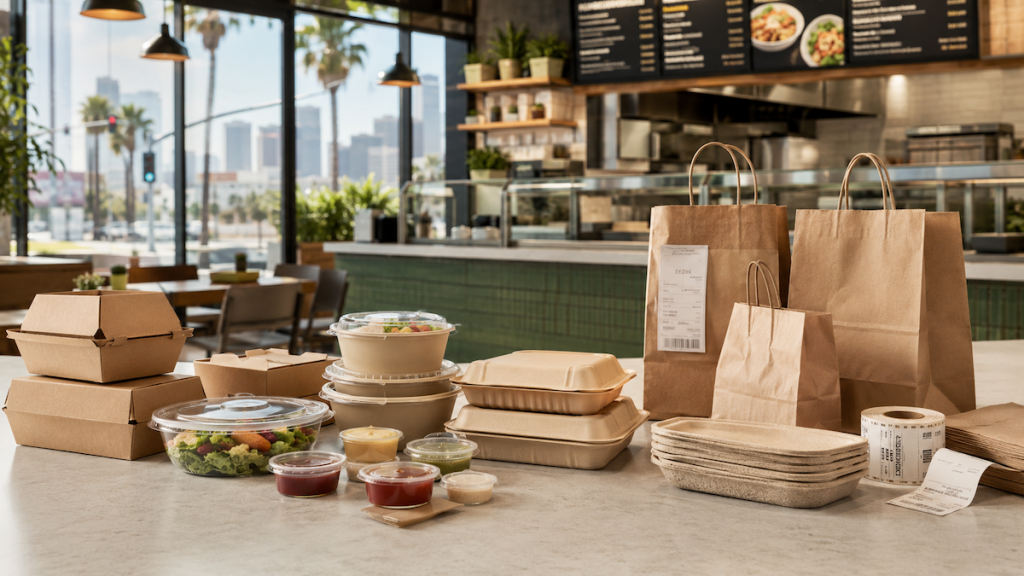
Quick-service and fast-casual restaurant groups are strong prospects because packaging is part of daily operations. These companies often need bowls, lids, paper bags, cups, cutlery, napkins, sauce cups, sandwich packaging, and delivery packaging.
Sweetgreen is one of the strongest local examples. The company is headquartered in Los Angeles and operates a large fast-casual salad and bowl chain with more than 200 restaurants and thousands of employees. Since its menu is built around salads, grain bowls, pickup, and delivery, Sweetgreen has a clear need for bowls, lids, bags, labels, and compostable packaging. For suppliers, relevant angles include multi-location consistency, sustainable materials, and packaging that works well for both pickup and delivery.
Mendocino Farms is another strong Greater Los Angeles example. Founded in Los Angeles, the company is a fast-casual sandwich and salad chain with more than 80 locations across several U.S. markets. Its lunch-focused menu, office catering, takeout orders, sandwiches, and salads create demand for sandwich boxes, salad bowls, branded bags, labels, and catering packaging. Because the brand is closely tied to higher-quality office lunches and fast-casual dining, packaging that protects freshness and presentation may be especially relevant.
Winchell’s Donut House is headquartered in City of Industry, within the Greater Los Angeles area, and has multiple LA-area locations. As a donut, coffee, and breakfast quick-service chain, it uses packaging that supports daily store operations: donut boxes, paper bags, hot cups, lids, sleeves, napkins, and breakfast packaging. This type of regional chain can be a good fit for suppliers that offer reliable replenishment and consistent product quality.
CAVA is not headquartered in Los Angeles, but it is still useful as a fast-casual example because of its local store presence and standardized operating model. Its bowls, pita wraps, salads, and digital ordering model create demand for consistent bowls, lids, wrap packaging, bags, and labels across locations. For suppliers, the main takeaway is that multi-location fast-casual brands often need packaging that works across dine-in, pickup, delivery, and catering.
Strong demand signals include new store openings, delivery growth, catering programs, sustainability messaging, and menu formats that depend heavily on takeout. The most relevant contacts are usually procurement managers, operations leaders, supply chain managers, and regional operations teams.
Ghost Kitchens and Delivery-First Food Operators
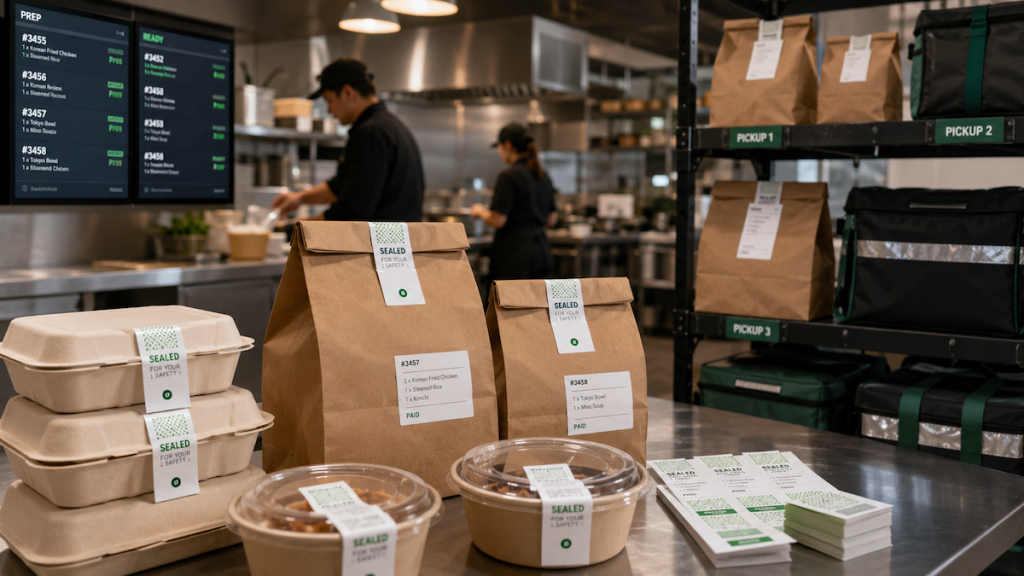
Ghost kitchens are built around delivery and pickup. In this segment, packaging is not just a container. It directly affects the customer’s experience after the food leaves the kitchen.
CloudKitchens is a relevant example in the Greater Los Angeles market. Its Los Angeles page reports 5 dark kitchen locations, 187 total dark kitchens, an average basket size of $32, and about 215,000 deliveries per week across its Los Angeles ghost kitchen locations. Restaurants operating through these kitchens may need bowls, boxes, bags, labels, tamper-evident seals, beverage carriers, and delivery-safe containers.
Goop Kitchen is another relevant delivery-first example. The brand started in Los Angeles as a pickup and delivery-focused food concept and has since expanded beyond Southern California. Recent coverage describes Goop Kitchen as operating multiple Los Angeles locations before expanding to markets such as New York and the Bay Area. Since its menu is built around prepared bowls, salads, wraps, and delivery-friendly meals, relevant packaging needs may include sealed bowls, lids, labels, delivery bags, tamper-evident packaging, and containers that protect presentation during transit.
The most practical outreach angle is reliability after handoff: leak-resistant containers, delivery-safe packaging, tamper-evident seals, standardized SKUs, fast replenishment, and packaging kits for virtual brands.
Food Trucks and Mobile Food Vendors
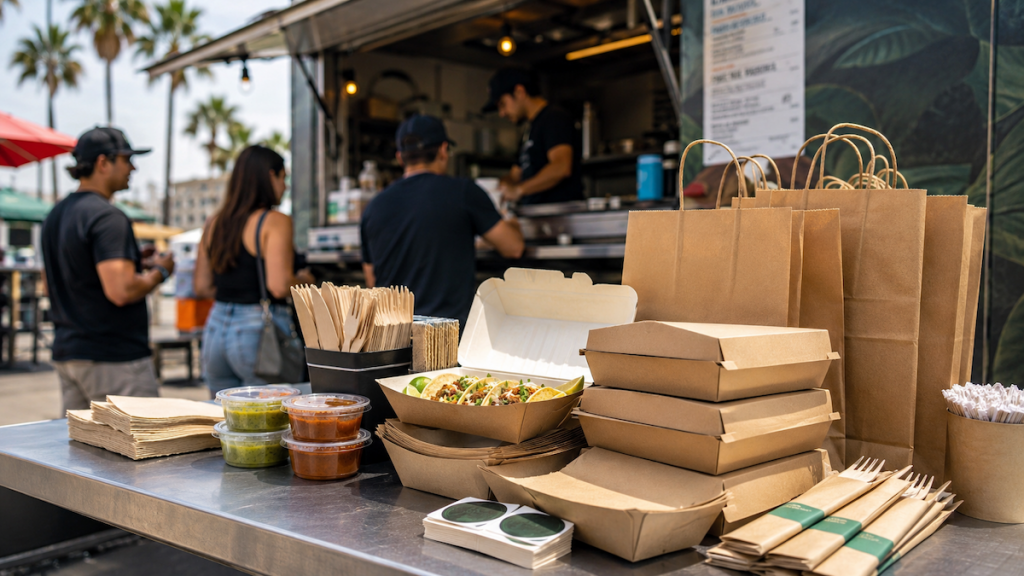
Food trucks and mobile vendors need packaging that is portable, durable, and fast to use. Customers often eat on the street, at an event, or shortly after pickup, so packaging has to work for handheld meals, sauces, fried items, and high-volume service windows.
Kogi BBQ is one of the most recognizable LA food truck examples. It started in Los Angeles and helped shape the city’s modern food truck culture with Korean-Mexican tacos, burritos, sliders, and catering. The business has expanded beyond trucks into catering, a bar, a taco stand, and rice bowl concepts. Packaging needs may include taco trays, wraps, paper boats, napkins, bags, stickers, and event catering packaging.
Mariscos Jalisco is a better fit for this article than a broader Southern California food truck example because it has clear Los Angeles locations and local recognition. Its official website lists locations including Boyle Heights, DTLA, La Cienega, and Pomona. Founded in 2002, the brand is known for crispy shrimp tacos, ceviche tostadas, and seafood cocktails. Seafood, sauces, and fried items all require packaging that is leak-resistant, grease-resistant, and easy to carry.
Suppliers can also use food truck associations, event calendars, and catering platforms to identify more mobile vendors across the LA market. These channels are not direct buyers in the same way as food truck operators, but they can help reveal recurring needs across multiple vendors, including compliant foodware, paper boats, cups, napkins, branded stickers, and compostable event packaging.
Packaging in this segment needs to be simple, fast, and event-ready. Relevant products include taco trays, paper boats, wraps, fry cups, dessert cups, drink cups, napkins, branded stickers, paper bags, and compostable event packaging.
Full-Service and Premium Restaurant Groups
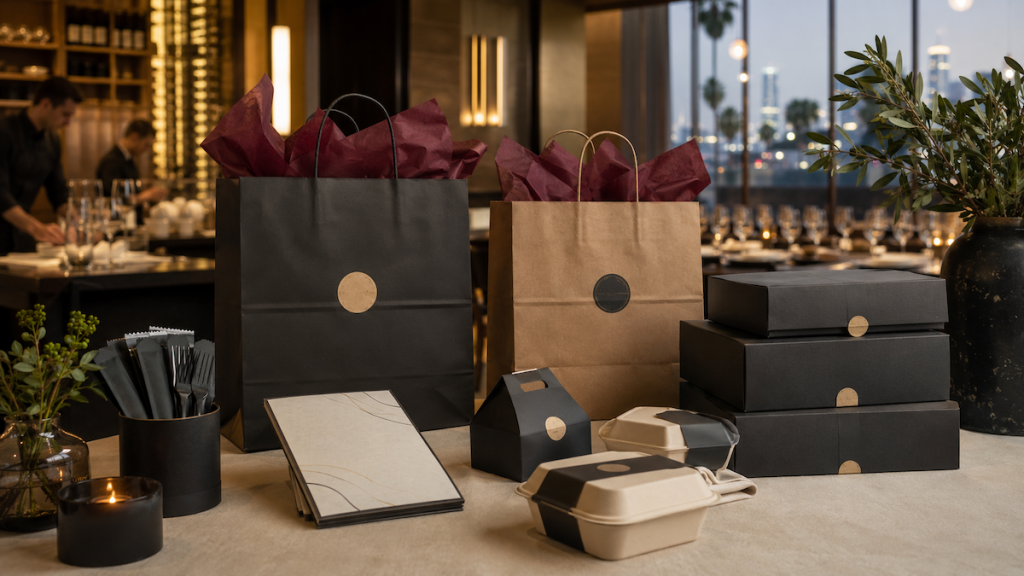
Full-service restaurant groups may not use packaging at the same volume as fast-casual chains, but takeout, leftovers, private dining, delivery, and catering still create demand. For premium restaurants, packaging also has to match the brand experience.
The h.wood Group is a Los Angeles-based restaurant and nightlife group. Its LinkedIn profile lists 501-1,000 employees and describes the company’s specialties as hospitality, event production, and entertainment. Because its venues are tied to premium dining, nightlife, celebrity culture, and private events, potential packaging needs may include premium bags, dessert boxes, custom packaging, private event materials, and branded takeout solutions.
Innovative Dining Group is headquartered in West Hollywood and operates restaurant concepts such as Sushi Roku, BOA Steakhouse, Katana, and Robata Bar. Its LinkedIn profile lists 1,001-5,000 employees. With concepts across sushi, steakhouse dining, and premium hospitality, the group may need high-quality takeout packaging, sushi trays, catering boxes, custom bags, and private dining packaging.
Hillstone Restaurant Group operates upscale restaurant brands including Houston’s, Hillstone, Honor Bar, R+D Kitchen, and South Beverly Grill. For a premium restaurant group, packaging is not only about function. It also needs to protect presentation and feel consistent with the dining experience. Relevant products may include premium takeout containers, dessert boxes, custom bags, reusable dine-in foodware, and private event packaging.
Outreach should be less about the lowest unit price and more about presentation, brand consistency, reliable fulfillment, dine-in compliance, and packaging quality.
Coffee Shops and Specialty Coffee Brands
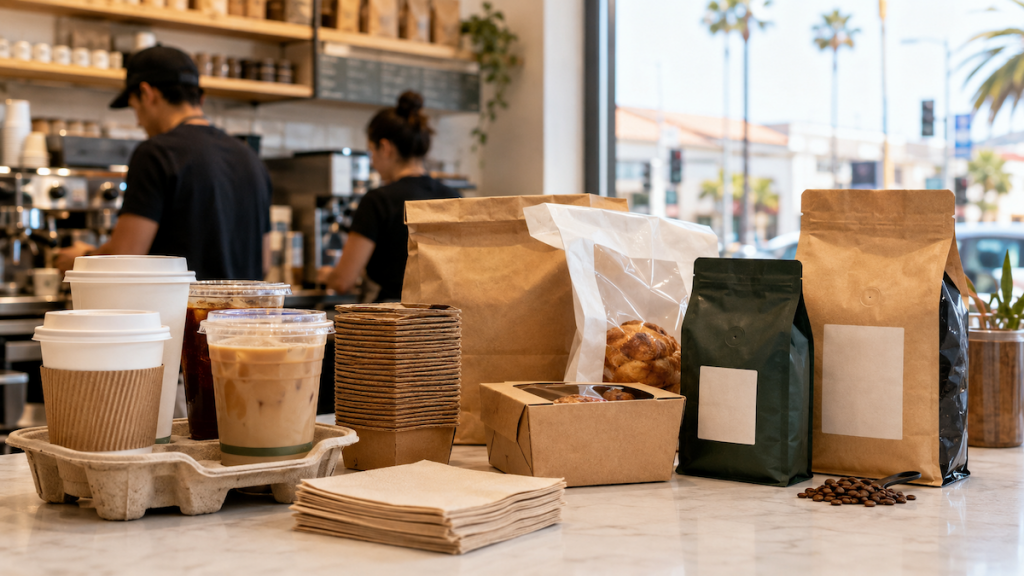
Coffee shops are steady packaging customers. Cups, lids, sleeves, pastry bags, napkins, and takeaway food packaging are used every day. Packaging is also highly visible: a cup, sleeve, or retail coffee bag can become part of the brand experience.
The Boy & The Bear is a Los Angeles-based specialty coffee roaster and cafe brand. Its LinkedIn profile lists 11-50 employees and says the company currently operates six cafes in Los Angeles, with eight projected by the end of 2026. Its business includes specialty coffee roasting, cafe drinks, retail beans, and subscription sales, creating demand for hot cups, cold cups, lids, sleeves, pastry bags, retail coffee bags, and shipping materials.
Go Get Em Tiger is an LA-based coffee retail and roasting company. Its LinkedIn profile lists 51-200 employees, 10 cafes, and a direct-to-consumer coffee subscription business. Its locations include Grand Central Market, Larchmont, Los Feliz, Highland Park, ROW DTLA, and Culver City. Packaging needs may include cups, lids, sleeves, food packaging, pastry bags, carryout bags, retail coffee bags, and subscription packaging.
Kumquat Coffee is a Los Angeles specialty coffee brand that started in Highland Park in 2018. Eater LA reported that the business later expanded to Cypress Park, Downtown Los Angeles, and Glassell Park, where it opened Quat, a cafe, roastery, retail space, and tasting room. For a specialty coffee brand like this, packaging needs go beyond cups. Retail coffee bags, labels, pastry packaging, and premium packaging for coffee products may all be relevant.
Philz Coffee is not a Los Angeles-based company, but its location page lists multiple Los Angeles-area stores, including Long Beach, Culver City, DTLA, Glendale, Hollywood, Los Feliz, Pasadena, Beverly Hills, and Studio City. It is best described as a Bay Area coffee chain with a strong LA-area footprint. High daily beverage volume creates demand for hot cups, cold cups, lids, sleeves, bags, and drink carriers.
Coffee brands are especially good prospects when they operate multiple cafes, sell retail beans, or run subscription programs. In those cases, packaging touches both daily service and brand experience, from cups and sleeves to retail coffee bags and shipping materials.
Catering and Event Foodservice Companies
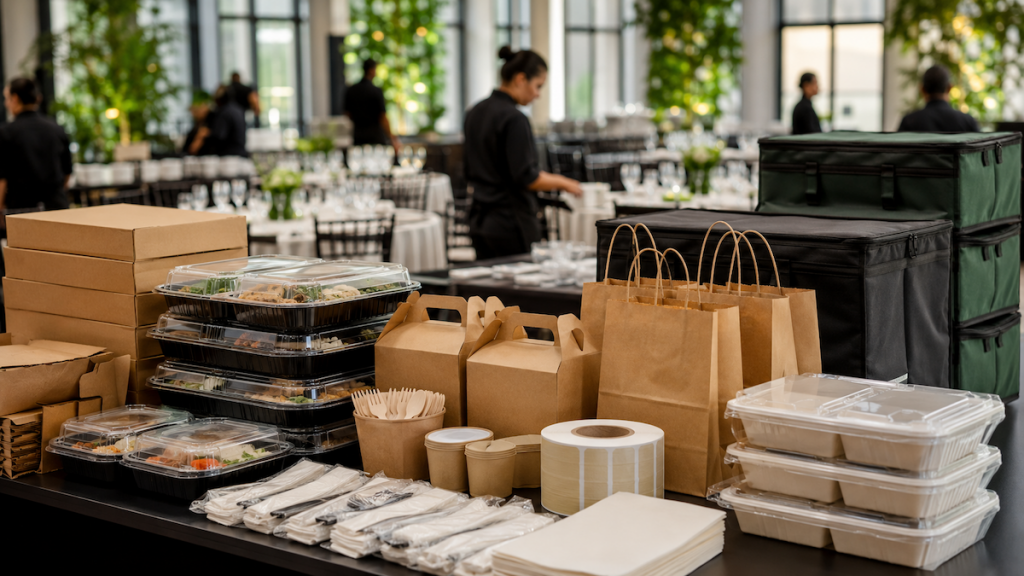
Catering companies often buy packaging for specific events, which can make demand more seasonal but also higher volume. They may need trays, platters, boxed lunch packaging, dessert boxes, insulated carriers, labels, and premium bags.
Wolfgang Puck Catering is headquartered in West Hollywood. Its LinkedIn profile lists 1,001-5,000 employees and describes its services as catering, corporate dining, weddings, foodservice, special events, and workplace services. Its Los Angeles operations cover corporate events, social gatherings, and large-scale occasions. Packaging needs may include high-quality trays, insulated carriers, presentation packaging, labels, event-specific packaging, and branded bags.
Patina Catering is strongly tied to Los Angeles event catering. Patina Group’s catering page mentions film premieres, sports championships, brand launches, weddings, and Los Angeles event catering. Combined with its broader scale of 5,001-10,000 employees and more than 30 brands and concepts, it is a relevant prospect for suppliers offering trays, premium boxes, dessert packaging, labels, custom bags, and large-event transport packaging.
Amy’s Culinary Adventures is a Los Angeles full-service catering company. Its website highlights Los Angeles weddings, party catering, corporate events, and business lunches, with about 20 years of local catering experience. Its packaging needs may include boxed meals, dessert boxes, trays, event labels, display packaging, and corporate event takeout packaging.
Marmalade Catering is based in the heart of Los Angeles. Its website highlights 30+ years of experience and more than 1,500 catered events. The company serves weddings, corporate functions, and special occasions, which may create demand for trays, dessert boxes, boxed lunch packaging, event catering packaging, and premium presentation materials.
Timing matters in catering. Event seasons, holiday orders, corporate meetings, weddings, venue partnerships, and entertainment industry events can all create short-term packaging demand that suppliers can plan around.
Institutional and Campus Foodservice
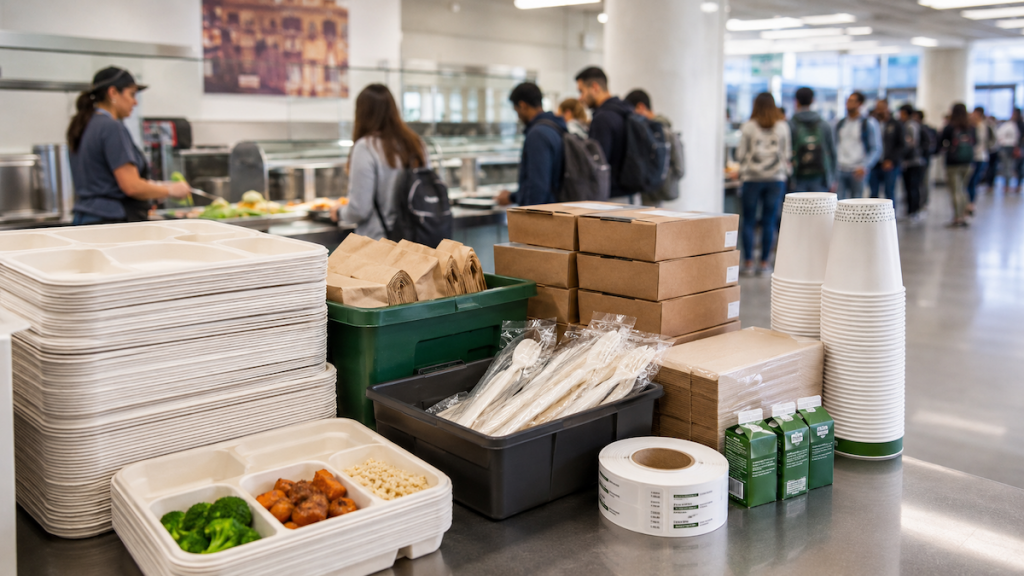
Institutional foodservice can involve longer sales cycles, but the volume can be large. To keep this section grounded, the examples below are organizations with clear Greater Los Angeles foodservice operations.
LAUSD Food Services is one of the strongest local institutional examples. LAUSD’s Café LA page says its Food Services Division serves more than 530,000 meals each day, including breakfast, lunch, and after-school supper. That level of daily meal service can create demand for trays, sealed containers, cups, napkins, cutlery, portion cups, and compliant packaging.
UCLA Dining is a large campus dining system in Los Angeles. Its official site says it serves 15,500 students each day and operates 10 distinct dining establishments. Its dining locations include residential restaurants and quick-service locations such as Bruin Café, Cafe 1919, The Drey, The Study at Hedrick, Rendezvous, and Bruin Bowl. Potential packaging needs include takeout containers, drink cups, napkins, food labels, grab-and-go packaging, and quick-service food packaging.
USC Hospitality is another clear Los Angeles campus foodservice example. USC Hospitality lists many University Park Campus dining points, including residential dining halls, cafes, food courts, restaurants, private event venues, and Catering2Go. USC Auxiliary Services notes that USC Hospitality includes more than 40 retail and residential locations and supports about 4,400 students on meal plans. Packaging demand may come from campus cafes, grab-and-go food, Catering2Go, student dining, private events, and campus meetings.
Sales cycles are usually more formal here, so the best entry points are procurement pages, dining services teams, campus catering teams, sustainability initiatives, and contract renewal cycles.
Meal Prep and Prepared Meal Delivery Brands
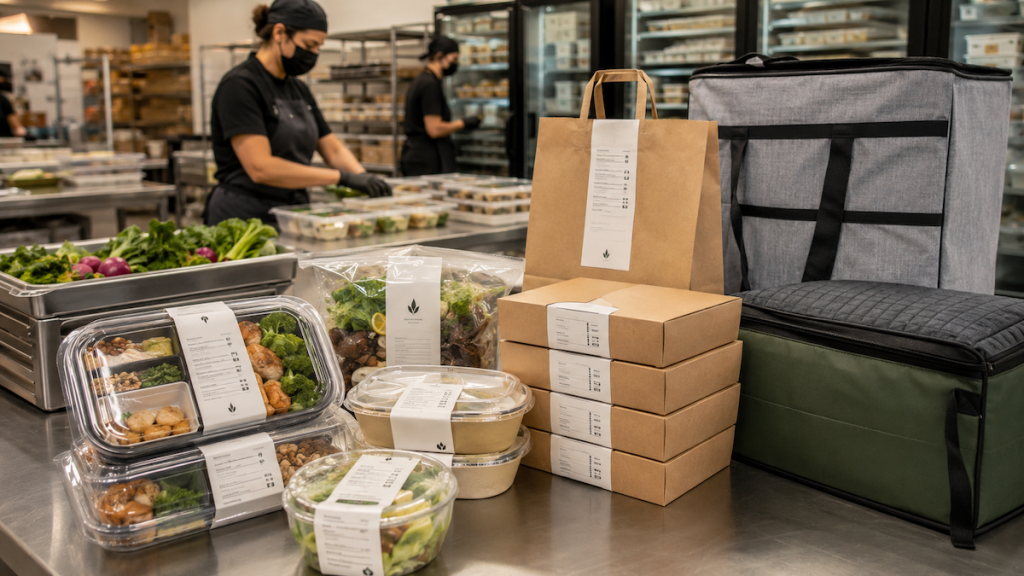
Meal prep and prepared meal companies depend heavily on packaging because packaging is part of the product. Meals need to be portioned, sealed, labeled, refrigerated, delivered, and sometimes reheated.
Everytable is a Los Angeles-based prepared meal company. Its LinkedIn profile lists 51-200 employees and describes a model built around a central kitchen, small-footprint stores, meal subscriptions, and SmartFridge distribution. Since meals move from a central kitchen into retail stores, subscriptions, office fridges, and institutional channels, packaging needs may include sealed meal trays, labels, sleeves, cold display packaging, and delivery packaging.
EatGoodLA is a Los Angeles-based organic meal prep company serving families, schools, and community organizations across Los Angeles. Its website lists weekly meal plans and kids’ organic school lunches. That model creates demand for meal trays, lids, labels, delivery bags, school meal packaging, and family meal prep packaging.
Organic Oren is an organic meal delivery brand serving Southern California. Its website describes chef-prepared meals using local organic ingredients. For packaging suppliers, relevant needs may include meal containers, labels, insulated delivery materials, premium presentation packaging, and reusable delivery packaging.
Ready Fit Go is a Greater Los Angeles/South Bay healthy meal prep brand. Its website lists a Hermosa Beach location and offers healthy meal prep, online ordering, pickup, and delivery. Compared with a national meal delivery platform, it is more closely tied to the local market. Packaging needs may include microwave-safe trays, nutrition labels, refrigerated display packaging, delivery bags, and subscription-style meal prep packaging.
Prepared meal brands are worth prioritizing when they combine recurring orders, refrigerated distribution, retail pickup, or subscription delivery. Packaging is part of the product experience, so suppliers can focus on sealing, labeling, portion control, reheating, cold-chain handling, and delivery presentation.
How B2B Sales Teams Can Prioritize the Greater Los Angeles Market
Not every foodservice buyer should be approached in the same order. For restaurant packaging suppliers, the strongest starting points are usually operators with frequent packaging use, multiple locations, visible takeout or delivery activity, and clear reasons to review packaging standards.
A practical first tier includes fast-casual restaurant groups, coffee brands, ghost kitchens, and prepared meal companies. These businesses use packaging as part of everyday operations, and many need consistency across bowls, cups, lids, bags, labels, and delivery containers. Their demand is often easier to identify through store counts, online ordering, delivery menus, catering pages, and sustainability messaging.
A second tier includes catering companies, food trucks, mobile vendors, and event foodservice operators. Their demand may be less predictable, but order sizes can be meaningful around weddings, corporate lunches, festivals, holiday events, and entertainment industry gatherings. For these prospects, timing and event calendars matter as much as company size.
Institutional and campus foodservice should be treated as a higher-volume but longer-cycle opportunity. School districts, universities, and campus dining teams may create large packaging demand, but suppliers usually need to work through procurement systems, contract cycles, sustainability requirements, and approved vendor processes.
Premium restaurant groups are more selective prospects. They may not use the same packaging volume as fast-casual chains, but they can care more about presentation, custom branding, dine-in compliance, and the quality of the takeout experience. These accounts may be better suited for suppliers with strong design, customization, or premium material options.
A useful way to prioritize the market is to score prospects by five signals: packaging frequency, number of locations, off-premise sales activity, compliance pressure, and buying accessibility. The best early targets are not always the largest organizations. They are often the operators where packaging is visible, repeated, operationally important, and relatively easy to discuss with the right decision-maker.
Final Thoughts
Greater Los Angeles is a useful market for restaurant packaging suppliers because demand comes from many foodservice formats, not only traditional restaurants. Fast-casual chains, coffee brands, ghost kitchens, caterers, campus dining teams, food trucks, and prepared meal companies all create different packaging needs.
The strongest demand signals include multi-location operations, delivery growth, catering programs, menus built around takeout, sustainability requirements, public procurement activity, and prepared meal distribution.
For B2B sales teams, the key is to match outreach to the customer’s real operating model. A coffee chain may care about cups, sleeves, and retail coffee bags. A meal prep brand may care about sealed trays, labels, and cold-chain delivery. A catering company may care more about presentation, transport, and event-specific packaging. The more specific the packaging use case, the stronger the prospecting angle.
AI Vision Inspection Systems in Chicago: 8 Target Industries for B2B Sales Teams
Hotel Amenities in Miami: 8 Target Buyer Segments for B2B Sales Teams