AI Vision Inspection Systems in Chicago: 8 Target Industries for B2B Sales Teams
by Yu T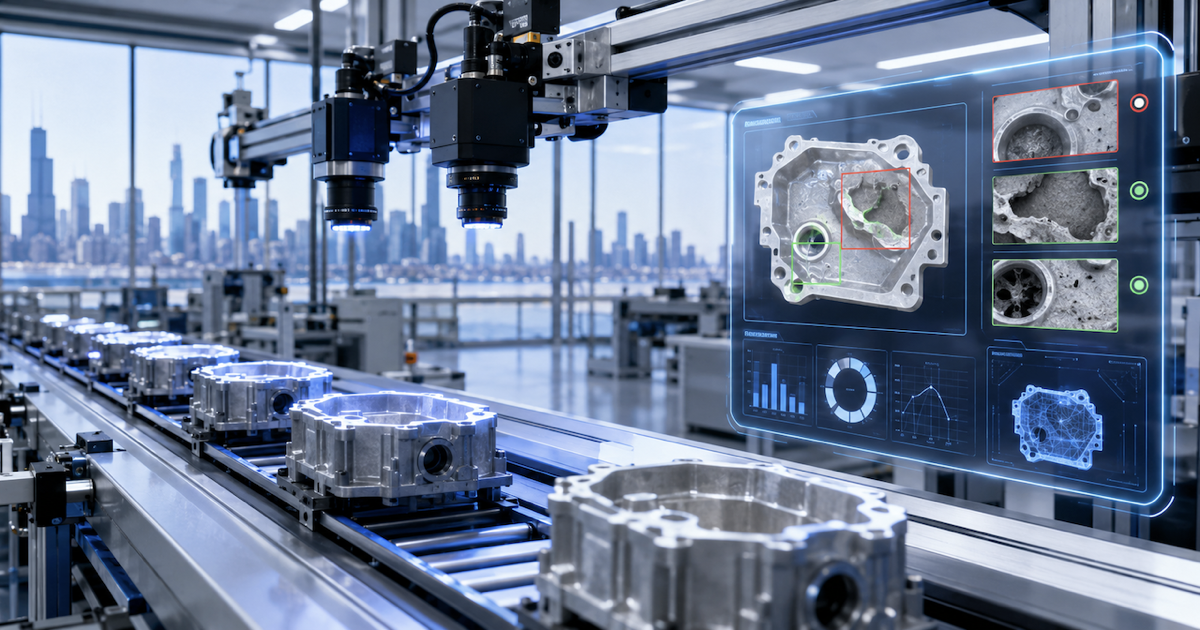
Explore eight Chicago-area industries for AI vision inspection, including local companies, use cases…
For manufacturers, quality problems rarely stay small. A missed defect can lead to rework, delayed shipments, rejected batches, customer complaints, or product recalls. That is why more manufacturers are looking at AI vision inspection systems when manual inspection is difficult to scale or traditional rule-based machine vision struggles with product variation.
Chicago is a useful market to study because its manufacturing base is spread across several industries and locations. The opportunity is not only in downtown Chicago. Many potential buyers are located across the wider Chicago-Naperville-Elgin metro area, including Joliet, Aurora, Naperville, Schaumburg, Elgin, Lake County, Bedford Park, and the Illinois-Indiana industrial belt.
The company examples below are not presented as confirmed buyers. They are included to show where AI vision inspection may be relevant based on public company information, product categories, production environments, and likely quality-control requirements.
This article is not a strict ranking. The eight industries below were selected based on local manufacturing presence, inspection complexity, compliance or quality pressure, and practical sales potential for B2B teams selling AI vision inspection systems in Chicago.
How to Read the Chicago Manufacturing Map
For sales teams, “Chicago” should not mean only the city center. Different types of manufacturers tend to appear in different parts of the metro area.
The I-55 corridor toward Joliet is useful for food production, packaging, logistics-linked manufacturers, and some metal fabrication companies. The I-90 and I-94 route toward Schaumburg, Elk Grove Village, and Elgin is worth checking for electronics, electrical equipment, automation suppliers, and contract manufacturers. The I-88 corridor toward Naperville and Aurora often surfaces suburban production sites, packaging companies, and industrial suppliers. The I-80 and I-294 belt is relevant for metalworking, warehousing-linked manufacturers, packaging, and regional suppliers. For pharmaceutical, healthcare, and medical device prospects, Lake County and the northern suburbs are usually more useful than downtown Chicago.
This local view matters because AI vision inspection is not sold in the same way to every manufacturer. A food producer near Joliet may care about label accuracy and seal inspection. A medical device company in Lake County may care about validation records and sterile packaging. A metal fabricator near the I-80 corridor may care more about scrap reduction and surface defects.
Automotive and Heavy Truck Manufacturing
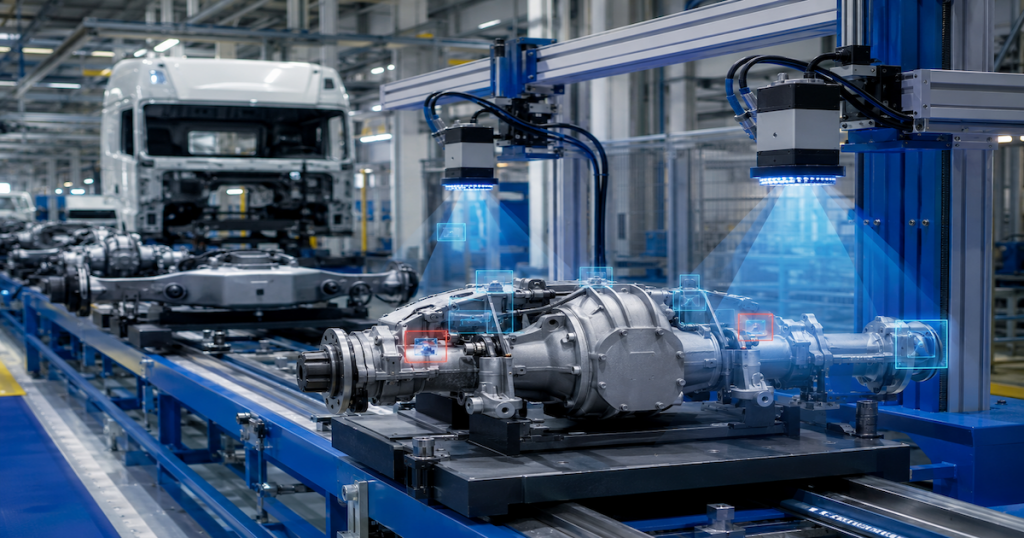
Automotive and heavy truck manufacturing is one of the clearest starting points for AI vision inspection suppliers in the Chicago area. The region has both large manufacturing anchors and a wider supplier network across Illinois and Northwest Indiana.
Ford Chicago Assembly Plant on the South Side is one of the strongest local manufacturing anchors. The plant is located in the Hegewisch neighborhood of Chicago and employs about 5,800 workers. It produces the Ford Explorer, Lincoln Aviator, and Police Interceptor Utility. Because this is a large vehicle assembly environment, AI vision inspection may be relevant for weld quality, painted surface defects, component presence checks, assembly verification, and final quality control. Large assembly sites may not always be the easiest first sales target, but they help define the inspection standards that flow through nearby suppliers.
AutoKiniton has a strong presence in Chicago’s automotive manufacturing ecosystem, with a facility at 12350 S Avenue O on the city’s Southeast Side, close to the Ford Chicago Assembly Plant. The company is globally headquartered in New Boston, Michigan, and was formerly known as Tower International, Inc. AutoKiniton has about 5,001–10,000 employees and reported around $1.04B in annual revenue. Its products and capabilities include high-strength vehicle structures, precision stamped assemblies, cold- and hot-stamped welded assemblies, body-in-white and frame structures, tooling development, and end-to-end logistics. Because it serves major automotive OEMs and specializes in stamped metal structures and advanced assembly, AI vision inspection may be relevant for stamped part defect detection, weld quality inspection, mixed-metal joining checks, body structure alignment, dimensional verification, and final assembly quality control.
International Motors, formerly Navistar, is headquartered in Lisle, Illinois. It has around 14,500 employees and manufactures Class 4–8 commercial trucks, IC Bus school buses, diesel engines, chassis, and powertrain-related systems. For AI vision inspection suppliers, the opportunity may sit not only with the company itself, but also with suppliers that support heavy truck parts, welded assemblies, machined components, and traceability-heavy production.
The demand signal to watch in this industry is usually production change. EV-related expansion, battery-adjacent components, new automation equipment, or hiring for quality and manufacturing engineering roles can all point to inspection needs. When a supplier adds EV component capacity, it often needs better checks for weld quality, connector placement, surface defects, and traceability. Quality managers are usually the best first conversation because they own defect rates and inspection standards, while manufacturing and automation engineers influence how a vision system would fit into the line.
Food and Beverage Processing
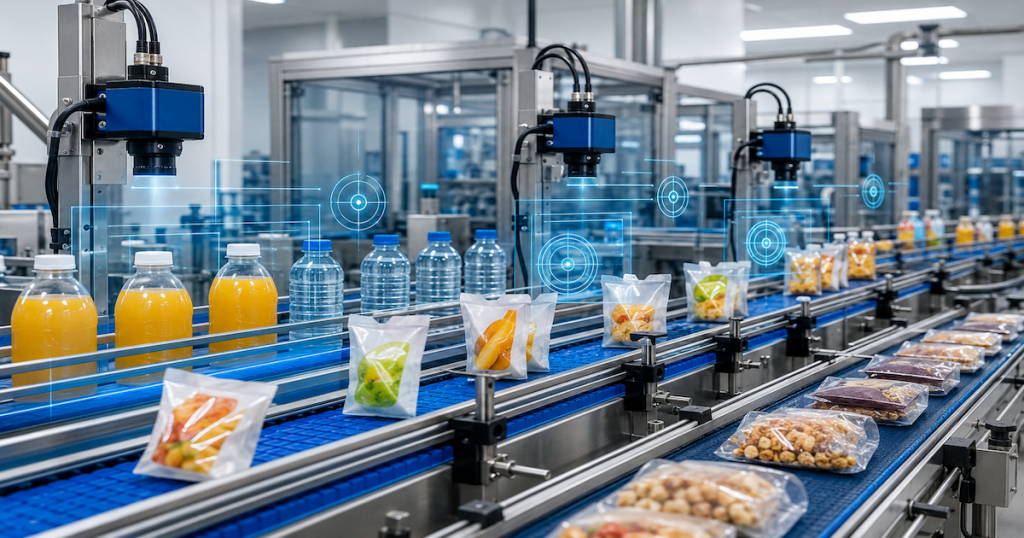
Food and beverage is a different kind of inspection opportunity. The challenge is less about complex assembly and more about speed, packaging accuracy, and risk control. A wrong label, missing date code, poor seal, low fill level, or damaged package can become expensive quickly when a line is running at high volume.
Chicago has a strong food manufacturing and food-brand ecosystem. Some companies have headquarters in the city or nearby suburbs, while production, packaging, and distribution activity often stretches toward Joliet, Aurora, Naperville, and the I-55 corridor.
Mondelez International is headquartered in Chicago and operates as a global snacks and packaged food company. It has roughly 91,000 employees and annual revenue around $38.5B. Its products include chocolate, cookies, biscuits, gum, confectionery, and powdered beverages under brands such as Oreo, Cadbury, Ritz, Chips Ahoy!, Nabisco, Sour Patch Kids, and Belvita. For this type of business, AI vision inspection may be relevant for high-speed packaging checks, date-code verification, label accuracy, wrapper defects, product appearance, and package seal quality.
Conagra Brands is also based in Chicago and has around 18,300 employees, with annual revenue around $11.6B. Its portfolio includes frozen meals, snacks, condiments, shelf-stable foods, and packaged grocery brands such as Birds Eye, Healthy Choice, Marie Callender’s, Slim Jim, Hunt’s, Vlasic, and Duncan Hines. Multi-SKU packaged food production can create inspection needs around label mismatch, carton accuracy, date-code checks, fill levels, package damage, and final product presentation.
TreeHouse Foods in Oak Brook is a private-label packaged food manufacturer with about 7,500 employees and annual revenue around $3.45B. Private-label manufacturing often involves multiple customers, packaging formats, and product variations. That makes AI vision inspection useful for reducing label errors, checking date codes, verifying packaging consistency, and detecting defects across high-variety production lines.
Ferrara Candy Company, headquartered in Chicago, is a private subsidiary of Ferrero Group with annual revenue around $2.2B and more than 9,000 employees. It produces sugar confectionery brands such as NERDS, Brach’s, Jelly Belly, SweeTARTS, Trolli, Lemonhead, Butterfinger, Baby Ruth, and Laffy Taffy. For confectionery production, AI vision inspection may fit wrapper defects, color consistency, packaging seals, product count, and high-speed visual checks.
Demand usually appears around packaging-line changes. A company adding filling, pouching, sealing, bottling, or labeling equipment often needs stronger inspection for labels, date codes, fill levels, seal integrity, and package damage. Food safety initiatives, recall prevention language, or hiring for quality, food safety, and packaging roles can also suggest that a company is reviewing inspection processes. Packaging managers, quality managers, and food safety managers are often more relevant than general business contacts because they understand the cost of rejected shipments and recall risk.
Pharmaceutical and Life Sciences

Pharmaceutical and life sciences companies do not buy inspection only for efficiency. In many cases, inspection is tied to compliance, documentation, traceability, and product integrity. This makes the sales conversation different from food, metals, or general manufacturing.
In the Chicago area, this market is concentrated more heavily in Lake County and the northern suburbs. North Chicago, Abbott Park, Deerfield, and Lake Zurich are especially relevant for sales teams researching pharmaceutical and healthcare manufacturers.
AbbVie in North Chicago is a public biopharmaceutical company with about 57,000 employees and annual revenue around $61B. Its focus areas include immunology, oncology, neuroscience, eye care, and aesthetics. Because pharmaceutical manufacturing is heavily regulated, AI vision inspection may be relevant for label verification, vial or cartridge inspection, contamination checks, packaging verification, and documentation-heavy quality control.
Abbott Laboratories, headquartered in Abbott Park, has more than 100,000 employees globally and annual revenue around $44B. Its business spans medical devices, diagnostics, nutrition, and branded generic pharmaceuticals. Depending on the division, AI vision inspection may support diagnostic product checks, medical device packaging, small-component inspection, label verification, and final quality control.
Baxter International in Deerfield has around 38,000 employees and annual revenue in the $10B–11B range. Its business focuses on medical equipment and supplies, including infusion therapies, surgical technologies, kidney care, and hospital products. For AI vision inspection, the likely fit is sterile packaging seal inspection, label checks, container inspection, cartridge or tubing-related inspection, and packaging consistency.
The signal to watch in this sector is usually compliance pressure rather than general automation interest. Serialization, packaging-line validation, FDA-related language, audit readiness, and traceability projects all suggest a need for inspection systems that can produce consistent records. Hiring for validation, quality assurance, packaging engineering, or compliance roles can also indicate that a company is preparing for a product launch, process change, or regulated production upgrade. Quality control managers, validation engineers, compliance managers, and packaging engineers are usually the most relevant entry points.
Electronics and Electrical Equipment Manufacturing
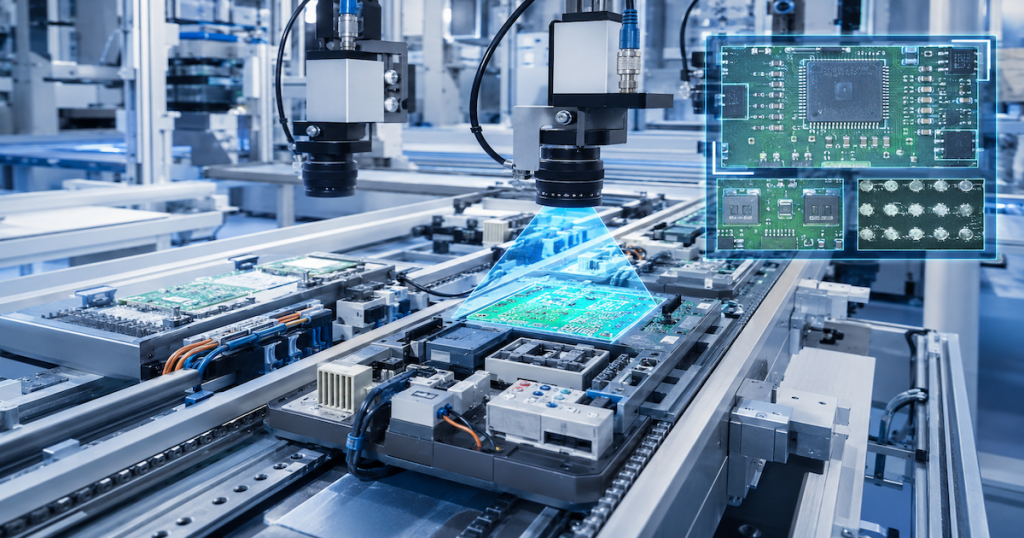
Electronics and electrical equipment manufacturers are strong fits when products are small, dense, and difficult to inspect manually. Many companies in this space already use AOI or traditional machine vision. The opportunity for AI vision inspection often comes when those systems struggle with false positives, solder variation, reflective surfaces, or complex defect patterns.
The northwest suburbs are worth checking first, especially Schaumburg, Elk Grove Village, Elgin, and Hoffman Estates. This area has industrial parks, logistics access, electronics suppliers, automation companies, and contract manufacturing activity.
Motorola Solutions is headquartered in Chicago and has about 23,000 employees, with annual revenue around $11.7B. The company focuses on mission-critical communications, video security and access control, command center software, managed services, and public safety networks. Because its products involve electronics, enclosures, connectors, assembled devices, and security hardware, AI vision inspection may be relevant for PCB quality, connector placement, enclosure defects, label checks, and final assembly inspection.
Flex is a global electronics manufacturing services provider with around 172,000 employees and annual revenue around $27.9B. Its services include product development, supply chain solutions, high-volume manufacturing, aftermarket services, and lifecycle support across automotive, industrial, healthcare, consumer devices, and cloud/data center infrastructure. EMS companies are relevant because they often deal with PCB assembly, solder joints, component placement, wire harnesses, high-mix production, and final assembly checks.
Eaton is a global power management and electrical components company with around 94,000 employees and annual revenue of about $27.4B. Its Chicago-area presence is tied to Eaton Tripp Lite in Woodridge, Illinois, a power protection and IT infrastructure business that became part of Eaton after its acquisition of Tripp Lite, as well as local support operations in Glendale Heights. Eaton’s products include circuit breakers, switchgear, UPS systems, power distribution equipment, panelboards, motor controls, aerospace systems, and vehicle or eMobility products. For AI vision inspection, relevant use cases may include connector checks, component assembly verification, label inspection, surface defects, electrical equipment inspection, and power distribution component quality control.
A strong signal in this sector is process complexity. SMT expansion, AOI upgrade projects, yield improvement language, or hiring for process engineers may suggest that a company is running into the limits of existing inspection methods. Sales conversations should focus less on replacing people and more on reducing false positives, handling variation, and improving inspection consistency. Process engineers, test engineering managers, quality directors, and manufacturing managers are usually the best starting points.
Primary Metal and Fabricated Metal Manufacturing
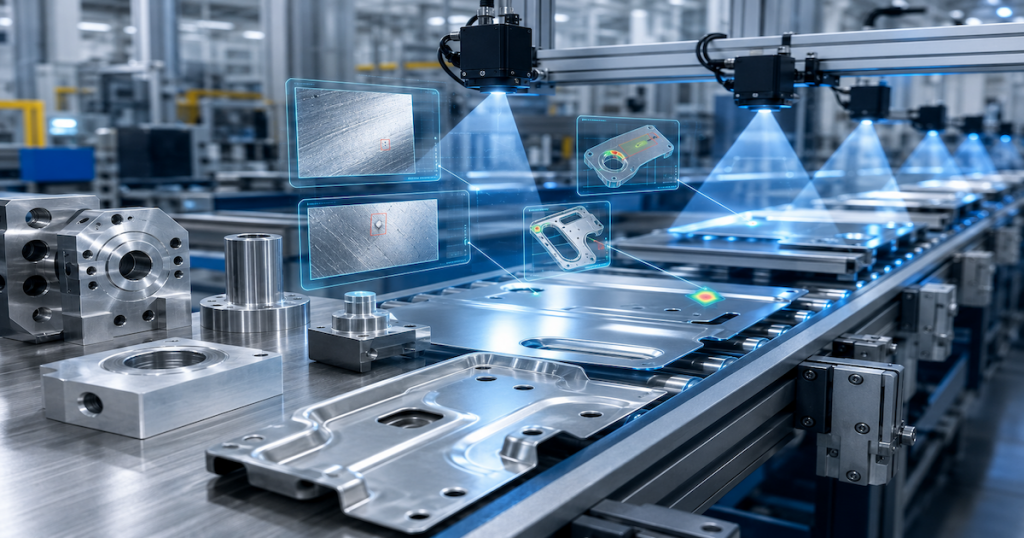
Metal and fabricated product manufacturers are attractive because inspection problems are directly tied to scrap, rework, and customer acceptance. In high-volume production, even a small improvement in defect detection can have a clear financial impact.
Many relevant prospects are outside downtown Chicago. The south and southwest suburbs, South Chicago, Joliet, the I-80 and I-294 industrial belt, and Northwest Indiana are useful areas for finding steel processing, metal distribution, stamping, tube manufacturing, CNC machining, and other space-intensive operations.
Illinois Tool Works (ITW) in Glenview is a multi-industrial manufacturer with around 43,000–44,000 employees and annual revenue around $16B. Its businesses include engineered fasteners, components, equipment, consumable systems, welding products, food equipment, polymers, fluids, and specialty products. AI vision inspection may be relevant for precision parts, surface quality, dimensional checks, fastener inspection, weld-related components, and assembly verification.
Ryerson Holding Corporation is headquartered in Chicago and has around 4,200 employees, with annual revenue around $4.6B. It supplies and processes industrial metals including aluminum, carbon steel, stainless steel, coil, plate, sheet, bar, pipe, and tube. Because metal products are often judged by surface condition and dimensional consistency, AI vision inspection may fit use cases such as scratch detection, dent detection, rust or texture anomaly detection, dimensional checks, and customer quality verification.
Tempel Steel, headquartered in Chicago, is a Worthington Steel company with around 1,500+ employees and pre-acquisition revenue of about $377M. It manufactures high-precision magnetic steel laminations for electric motors, generators, and transformers, serving eMobility, transportation, industrial, and energy markets. AI vision inspection may be relevant for stamping defects, lamination quality, surface conditions, dimensional accuracy, and electric motor component quality.
In metals, the strongest sales angle is not “AI innovation.” It is scrap reduction, fewer rejected parts, better surface quality, and more consistent inspection at production speed. Signals to watch include scrap reduction projects, surface quality complaints, coating quality requirements, precision manufacturing language, and high-volume line upgrades. Quality managers and production managers usually feel the cost of defects first, while manufacturing engineers become important once the discussion turns to lighting, part movement, reflective surfaces, and camera setup.
Packaging and Converting
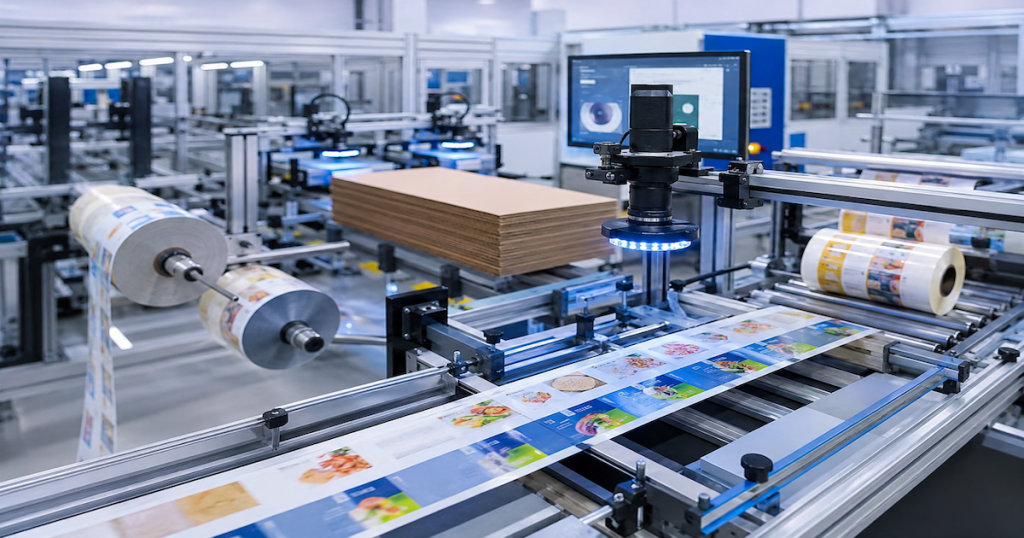
Packaging and converting is important because it connects several Chicago-area industries at once. Food, pharmaceutical, healthcare, consumer goods, and logistics companies all depend on packaging suppliers. That means inspection demand may come from the packaging company itself or from strict customer requirements passed down by brands and retailers.
Packaging prospects are spread across the metro area. Lake Forest and the northern suburbs are relevant for larger packaging companies and healthcare-related packaging demand. The I-55 corridor, I-80 and I-294 belt, Joliet, Aurora, and other suburban industrial areas are useful for production, warehousing, converting, and contract packaging.
Packaging Corporation of America (PCA) in Lake Forest has about 15,400 employees and annual revenue close to $9B. It focuses on containerboard, corrugated packaging, and paper, with mills and converting facilities across the United States. AI vision inspection may be relevant for print quality, corrugated board defects, barcode readability, label accuracy, carton quality, and converting-line inspection.
Berlin Packaging is headquartered in Chicago and has around 2,000 employees, with estimated annual revenue around $3B. It supplies glass, plastic, and metal containers, closures, dispensing systems, tubes, and related packaging services. Because it serves beverage, food, personal care, pharmaceutical, household care, and industrial end markets, AI vision inspection may be relevant for container quality, closure fit, label alignment, surface defects, barcode readability, and packaging consistency.
Pregis in Deerfield has roughly 1,000–3,000 employees and estimated annual revenue in the $700M–$1B range. It provides protective packaging materials and systems, including paper systems, air systems, foam systems, automated mailing and bagging, bubble cushioning, foam pouches, protective paper, surface protection films, and shipping mailers. AI vision inspection may be relevant for film quality, web defects, seal integrity, material consistency, package forming, and automated packaging-line checks.
In this sector, the defects are easy to understand but expensive to miss. A wrong barcode, unreadable date code, poor print registration, weak seal, damaged carton, or film defect can lead to chargebacks, rejected shipments, or customer complaints. Sales teams should watch for packaging companies serving food, pharmaceutical, healthcare, or major retail customers because those customers often require stronger proof of packaging quality. Quality managers, production managers, packaging engineers, and operations directors are usually the most practical entry points.
Medical Device Manufacturing

Medical device manufacturing should be treated separately from general life sciences. The prospect pool is narrower than food or general manufacturing, but the value per opportunity can be higher because inspection is tied to precision, documentation, and compliance.
The best geography to check is the northern and northwest suburbs. Lake County is important because of its healthcare and life sciences base, while Elgin and nearby suburbs can surface specialized contract manufacturers, electronics-enabled devices, and precision component suppliers.
Abbott in Abbott Park can appear in both the life sciences and medical device sections, but the angle should be different here. With more than 100,000 employees globally and major business lines across nutrition, diagnostics, medical devices, and branded generic pharmaceuticals, Abbott is too large to treat as one simple prospect. For this section, the focus should be on the medical device and diagnostics side, where AI vision inspection may support small-part checks, diagnostic device inspection, packaging verification, label inspection, and device assembly checks.
TRICOR Systems Inc. in Elgin is a mid-sized electronic contract manufacturer with 51–200 employees. It serves medical, aerospace, military, and industrial markets and is FDA registered, ISO 9001:2015, ISO 13485:2016, and AS9100D certified. Its work includes test instrumentation, SMT, circuit cards, cables, mechanical devices, and inspection systems. This makes it a strong example of a smaller local prospect where AI vision inspection could support electronic assemblies, small components, quality documentation, traceability, and regulated manufacturing.
3DPX Additive Manufacturing in Chicago has 11–50 employees and specializes in polymer selective laser sintering, CAD design, CNC machining, prototyping, and production parts. Because additive-manufactured parts often require dimensional verification, surface checks, geometric defect detection, and post-production inspection, AI vision inspection may be relevant even though the company is much smaller than Abbott or Baxter.
Medical device defects are not always obvious. Small features, reflective surfaces, transparent materials, tight tolerances, sterile packaging seals, and laser markings can make inspection difficult. Signals to watch include ISO 13485, FDA QSR language, cleanroom production, validation hiring, new device launches, and increased documentation requirements. Quality assurance managers, regulatory affairs managers, validation engineers, and manufacturing engineering managers are usually more relevant than broad commercial contacts.
Aerospace and Defense Manufacturing
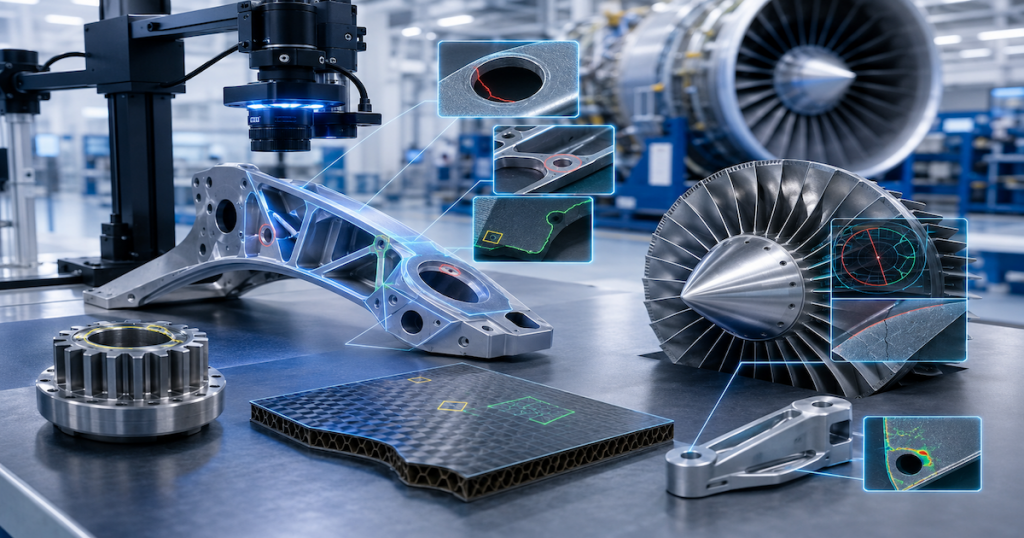
Aerospace and defense is a narrower but high-value opportunity in the Chicago area. It should not be treated as a broad local manufacturing cluster on the same level as food, metals, or life sciences. The better approach is to look for specific suppliers, MRO activity, precision machining, and defense-related subcontractors.
For geography, O’Hare-related MRO activity, Bedford Park, industrial suburbs, and precision manufacturing companies across the broader metro area are more useful than downtown Chicago. Searches such as “aerospace supplier Bedford Park,” “aircraft MRO Chicago,” “AS9100 manufacturer Illinois,” and “precision aerospace machining Chicago suburbs” are more useful than a broad search for aerospace companies in Chicago.
Northstar Aerospace in Bedford Park has 501–1,000 employees and estimated annual revenue of about $200M. It manufactures flight-critical gears, transmissions, accessory gearbox assemblies, rotorcraft drive systems, machined and fabricated parts, and also provides MRO services. For AI vision inspection, the strongest fit is precision part inspection, surface quality, dimensional checks, gear or transmission component inspection, and traceability for aerospace-grade parts.
United Airlines is headquartered at Willis Tower in Chicago and has more than 100,000 employees. It is not a manufacturing company in the traditional sense, but its Technical Operations and MRO functions can create inspection needs around aircraft maintenance, part verification, component condition checks, documentation, and traceability. This makes United more relevant as an MRO ecosystem anchor than as a standard factory prospect.
For large aerospace and defense companies such as Northrop Grumman or Lockheed Martin, it is better to treat them as ecosystem anchors unless there is a verified Chicago-area facility, supplier relationship, or relevant local operation. For sales teams, the more practical opportunity may be with AS9100-certified suppliers, precision machining companies, MRO providers, and aerospace component manufacturers around Bedford Park, O’Hare, and the broader Chicago industrial suburbs.
The signal to watch here is not general manufacturing volume. It is reliability and traceability. AS9100 certification, FAA or defense compliance, high-precision machining, MRO expansion, and aerospace quality roles can all suggest a stronger inspection need. Quality directors, compliance managers, manufacturing engineering managers, and operations leaders are usually closer to the problem than general business development contacts.
Turning Local Research Into Prospecting
The main mistake in this market is treating Chicago as one broad keyword. A company selling AI vision inspection systems should not build one generic list of “manufacturers in Chicago.” A better approach is to segment the market by industry, production process, and location.
An automotive supplier near the Illinois-Indiana border may care about weld inspection and traceability. A food manufacturer near Joliet may care about labels, seals, and fill levels. A medical device company in Lake County may care about ISO 13485 documentation and sterile packaging. A packaging converter near Aurora may care about barcode readability and print defects. These are all quality inspection problems, but the buying triggers are different.
Futern can support this workflow by helping sales teams move from broad market research to targeted prospecting. A team can start with a product category such as AI vision inspection systems, narrow the search to the Greater Chicago Area, identify relevant industries, find companies that match the use case, and watch for signals such as hiring, expansion, certifications, compliance language, or production-line upgrades. From there, outreach can be based on the company’s actual manufacturing context instead of a generic automation pitch.
Conclusion
Chicago is a practical market for AI vision inspection systems because it has both manufacturing depth and industry diversity. The strongest opportunities are spread across automotive suppliers on the South Side and near the Illinois-Indiana border, food and packaging operations around Joliet and Aurora, life sciences and medical device companies in Lake County, electronics and industrial suppliers around Schaumburg and Elgin, and metalworking companies across the I-80 and I-294 industrial belt.
For B2B sales teams, the value of this research is not simply knowing which industries exist. The real value is knowing where to look, which companies are worth researching, what signals suggest a real inspection need, and which roles are likely to care about the problem.
AI vision inspection is not sold the same way in every industry. Automotive teams may care about welds and assembly verification. Food manufacturers may care about labels and packaging defects. Pharma companies may care about validation and traceability. Metal fabricators may care about scrap. Medical device manufacturers may care about documentation and precision. Understanding those differences is what turns a regional market list into a usable prospecting plan.
AI Sales Agents: Complete Buyer's Guide
Global Outbound Sales in 2026: What Actually Scales and What Doesn't