Pittsburgh Robotics Companies: A Supplier Research Guide
by Yu T
Qualify Pittsburgh robotics companies by hardware stage, local role, and supplier fit.
Pittsburgh is widely associated with robotics research, yet suppliers need to know where physical hardware becomes a tested, deployed product. The Pittsburgh Robotics Network currently represents the workforce needs of more than 120 robotics companies and 7,500-plus employees across Southwestern Pennsylvania. That total spans manufacturers, engineering firms, startups, software businesses, laboratories, and companies whose local presence has changed.
For B2B sales teams, a broad list hides the information that matters. Machining, calibration, battery, and electronics suppliers each need a different opening. The useful variables are facility role, hardware maturity, build volume, deployment environment, quality requirements, and specification authority.
Research information and company estimates were reviewed on August 4, 2026. The companies mentioned below are research examples based on public information, local relevance, operating model, company size, product categories, and possible use cases. Their inclusion does not indicate confirmed demand or purchasing intent. Sales teams should verify facility details, current operations, supplier requirements, and decision-maker roles before outreach.
A Working Map of Pittsburgh's Robotics Hardware Activity
Pittsburgh's robotics cluster is compact, although its facilities perform very different work.
- The North Side, Strip District, and Lawrenceville corridor contains headquarters, engineering, and integration. Astrobotic builds and tests lunar systems on the North Side. Aurora, Aethon, and Onward Robotics operate through the Strip District and Lawrenceville, while Carnegie Robotics manufactures farther east. Gecko Robotics has its headquarters and test operations on the North Side.
- Oakland and the East End favor engineering-intensive businesses. HEBI Robotics designs and assembles near Oakland, while Near Earth Autonomy integrates flight systems in Point Breeze.
- Hazelwood Green centers on autonomous-vehicle engineering and integration through Motional. The site's value for supplier research lies in technical influence and validation rather than vehicle production.
- The northeastern suburbs add custom systems, contract manufacturing, construction robotics, and wearable robotics. Hellbender and SKA Robotics work around Harmarville, Advanced Construction Robotics is in Allison Park, and Humotech operates from the William Pitt Way industrial area.
- The airport and western county provide room for integration and field testing. Seegrid is based near the airport, Titan Robotics has a Coraopolis headquarters and integration hangar, and Journey Robotics used the airport's xBridge program for advanced system testing supported by its 2025 follow-on funding. Gecko also announced a Sewickley manufacturing and integration hub in July 2026.
This map provides an initial filter. Central and university-adjacent sites often point toward design and prototyping; airport-area and suburban facilities more often support larger equipment, integration, testing, or repeatable builds.
Qualify the Build Stage Before the Company Size
Employee count and funding establish scale, though they reveal little about the next purchase. A 20-person company preparing a pilot may release a concentrated prototype order, while a public company may route production sourcing through an external manufacturing partner.
A more practical qualification ladder has four questions:
- Is the Pittsburgh team building physical hardware or primarily writing software?
- Is the product in prototype, pilot integration, repeatable production, or fleet deployment?
- Does the local team control component specifications and supplier approval?
- What technical evidence must a vendor provide before a conversation advances?
The company groups below show how those questions change supplier strategy.
Prototype Programs Reward Speed and Engineering Access
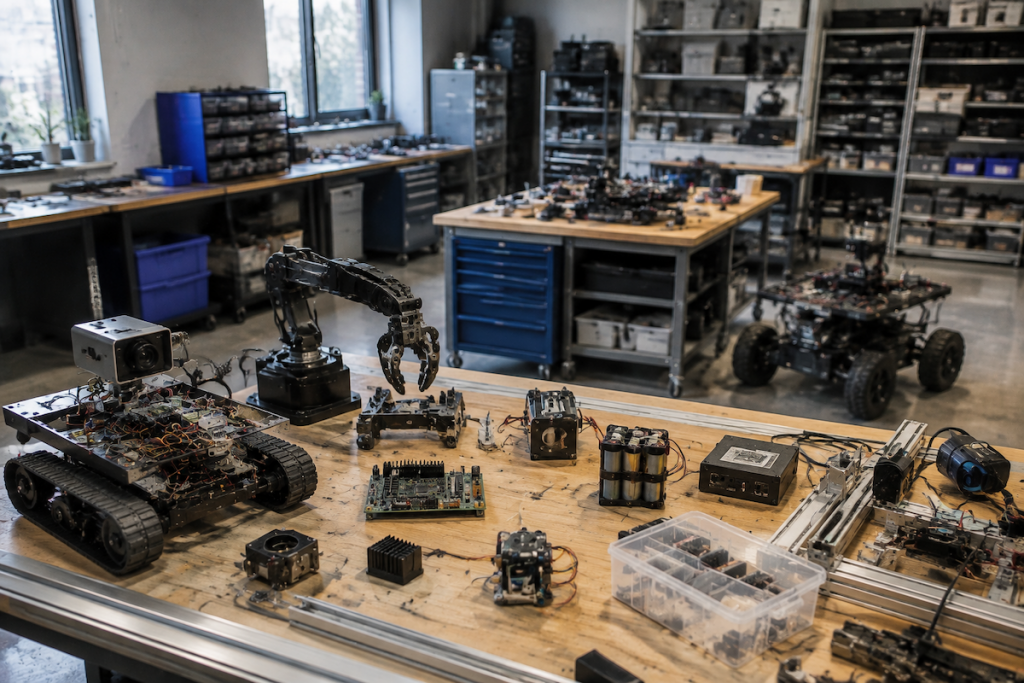
Small robotics teams often buy around a program milestone rather than a stable production schedule. Short lead times, design-for-manufacturing support, flexible minimum quantities, and direct engineering communication carry more weight than high-volume pricing.
Journey Robotics
Journey Robotics is a Pittsburgh startup of roughly 2-10 employees developing automated baggage-handling systems. A $250,000 follow-on investment announced in 2025 supported advanced testing of its system at Pittsburgh International Airport through the xBridge program. Prototype fabricators could study grippers, guarding, rails, vision hardware, and controls. Early outreach should address a pilot constraint and reach the CEO, CTO, or product-development lead.
Velo AI
LinkedIn currently places Velo AI in the 2-10 employee range. The Pittsburgh company is developing a second-generation Copilot bicycle-safety device with Hellbender. Its 2026 update places Gen 2 in prototype testing, following a paused consumer launch in 2025. Camera, PCB, thermal, battery, and enclosure suppliers first need to identify whether Velo AI or Hellbender controls the relevant specification and sourcing decision.
SKA Robotics
SKA Robotics sits in the roughly 10-20 employee range and provides custom engineering for robots used in harsh or variable environments. Its services extend from prototypes into light manufacturing, and its Harmarville relationship with Hellbender provides a production route. A credible opening combines machining, motor, sensor, wiring, or fabrication capability with responsiveness, revision control, and documented performance.
Humotech
Humotech operates with a small 2-10-person team in Pittsburgh. Its Caplex platform supports prosthetic, orthotic, and exoskeleton research, development, and evaluation. Precision motion components, force sensing, embedded controls, harnesses, test fixtures, and low-volume fabrication provide relevant supplier angles. Early qualification should establish whether the target work supports research equipment, clinical services, or a developing product program, followed by the engineering and production roles that control validation.
Pilot Integration Favors Suppliers That Solve Field Problems
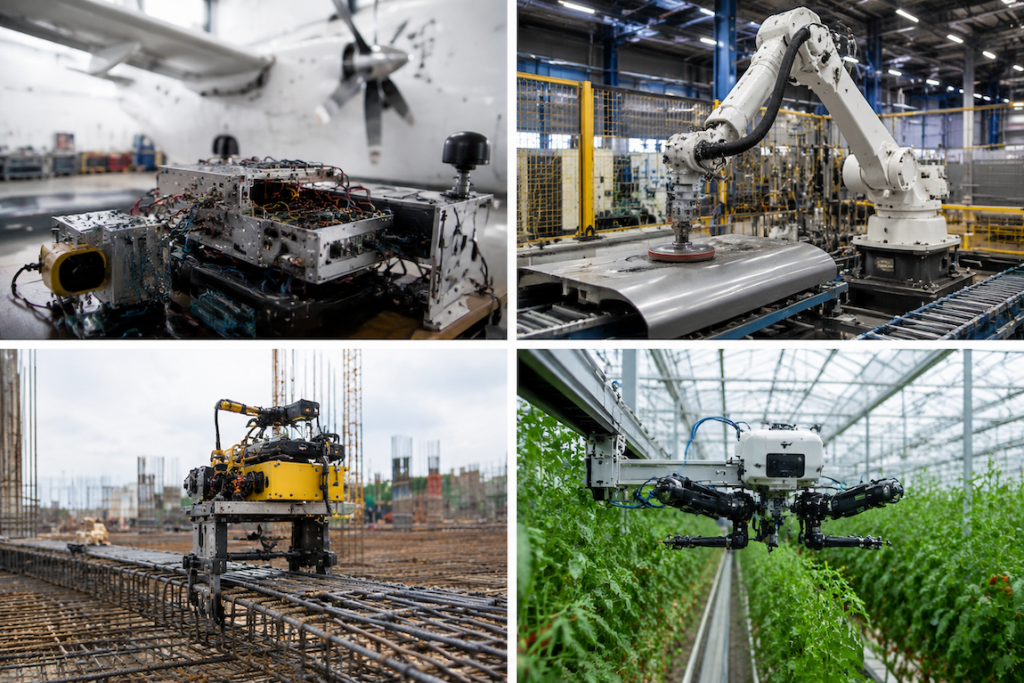
The next group has working systems exposed to aircraft, construction sites, greenhouses, or industrial processes. Purchasing logic tends to center on integration risk, field reliability, repairability, and the ability to support design changes during deployment.
Near Earth Autonomy
Near Earth Autonomy employs an estimated 50-100 people and integrates autonomous pilot systems in Pittsburgh. It reports work across more than 60 aircraft types, 3,000 autonomous flight hours, and 11,000 flights. The local role is integration and validation rather than aircraft production. Avionics, sensor, computing, harness, and test suppliers need traceability, environmental, lifecycle, and aviation-quality evidence.
Titan Robotics
Operating with approximately 20-50 employees, Titan Robotics maintains a Coraopolis headquarters and airport testing and integration center. Its adaptive systems address sanding, inspection, drilling, coating, and other high-mix processes. Supplier angles include motion components, structures, tooling, perception hardware, controls, and calibration. Engineering and program leaders often influence early specifications.
Advanced Construction Robotics
Advanced Construction Robotics has an estimated workforce of 46-60 at its Allison Park operation. TyBOT ties reinforcing steel, while IronBOT supports rebar placement and handling. Construction environments put shock, weather, transportability, safety, and field service ahead of laboratory elegance. The strongest opening is evidence that an enclosure, actuator, fabricated assembly, or connector can withstand those conditions and remain serviceable in the field. The director of robotic operations, engineering leadership, and production team may each shape qualification.
Four Growers
Recent public information places the Four Growers team above 30 people, within LinkedIn's broader 11-50 range. Its $9 million Series A, announced in 2024, supported expansion of the GR-100 greenhouse harvesting platform, which now operates in international commercial greenhouse environments. Moisture, sanitation, delicate gripping, machine vision, and uptime shape qualification. A focused approach connects cameras, grippers, motors, washable assemblies, or controls to one of those operating conditions.
Repeatable Robot Fleets Create a Different Supplier Test
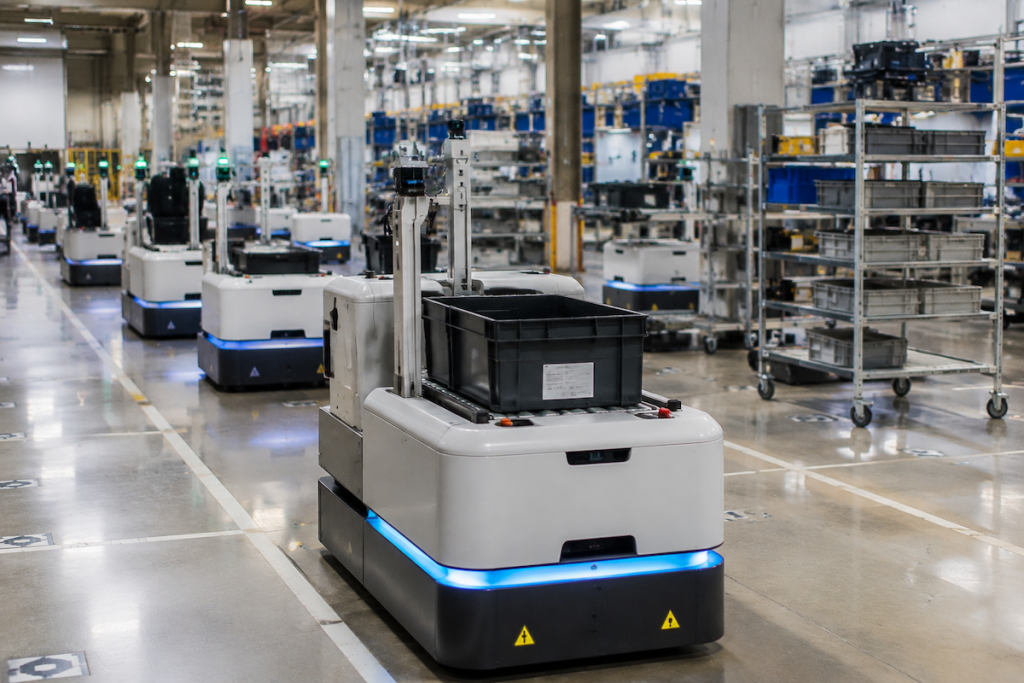
Fleet builders have more stable product architectures and installed systems to support. They often care about component consistency, obsolescence planning, quality records, replenishment, and service availability alongside unit price.
Seegrid
Seegrid operates at roughly 200 employees from its Pittsburgh headquarters near the airport. It states that its mobile robots are engineered, assembled, and supported in the United States, with more than 2,500 units deployed and 20 million autonomous miles. Production evidence should center on lot consistency, lifecycle availability, service continuity, and repeatability across assemblies, batteries, charging hardware, sensors, harnesses, or safety components. Supply chain, manufacturing, quality, and engineering leaders may influence different parts of the review.
Aethon – ST Engineering
Aethon became part of ST Engineering in 2017 and currently lists its headquarters at 48 26th Street in Pittsburgh's Strip District. Its LinkedIn profile lists 51-200 employees, giving the business a larger operating base than Pittsburgh's early-stage robotics teams. Aethon develops TUG and Zena mobile robots for healthcare and other indoor logistics settings, and its fleet completes more than five million deliveries annually. Hospital deployment raises the bar for safe navigation, cleanability, uptime, secure payload handling, and remote support. Qualification begins by separating Pittsburgh engineering and operating influence from ST Engineering sourcing requirements.
Onward Robotics – Formerly IAM Robotics
Onward Robotics rebranded from IAM Robotics in 2023 and continues to operate from 250 48th Street in Pittsburgh. Research estimates place the team in the 100-200 range. Its Lumabot mobile robots and Pyxis orchestration products support warehouse fulfillment. The profile offers potential fit for drives, batteries, sensors, sheet-metal assemblies, embedded electronics, and service parts. Before outreach, verify current Pittsburgh assembly volume and determine whether operations, engineering, or an external manufacturing partner owns each sourcing decision.
HEBI Robotics
HEBI Robotics has an estimated 20-40 employees and a clear recurring hardware model. It designs and assembles modular actuators and robotics products in Pittsburgh. Gears, bearings, motors, encoders, PCBs, seals, and machined housings affect platform performance. Hardware, production, or engineering leaders are stronger entry points when the proposal includes repeatability data and support for evolving product families.
High-Reliability Programs Raise the Qualification Burden
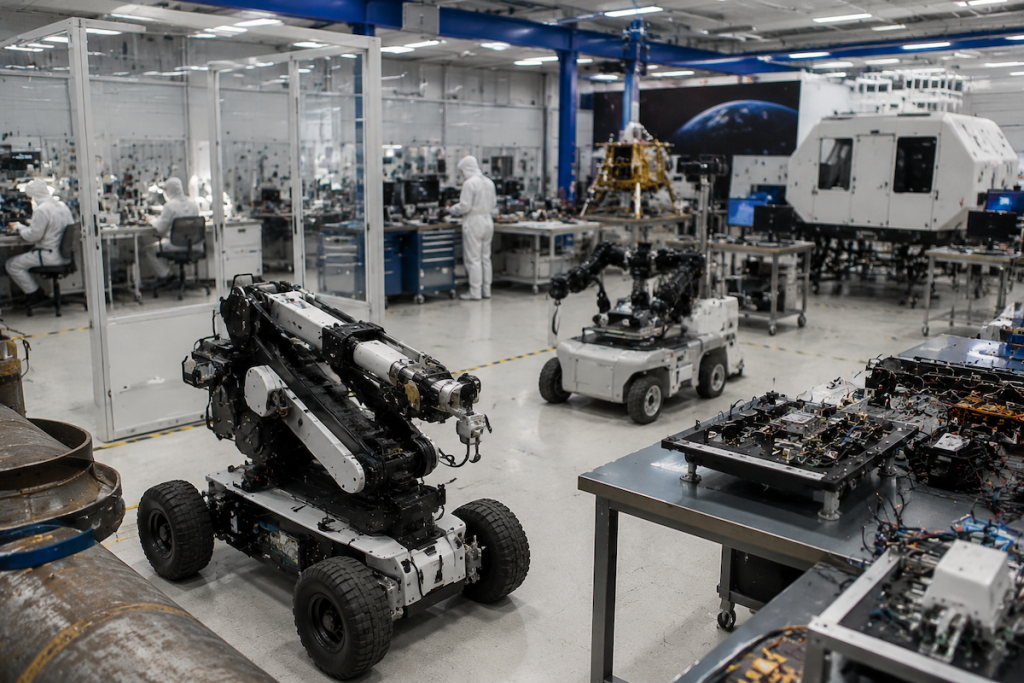
Infrastructure, defense, space, and surgical robots place greater weight on documented quality, environmental validation, calibration, configuration control, and change approval. Qualification may take longer and produce a more durable technical relationship.
Gecko Robotics
Gecko Robotics has an estimated workforce above 200, and its Pittsburgh headquarters includes testing and assembly space. In July 2026, the company announced a separate 10,000-square-foot manufacturing and integration hub in an Aleppo Township industrial park near Sewickley. The site is positioned around defense manufacturing, using Gecko's robotics and Cantilever software to help manufacturers produce military components more efficiently. That focus aligns with Gecko's broader work on U.S. Navy ship production and fleet readiness. Suppliers researching this facility should verify defense-oriented requirements around traceability, configuration control, cybersecurity, controlled technical information, quality documentation, and applicable domestic-sourcing rules. This qualification logic differs from Gecko's commercial infrastructure-inspection programs.
Carnegie Robotics
At roughly 120-140 employees, Carnegie Robotics designs, manufactures, tests, and calibrates rugged sensors and autonomous systems at its Lawrenceville facility. The company reports ISO 9001:2015 certification and an integrated in-house operating model. It remains an independent Pittsburgh business; it should not be confused with Endeavor Robotics, which FLIR acquired in 2019. Supplier fit centers on precision optics, embedded electronics, machined structures, rugged connectors, environmental testing, and dependable configuration control.
Astrobotic
Astrobotic reports more than 130 employees and operates a 47,000-square-foot Pittsburgh lunar logistics complex. The site contains cleanrooms, integration areas, fabrication resources, environmental testing, mission control, and rover work. Documentation, materials traceability, cleanliness, thermal performance, vibration resistance, and long lead-time planning matter. Research engineering, mission assurance, supply chain, and manufacturing influence separately.
Smith+Nephew – Pittsburgh Robotics R&D
Smith+Nephew employs more than 17,000 people globally, while its Pittsburgh robotics location supports R&D rather than volume manufacturing. The site contributes to the CORI platform and other digital surgery work. Precision components, sensing, motion control, calibration, test equipment, and regulated development services offer plausible angles. Local engineers may shape specifications while global quality and sourcing processes control approval.
Some Pittsburgh Teams Influence Hardware Built Elsewhere
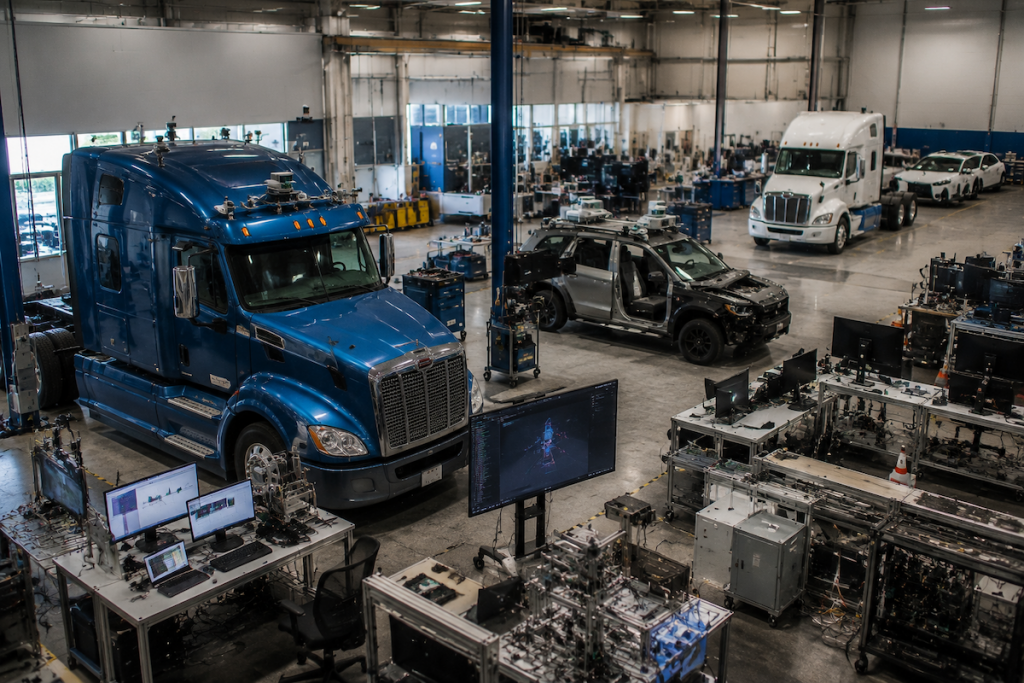
Local engineering relevance does not always mean local production. These examples deserve a separate research route because design authority, supplier management, and manufacturing responsibility may sit in different places.
Aurora Innovation
Aurora is a public autonomous-trucking company with approximately 1,900 employees at the end of 2025 and its corporate headquarters in Pittsburgh. Local hardware facilities build and test trucks and subsystems in prototype and batch environments, while industrialization involves vehicle manufacturers and hardware partners. The first research question is whether Pittsburgh controls the relevant prototype build, component design, validation work, or production-sourcing decision.
Motional
Following restructuring, Motional now sits in LinkedIn's 501-1,000 employee range and remains active at Hazelwood Green. The company resumed supervised public robotaxi service through Uber in Las Vegas in March 2026. Pittsburgh engineers work on vehicle hardware, integration, and validation, while vehicle production sits within Hyundai's broader manufacturing system. Hyundai is the majority owner, and Aptiv reduced its common equity interest to 15% in 2024. Local qualification should establish which specifications and supplier decisions remain with the Pittsburgh team.
Hellbender
Hellbender employs an estimated 11-50 people and operates more than 40,000 square feet of Pittsburgh electronics manufacturing space. Its work runs from PCB assembly through system integration, optical calibration, and final testing. Hellbender represents both a possible user of upstream electronics and a manufacturing partner for smaller developers. The review should cover capacity, quality requirements, program ownership, and sourcing authority before treating it as either type of prospect.
Stack AV
Stack AV lists 51-200 employees and maintains its autonomous-trucking headquarters in Pittsburgh. Its 2026 collaboration with PACCAR paired Stack's lidar, radar, camera, and perception architecture with a Peterbilt 579 platform. Pittsburgh teams influence system design, integration, testing, and service operations, while vehicle production remains with manufacturing partners. Sensing, compute, harness, thermal, and prototype-subsystem suppliers should establish local specification authority and the boundary between Stack AV and vehicle-partner sourcing.
Match the First Prospect List to the Supplier Offer
The largest company is rarely the automatic first choice. A better starting list aligns the supplier's strongest proof with the buyer's build stage.
Rapid machining, fabrication, and prototype-PCBA providers have a clearer opening with prototype and pilot programs when they can document lead time, revision control, flexible minimum quantities, and design-for-manufacturing support. Founders, CTOs, and lead mechanical or electrical engineers often influence those early decisions.
Vendors of motors, actuators, batteries, sensors, and harnesses may fit repeatable fleet builders when they can show lifecycle availability, lot consistency, failure data, and service support. Hardware engineering, supply chain, manufacturing, and quality teams become more important as builds stabilize. Rugged or regulated components belong with high-reliability programs, where traceability, calibration, environmental testing, and change control shape qualification.
Contract assembly and test providers should concentrate on companies moving from pilot work into repeatable builds. Process capability, test coverage, capacity ramp, and sourcing control matter to operations, manufacturing engineering, and program management. Production-equipment and upstream-electronics suppliers have a stronger reason to study local manufacturing partners when they can connect throughput, equipment compatibility, technical support, or domestic availability to a defined process.
Verify Five Details Before Outreach
First, confirm the Pittsburgh facility's exact role: headquarters, engineering office, test site, integration center, manufacturing operation, or training center. Second, determine the current hardware stage and realistic order pattern. Third, find where design authority, supplier approval, and purchase execution sit. Fourth, check ownership and operating status. Argo AI closed in 2022, Locomation wound down, and Sarcos ended robotic hardware production in 2024. These names belong on an exclusion list rather than a current prospect list. Fifth, map the likely influence chain across engineering, operations, quality, supply chain, and program leadership.
Outreach should then reflect the operating model. A prototype team needs a concise engineering proposition. A fleet builder expects supply continuity and quality evidence. A medical or aerospace program requires documentation and validation. One generic robotics message will miss those differences.
Turning the Research Into a Futern Workflow
Futern gives sales teams a practical way to move from the regional cluster to a qualified prospect list. Teams can discover companies, enrich size and location data, and tag each business by facility role, hardware stage, use case, and ownership. Website and LinkedIn review then helps confirm current operations and identify likely engineering, manufacturing, quality, supply chain, or program contacts.
The final step is to connect each company group with a specific supplier angle. That produces a shorter list with a reason for inclusion, a verification question, and a message tied to the product's operating environment. It also keeps inactive brands, software-only businesses, and research institutions from diluting outreach.
Conclusion
Pittsburgh offers substantial opportunity for robotics suppliers because the region contains every step from prototype engineering to deployed fleets and high-reliability systems. The practical advantage comes from separating those steps. When companies are grouped by local facility role, hardware maturity, deployment environment, sourcing authority, and technical proof, sales teams gain a prospect list they can act on. That qualification work also makes decision-maker research and outreach far more precise.
Northwest Georgia Flooring Manufacturers: Six Supplier Paths
Rochester Optics Manufacturers: Five Qualification Tests
Akron Polymer Manufacturers: A Supplier Qualification Guide
Explore more company and industry insights here.