Rochester Optics Manufacturers: Five Qualification Tests
by Yu T
A B2B guide to 20 Rochester optics manufacturers across five qualification tests.
Rochester gives B2B sales teams a concentrated market for studying precision production and supplier fit. Empire State Development reports that Rochester is home to more than 150 optics, photonics, and imaging companies, while the New York Photonics cluster supports more than 20,000 employees. The local production base spans fabrication, molding, coating, assembly, metrology, and several demanding end markets.
Purchasing logic varies across that base. Polishing consumables face different qualification questions at a large-optics facility than cleanroom packaging at a contact lens plant. Geometry, material, wavelength, volume, certification, and end-market risk shape supplier evidence and buying influence.
Research information and company estimates were reviewed on July 28, 2026. The companies mentioned below are research examples based on public information, local relevance, operating model, company size, product categories, and possible use cases. Their inclusion does not indicate confirmed demand or purchasing intent. Sales teams should verify facility details, current operations, supplier requirements, and decision-maker roles before outreach.
This guide organizes 20 Rochester-area manufacturers around five supplier qualification tests: surface geometry, coating and material behavior, assembly capability, metrology confidence, and end-market risk. Each path shows how production context changes supplier fit, evidence requirements, likely decision roles, and the checks needed before outreach.
A Geographic Map of Rochester's Optical Production
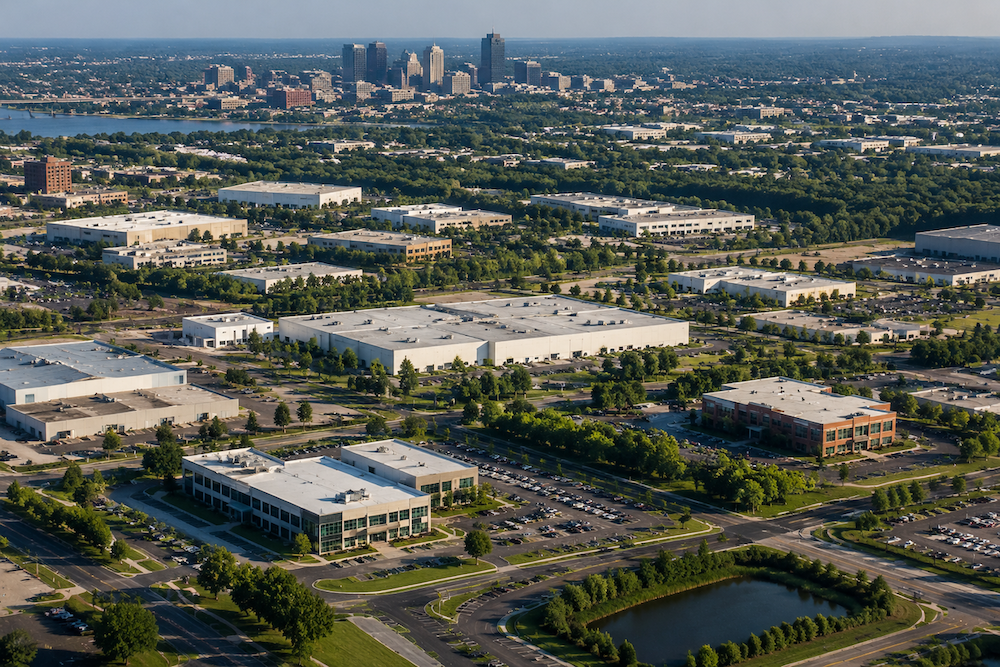
The Monroe County core includes Rochester, West Henrietta, and Fairport. Rochester hosts L3Harris, Bausch + Lomb, Syntec Optics, G&H | GS Optics, AccuCoat, Applied Image, QED Technologies, and Lumetrics. West Henrietta adds Rochester Precision Optics and the IDEX Health & Science optical center, while Fairport hosts Corning's precision optics and metrology operation.
East of that core, Optimax Systems, OptiPro Systems, and Photon Gear operate in the Town of Ontario in Wayne County. They belong to the Greater Rochester supply chain while sitting outside Monroe County. Sales teams filtering by county or planning site visits need to preserve that distinction.
Record local relevance by facility role: headquarters, plant, coating site, assembly operation, engineering office, or service center.
What Manufacturer Means in This Guide
The strongest examples publish evidence of local fabrication, molding, coating, assembly, calibration, or optical-equipment production. Universities and research centers strengthen the ecosystem, yet their grant and institutional purchasing structures place them in a separate group.
The same rule applies to local offices. TRIOPTICS USA describes its Rochester site as a secondary laboratory for sales, service, measurement, demonstrations, process development, engineering, and training. Current company location pages place Labsphere in New Hampshire and Taylor Hobson's principal operations in the United Kingdom, without establishing Rochester manufacturing. All three are excluded from the 20 manufacturers below.
Ownership also changes qualification. Vertex Optics became a Sydor Optics company in January 2026 and continues under its own brand, so the two should not be counted as unrelated manufacturers. Bausch + Lomb has traded publicly since 2022, while Bausch Health held about 87% of its shares as of April 22, 2026. Such structures affect onboarding and purchasing authority.
Surface Geometry Sets the First Qualification Test
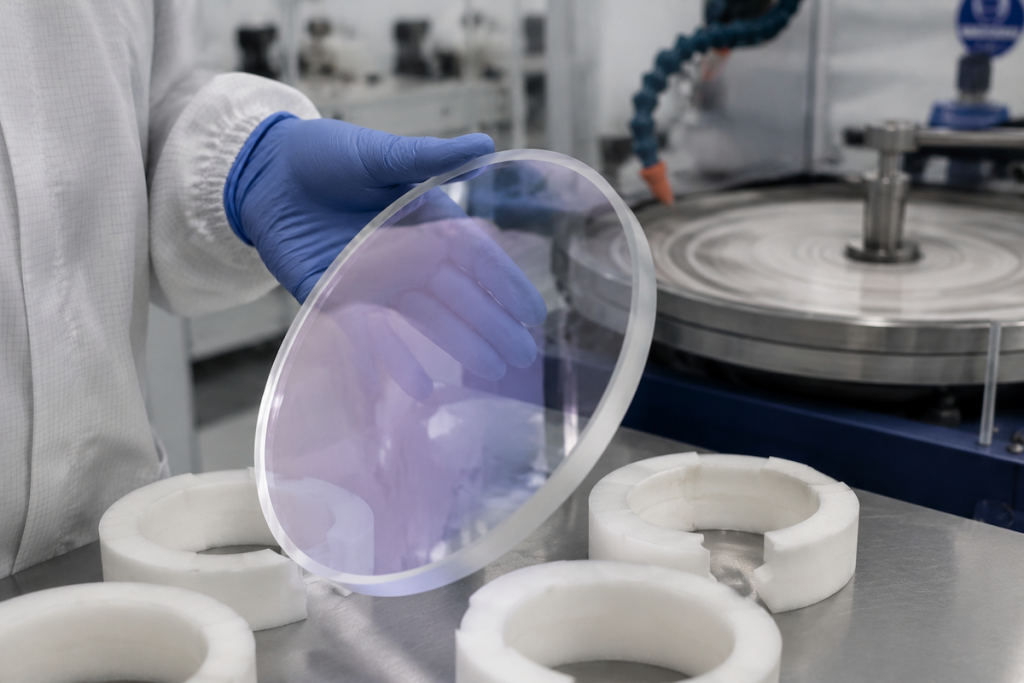
For optical fabrication suppliers, shape, diameter, material, surface figure, roughness, and volume determine the relevant tooling, consumables, inspection, handling, and packaging.
Optimax Systems
Optimax reports more than 450 employees at a 150,000-square-foot headquarters and factory in Ontario, Wayne County. It produces spheres, aspheres, cylinders, freeforms, coatings, and optical systems for aerospace, defense, and semiconductor programs. That scale suggests structured qualification for glass, polishing, coating, tooling, and inspection suppliers. Before outreach, verify approved-material rules and identify the relevant manufacturing, coating, supplier quality, or supply chain contact.
Sydor Optics
Sydor sits in the estimated 51-200 employee range, with a roughly 100,000-square-foot Rochester-area facility planned for fall 2027. Its high-volume plano and double-sided polishing base now sits alongside Vertex's curved, aspheric, and freeform capability following the January 2026 acquisition. Polishing throughput, substrate handling, contamination control, and expansion timing provide the most relevant research angles. Operations, process engineering, and sourcing influence may differ between the brands.
EvolvOptic
EvolvOptic sits in the estimated 11-50 employee range, yet it publishes deterministic finishing capability for optics up to 1.8 meters. The contrast shows why headcount alone is a weak filter. Large-part handling, metrology, low-roughness finishing, fixturing, and secure packaging carry more weight than a broad catalog pitch. Confirm the relevant process at its Mt. Read Boulevard site and identify manufacturing engineering or technical operations leadership.
Thorlabs Lens Systems
Thorlabs Lens Systems operates a 70,000-square-foot Rochester production facility within a global organization of more than 1,000 employees. Formerly JML Optical, the site handles glass and metal fabrication, coating, metrology, environmental testing, and cleanroom assembly. Optical glass, polishing inputs, coating support, precision mechanics, and controlled assembly materials offer credible supplier angles. Local operations or engineering may shape the technical case even when corporate procurement rules apply.
The strongest opening is a process-specific claim tied to an optic class, finish target, or throughput constraint. General language reveals little about qualification fit.
Coating and Material Behavior Change the Supplier Brief
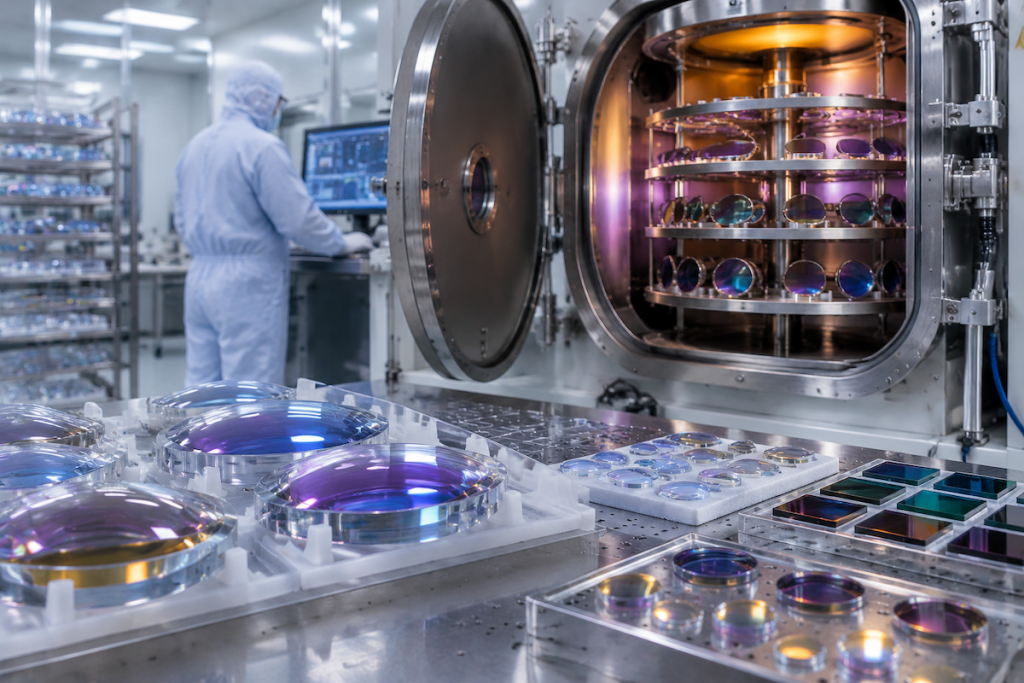
Polymer optics, molded glass, infrared materials, and spectral filters create different failure modes. Supplier proposals need to reflect adhesion, thermal behavior, wavelength, cosmetic limits, consistency, and deposition process.
Rochester Precision Optics
Rochester Precision Optics operates an approximately 110,000-square-foot West Henrietta manufacturing site with controlled assembly space. Its vertical model spans molded glass and polymer optics, infrared components, diamond turning, thin-film coating, machining, assembly, and final test. Material and automation suppliers therefore face several entry points with different owners. Strong outreach names the process and production stage, then targets the relevant engineering, coating, cleanroom, quality, or supply chain role.
G&H – GS Optics
G&H reported more than 60 Rochester employees when it acquired GS Optics in 2023 and announced a 25% campus expansion. In May 2025, it opened a Rochester Life Sciences Innovation Hub and manufacturing facility, providing a more recent operating signal for suppliers studying development, scale-up, and production support. The site specializes in diamond-turned and injection-molded polymer optics, coatings, and integrated solutions. Technical acceptance may begin with the Rochester engineering team, while G&H group functions influence commercial approval.
AccuCoat
AccuCoat is a focused coating business in the estimated 11-50 employee range, operating from an approximately 11,000-square-foot Rochester facility. It applies anti-reflective, beamsplitter, dichroic, mirror, infrared, and other coatings to varied substrates. The profile points toward deposition materials, chamber components, cleaning chemistry, masking, fixturing, and spectral inspection. Effective outreach shows coating-process fluency and reaches technical management, operations, or quality before leading with price.
IDEX Health & Science – Semrock
Semrock filters are produced at IDEX Health & Science's 100,000-square-foot Rochester optical center, combining manufacturing and R&D for filters, components, and subsystems. Hard sputtered films and volume programs for life science and analytical instruments raise scrutiny around stability, traceability, contamination, spectral measurement, and change control. Coating engineering, supplier quality, operations, and strategic sourcing are likely influences, with IDEX policies above the local technical case.
Expansion at G&H and the breadth of RPO and Semrock offer different timing signals from specialist AccuCoat. Match the message to substrate, coating process, and scale rather than treating coating as one category.
Assembly Capability Reveals a Different Buying Logic
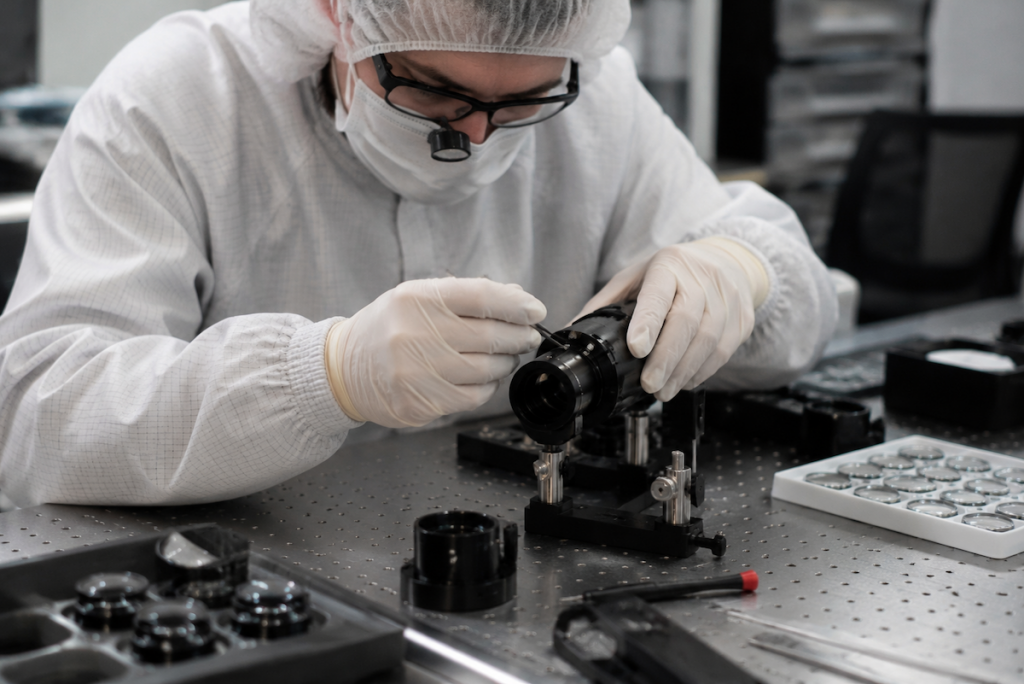
For lens modules and electro-optical subsystems, buying logic shifts toward alignment, bonding, mechanics, cleanliness, testing, and repeatability. Qualification must cover the assembly environment.
Syntec Optics
Syntec operates a nearly 90,000-square-foot Rochester headquarters and manufacturing site. Its 2025 annual filing reported 164 employees as of December 31, 2025. Polymer and glass molding, diamond turning, coating, machining, cleanroom assembly, and photonics packaging sit under one roof. Relevant supplier angles include resins, tooling, optomechanical parts, adhesives, cleanroom products, and automated inspection. Manufacturing, new-product introduction, quality, and assembly roles may control different qualification steps.
Apollo Optical Systems
Apollo is a smaller specialist, with an estimated 11-50 employees and a published 21,000-square-foot Rochester facility. It combines polymer injection molding, diamond turning, coatings, precision assembly, and metrology. Optical polymers, mold inserts, bonding, coating support, and scalable assembly methods offer the clearest angles. With technical and commercial responsibility likely concentrated in a small team, outreach should connect the offer to a specific development or production constraint.
Navitar
Navitar falls in the 51-200 employee range and manufactures imaging and projection optics at its Rochester site. It joined AMETEK in 2022, adding global governance to local engineering and assembly. Lens barrels, precision parts, adhesives, imaging test equipment, and production tooling warrant study. Separate local design, manufacturing, and quality influence from AMETEK-wide sourcing requirements, especially for established OEM products.
Photon Gear
Photon Gear represents the cluster's small, technically concentrated end. Photonics Marketplace reports roughly 12 employees and a 5,400-square-foot Ontario facility. It designs, assembles, and characterizes precision lens systems for applications including semiconductor inspection and medical imaging. Low-volume mechanics, alignment fixtures, optical components, bonding materials, and custom test support offer stronger openings than volume claims. The president, optical engineering, or assembly leadership may be close to the decision.
Assembly suppliers should also ask whether design engineering, new-product introduction, or production operations owns the first review. That answer often determines whether outreach begins with performance data, samples, or a scalability case.
Metrology Manufacturers Buy Around Process Confidence
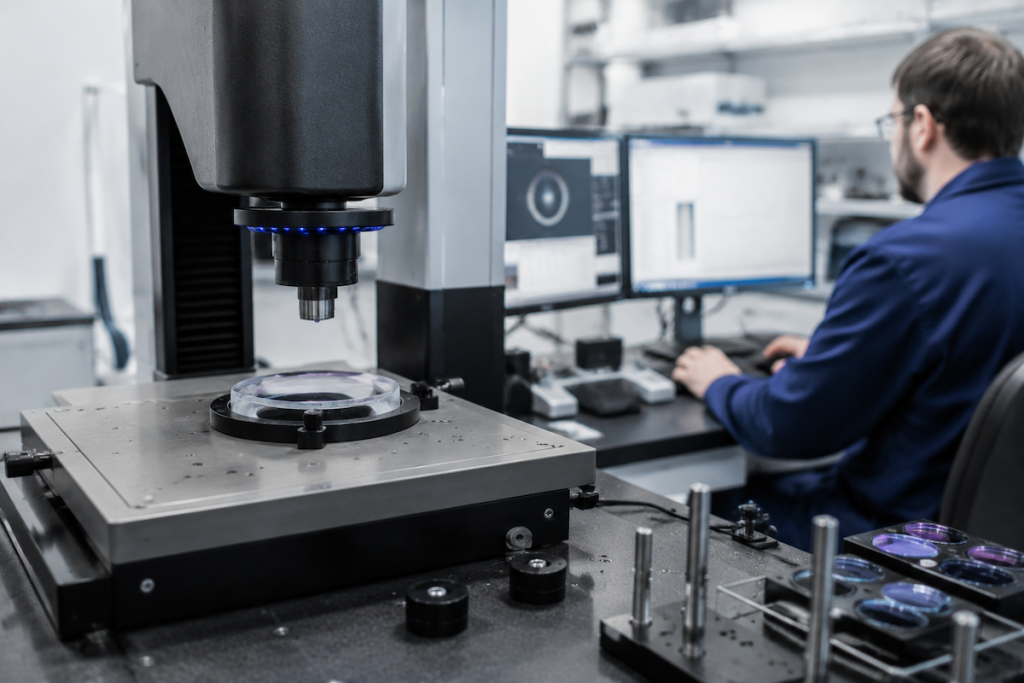
Calibration, finishing-machine, and measurement-system producers qualify components, motion, software, and calibration methods against the accuracy promised to customers.
Applied Image
Applied Image is an estimated 11-50 person specialist with more than 45 years in Rochester. It manufactures precision-imaged components, targets, reticles, and calibration standards. Its ISO/IEC 17025:2017 calibration accreditation runs through October 30, 2027, while its published ISO 9001 certification runs through October 18, 2027. Supplier outreach should address measurement uncertainty, traceability, and the exact accredited scope with quality, laboratory, manufacturing, or engineering leaders.
QED Technologies
QED employs about 135 people globally, including roughly 90 in Rochester, according to a March 2026 Rochester Business Journal profile. It designs polishing and metrology systems while fabricating advanced optics in Rochester. Empire State Development announced an $18.7 million expansion in May 2025, covering up to 20,000 additional square feet and as many as 72 jobs over five years. The expansion scope combines a new R&D center with additional precision-optics fabrication capacity, creating supplier research angles around machine components, motion and controls, polishing fluids, calibration, facilities, and production support.
Lumetrics
Lumetrics is an 11-50 employee measurement-systems manufacturer operating in Rochester since 2003. Its non-contact systems measure thickness and optical performance for contact lenses, wafers, glass, and medical devices. Supplier relevance sits around optical sources, sensors, precision mechanics, electronics, software, calibration, and contract production. Product engineering and operations may have direct influence, making a concise technical message stronger than a broad automation proposal.
OptiPro Systems
OptiPro's Ontario technology center spans about 76,000 square feet. Its 2024 expansion plan retained 98 local jobs and added grinding, polishing, metrology, automation, and machine-assembly capacity. As a capital-equipment producer, it evaluates reliability, build schedules, serviceability, and lifecycle support. Precision parts, controls, motors, metrology components, tooling, and service inputs offer supplier angles. Research engineering, assembly, operations, and purchasing as separate influence routes.
For metrology-related companies, calibration evidence and lifecycle support often matter as much as unit price. Project announcements can guide timing, while current scope, build stage, and purchasing ownership still require confirmation.
End-Market Risk Reshapes Qualification
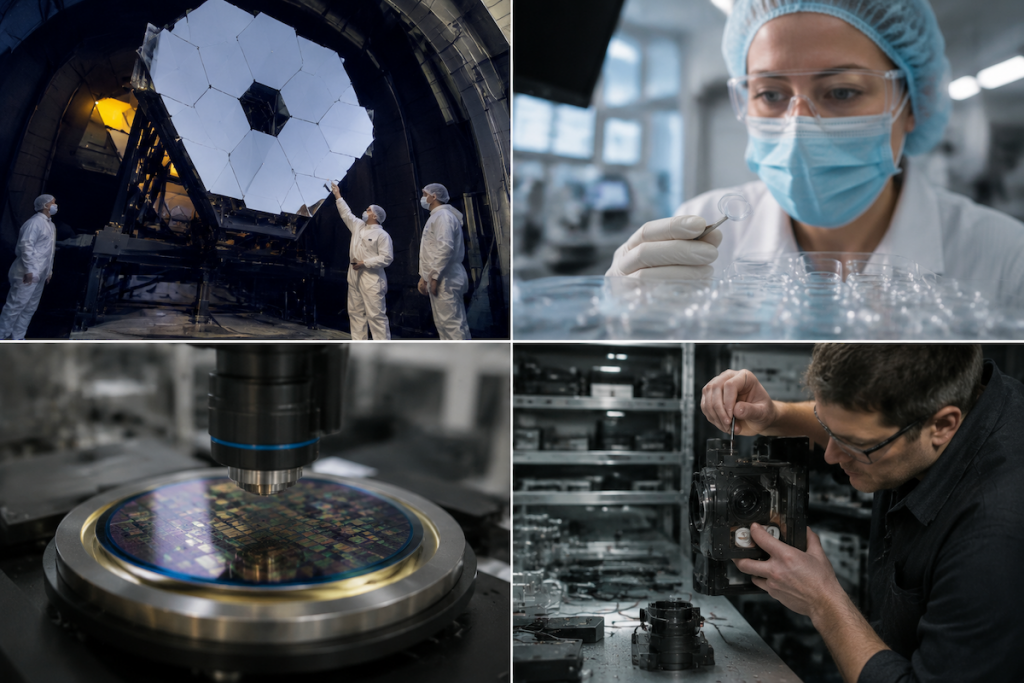
End use adds another qualification layer. Defense, medical, semiconductor, and scientific applications impose different documentation, change-control, security, and validation requirements. These obligations are program-specific: FDA rules primarily govern finished-device manufacturers, while defense cybersecurity and export controls depend on the contract, system, item, technical data, destination, and end use.
L3Harris Technologies
L3Harris reported about 45,000 employees globally as of January 2, 2026, with nearly 3,700 across broader Rochester operations; the optics facility represents only part of that local workforce. Production supports large mirrors and components for astronomy, high-energy lasers, and Earth imaging. Qualification may involve traceability, export classification, cybersecurity, and program controls, but requirements must be checked against the specific contract and information system. CMMC Phase I remains in effect, while the Phase II requirements originally scheduled for November 2026 were suspended in July 2026.
Bausch + Lomb
Bausch + Lomb has about 13,000 employees worldwide, including roughly 1,175 in Rochester. Its 1.1-million-square-foot Goodman Street site makes hundreds of millions of contact lenses annually. The FDA's Quality Management System Regulation took effect on February 2, 2026 and incorporates ISO 13485:2016 for finished-device manufacturers. Suppliers should therefore verify the program's flowed-down controls for validation, traceability, contamination, and change notification. Bausch Health's roughly 87% ownership also makes local versus corporate authority a necessary check.
Corning Fairport
Corning reported approximately 67,200 employees worldwide at year-end 2025, while Fairport is a specialized manufacturing and R&D site rather than headquarters. It produces precision inspection optics and non-contact metrology instruments, particularly for semiconductor applications. Optical materials, fabrication inputs, precision mechanics, calibration, and systems integration offer potential angles. Current Fairport hiring confirms active fabrication, metrology, operations, supplier quality, and procurement functions; verify which product line owns the requirement.
Triptar
Triptar operates at micro-manufacturer scale from 3,300 square feet of laboratory, production, and engineering space in downtown Rochester. It builds optical instruments, modules, and components from prototypes through contract and OEM production. Small quantities and custom requirements shape its buying logic. Specialized optics, machined parts, electronics, software, illumination, and assembly support fit best when tied to a specific project. Founder or engineering access may matter more than formal procurement.
End-market segmentation sets the likely pace: custom scientific work may allow direct technical discussion, while regulated medical and defense programs typically bring more formal documentation and approval routes.
How Sales Teams Should Prioritize the Rochester Market
Company fame is a poor starting filter. Large defense or medical manufacturers offer strategic value, yet onboarding may involve audits, cybersecurity, validation, and long program horizons. Smaller specialists often provide clearer technical access when an offer solves a narrow process problem.
A polishing compound or optical glass supplier might begin with Optimax, Sydor, EvolvOptic, and Thorlabs Lens Systems. Coating material or vacuum component providers could study AccuCoat, Semrock, G&H | GS Optics, and Rochester Precision Optics. Adhesive, cleanroom, and assembly suppliers have stronger logic around Syntec, Apollo, Navitar, and Photon Gear. Motion-control, machining, electronics, and calibration providers should examine QED, OptiPro, Lumetrics, Applied Image, and Corning Fairport.
Combine use-case fit, technical evidence, facility role, buying influence, and qualification burden. Start where the offer addresses one clear production consequence.
Verify Before Outreach
Before adding a company to a campaign, confirm five points:
- The named local site performs the process connected to the offer.
- The company still operates under the recorded owner and brand structure.
- The relevant product line serves an end market the supplier is equipped to support.
- The likely decision roles match the purchase: process engineering, coating, operations, quality, laboratory, facilities, supply chain, or program management.
- The outreach message reflects the site's scale, production model, and qualification language.
Avoid mixing manufacturers, university labs, service offices, and distributors in one sequence. Cleanroom outreach requires different logic at Bausch + Lomb, Photon Gear, and TRIOPTICS USA because their local roles differ.
Turning Research Into a Focused Workflow With Futern
Futern helps sales teams turn a broad Rochester optics search into prospect groups built around manufacturing evidence. Teams can enrich company records with size, location, descriptions, product categories, and facility clues, then review websites and LinkedIn profiles for likely operations, engineering, quality, and supply chain roles.
Segmentation should follow the supplier's offer. Teams can separate coating facilities from assembly operations, distinguish equipment producers from fabricators, and flag local offices for verification. Research notes can capture the use case, ownership, facility role, technical evidence, and next step for each company.
This workflow grounds outreach in a specific reason and lets sales teams revise priorities when facility, hiring, certification, or ownership information changes.
Conclusion
Rochester combines deep optical expertise with many forms of production. Broad lists hide the differences that determine supplier fit. Grouping manufacturers by process, material, assembly, metrology, end-market risk, and facility role produces a more actionable prospecting plan.
By verifying operating evidence and decision influence, sales teams can concentrate effort where their offer has a credible technical purpose.
Akron Polymer Manufacturers: A Supplier Qualification Guide
Wichita Aerospace Manufacturers: A Qualification Guide
AI Vision Inspection Systems in Chicago: 8 Target Industries for B2B Sales Teams