Eindhoven High-Tech Equipment Manufacturers: A Supplier Guide
by Yu T
Compare 20 Brainport manufacturers by facility role, production risk, scale, and supplier fit.
Brainport Eindhoven concentrates equipment OEMs, system integrators, precision manufacturers, electronics specialists, and optical technology companies within a compact network. Brainport Eindhoven reports more than 5,000 technology and IT companies and organizations in a region known for high-mix, low-volume, high-complexity production.
Prospect selection starts with production responsibility. Equipment OEMs qualify inputs around system performance and lifecycle risk. Integrators weigh manufacturability, cleanliness, capacity, and configuration control. Optics, plastics, and magnetic specialists apply narrower technical tests. Local engineering influence also differs from corporate purchasing authority.
Research information and company estimates were reviewed on August 31, 2026. The companies below are research examples selected for local relevance, operating role, scale, technical capability, and possible supplier fit. Their inclusion does not indicate confirmed demand or purchasing intent. Sales teams should verify current facility responsibilities, qualification requirements, purchasing authority, and project timing before outreach.
The guide organizes 20 companies into five supplier paths: complete equipment, mechatronic integration, precision components and tooling, optics and metrology, and electronics and motion. The list includes both finished-equipment builders and enabling manufacturers whose modules, tooling, or components carry production responsibility inside the equipment supply chain.
How to Read the Brainport Manufacturing Map
The Metropolitan Region Eindhoven covers 21 municipalities, while this guide's companies cluster around five practical nodes: Veldhoven, Eindhoven, Son en Breugel, Helmond, and Hapert. Veldhoven contains ASML, Morphotonics, and Magnetic Innovations. Eindhoven brings together electron microscopy, system integration, precision machining, additive manufacturing, metrology, optics, and medical mould tooling across Achtseweg, De Hurk, Strijp-T, Esp, and Brainport Industries Campus.
Son en Breugel combines Prodrive and Neways with BKB Precision, Bakker Magnetics, and Axxicon. Helmond contributes AAE's automation operation; Hapert adds LouwersHanique's glass and ceramic manufacturing. The dense map supports engineering collaboration and short logistics loops, yet proximity does not establish purchasing authority. Record the municipality, facility function, and purchasing level separately because supplier approval remains company- and site-specific.
Path One: Complete Equipment and Production Platforms
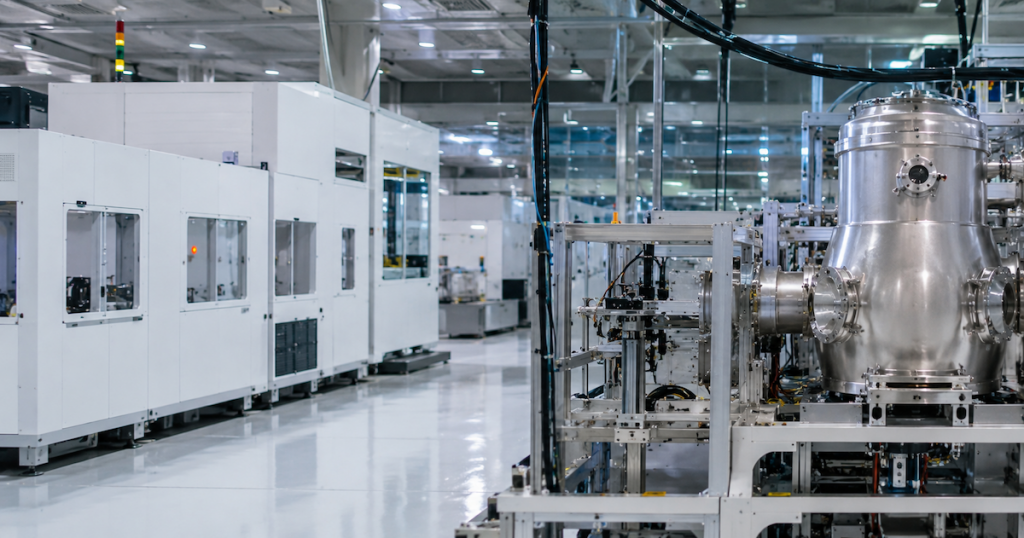
Complete-equipment builders carry responsibility for architecture, safety, performance, documentation, and field support. Evaluation covers lifecycle availability, contamination, change control, software or firmware evidence, and recovery planning.
ASML
With more than 44,000 FTE worldwide and EUR 32.7 billion in 2025 net sales, ASML anchors the Veldhoven ecosystem. Almost 3,000 employees assemble EUV and DUV lithography systems in two local factories, integrating internally produced and supplier-built modules. Ultra-clean parts, vacuum-compatible materials, precision motion, thermal control, metrology, and tooling fit this model when the evidence covers traceability, capacity, engineering changes, and long-term availability.
Thermo Fisher Scientific – FEI Electron Optics
Part of Thermo Fisher Scientific, which reported $44.56 billion in 2025 revenue, FEI Electron Optics designs and manufactures focused ion- and electron-beam microscopes at Achtseweg Noord. Its ISO 9001 and ISO 14001 certificates cover development, manufacture, installation, and service through July 7, 2027. Vacuum components, precision mechanics, cooling, vibration control, and clean manufacturing enter through technical review by engineering and quality, followed by the appropriate sourcing and operations route.
Additive Industries
Additive Industries builds modular metal powder-bed-fusion systems in Eindhoven. LinkedIn places the privately held business in the 51-200 employee band, and the company launched the MetalFab 420K after a 2025 production-floor beta. Qualification combines machine reliability with laser performance, powder handling, gas flow, controls, safety, and production readiness. Ownership of a target component may sit with product engineering, manufacturing, supply chain, or service.
Settels Savenije
Settels Savenije employs more than 165 FTE at Strijp-T. Its facility combines development, precision manufacturing, cleanrooms, system assembly, qualification, and first-series production. For suppliers supporting prototype-to-production transitions, the more useful opening connects materials, precision parts, vacuum hardware, sensors, cables, cleaning, or validation to design-for-manufacture, configuration ownership, cleanliness, and release evidence.
Across these companies, supplier fit depends on system responsibility, documentation, and lifecycle support. Capital-equipment programs often separate design approval, operational acceptance, and commercial onboarding, so one enthusiastic engineer does not complete qualification. Useful evidence includes controlled specifications, obsolescence planning, service response, and a credible route from prototype to supported series.
Path Two: Mechatronic Systems and Module Integration
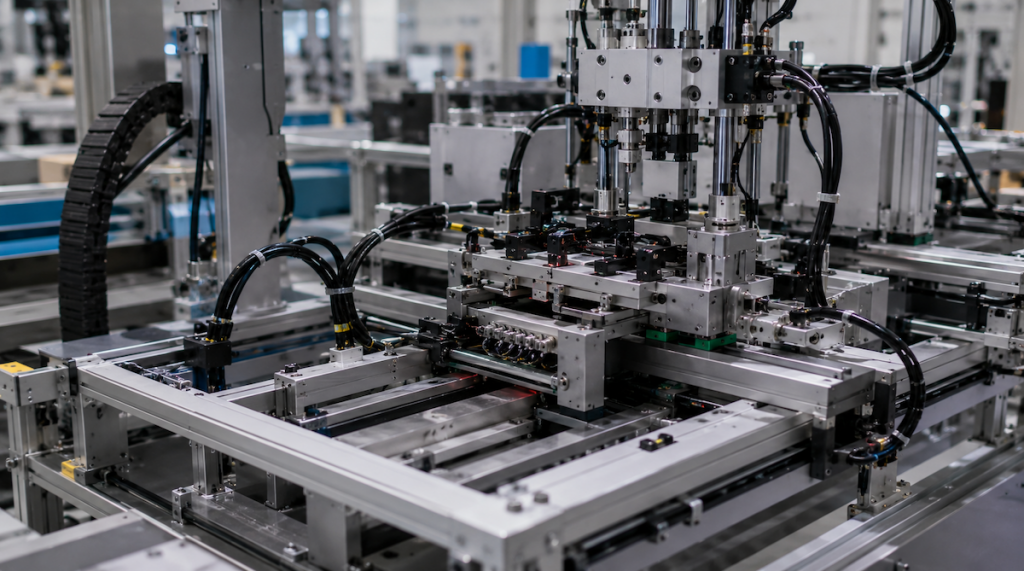
System integrators turn OEM requirements into repeatable modules. Qualification emphasizes interfaces, cleanliness, test coverage, supply continuity, industrialization, and ramp-up.
NTS
Across its Eindhoven sites, NTS covers precision parts, sheet metal, frames, mechatronic assembly, prototyping, and cleanroom integration. The group reported EUR 382 million in 2025 revenue and 1,636 FTE. Machining, surface treatment, components, cables, packaging, and test services each reach different owners, making the named module or process more useful than a group-wide pitch.
Frencken
Frencken operates Eindhoven mechatronics and precision-manufacturing facilities within a group of roughly 3,600 employees across 18 sites. Its work spans semiconductor, analytical, medical, and industrial systems, including vacuum chambers and motion assemblies. Machined parts, sheet metal, coatings, cleanroom inputs, cables, and test support offer practical angles. Qualify the local program, end market, and approval owner.
VDL ETG Eindhoven
VDL ETG Eindhoven employs about 1,200 people and integrates mechatronic systems for high-tech OEMs. Engineering, critical-part production, assembly, qualification, and supply-chain management operate within the same local organization. For precision machining, joining, cleaning, logistics, tooling, or testing, process-capability evidence must match the relevant prototype, new-product introduction, or established series.
AAE
Around 550 employees support AAE's Helmond work in automation, precision modules, manufacturing, assembly, and testing. Its custom equipment and modules serve semiconductor, medical, automotive, and other advanced industries, creating separate routes for machine components, motion hardware, vision, controls, and precision fabrication. A focused opening names the affected outcome and the project, engineering, operations, quality, or purchasing owner.
Module integrators also expect evidence on ramp behavior, interfaces, test responsibility, and disruption recovery. New-product introduction teams may influence an early technical choice, while quality and supply chain govern release and continuity. Suppliers should show how engineering changes move through their own production process and how nonconforming output will be contained.
Path Three: Precision Components, Moulds, and Industrialization
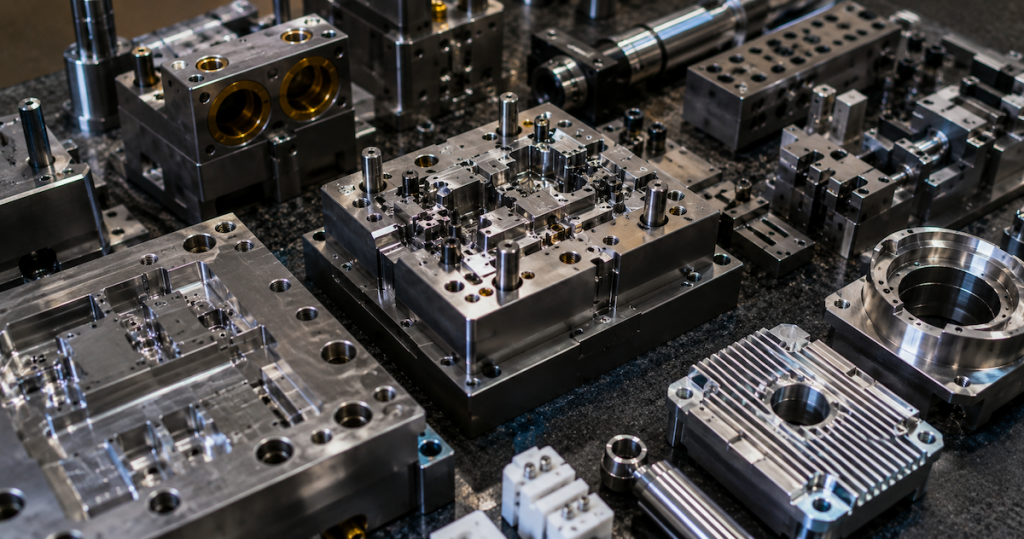
Precision manufacturers qualify material stability, machining capability, tooling performance, repeatability, inspection, cleanliness, and regulated-process evidence.
KMWE
KMWE recorded almost EUR 190 million in 2024 turnover and had about 650 employees at its 2025 anniversary. Brainport Industries Campus integrates engineering, machining, module assembly, aerospace work, additive manufacturing, and repair. Materials, cutting tools, coatings, cleaning, metrology, and automation offer relevant angles. Separate semiconductor, aerospace, medical, and industrial programs because approval requirements differ.
BKB Precision
BKB Precision Group reported 131 employees as of December 31, 2025. Its Son operation produces high-performance plastic components through precision machining and controlled production. Material traceability, dimensional stability, contamination, inspection, and machining behavior shape supplier release. Before outreach, establish the resin family, tolerance, environment, and end-market requirement affected by the proposed polymer, tooling, metrology, cleaning, or automation solution.
IGS GeboJagema
IGS GeboJagema employed approximately 174 FTE when BC Partners announced its 2025 investment; BC Partners is now the majority shareholder. The Eindhoven company designs, manufactures, validates, and services high-precision medical-device moulds. Machining accuracy must carry through validation, documentation, and maintainability, so tool steel, hot-runner, metrology, automation, polishing, and maintenance providers need the responsible engineering, validation, quality, operations, or sourcing team.
Axxicon
LinkedIn places Axxicon, a privately owned Son manufacturer, in the 11-50 employee band. It combines development, precision toolmaking, injection moulding, and assembly for microfluidics, diagnostics, optics, and polymer testing. Axxicon states that its operation is certified to ISO 9001 and ISO 13485 and includes ISO Class 7 cleanroom production. Tool materials, micro-machining, cleanroom inputs, moulding equipment, inspection, and validation support enter at different process stages.
Proof should mirror the process: machining capability, medical-tool validation, plastics contamination control, or tolerance-recovery planning. The strongest entry point often appears where a supplier removes an industrialization constraint, such as a difficult material, inspection bottleneck, unstable tool life, or cleaning step. Procurement relevance follows after the process owner validates that contribution.
Path Four: Optics, Metrology, and Advanced Materials
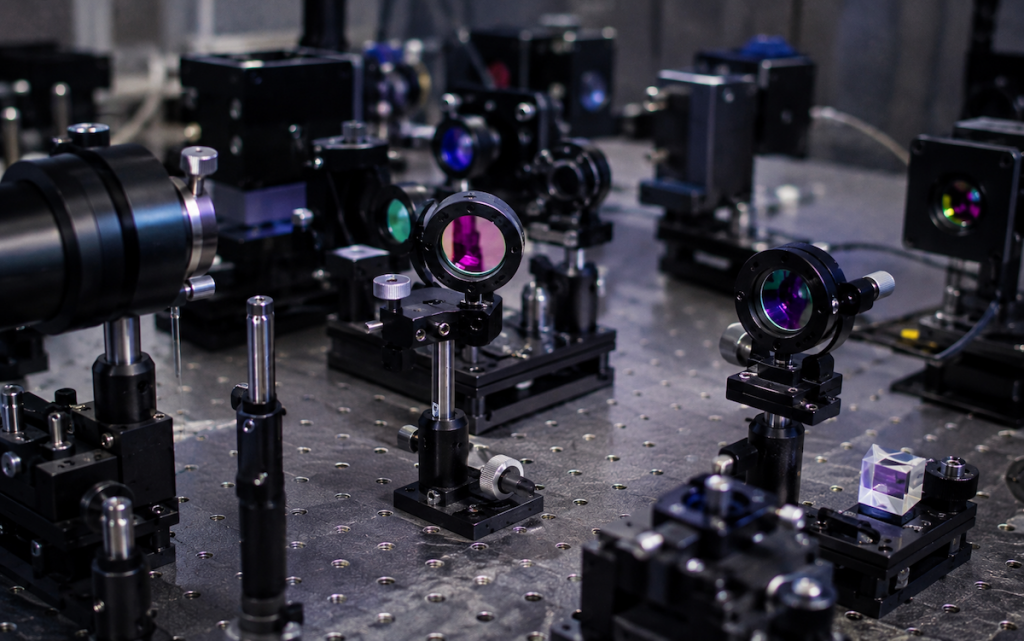
Optical and metrology companies qualify material behavior, surface quality, alignment, calibration, and environmental stability through application-specific evidence.
IBS Precision Engineering
LinkedIn places IBS Precision Engineering in the 11-50 employee band. From Eindhoven and three other European locations, it develops, produces, and assembles ultra-precision metrology systems under an ISO 9001 scope valid through November 2028. Sensors, encoders, granite, air bearings, precision structures, calibration, and controls become credible angles when technical discussions define uncertainty, thermal behavior, dynamic performance, and verification ownership.
Morphotonics
Morphotonics expanded to 50 employees in 2025 and develops large-area nanoimprint systems in Veldhoven. The company reported multiple customer-site installations during 2025, providing a recent operating signal. Precision stages, UV systems, resins, coatings, substrate handling, inspection, controls, and contamination management fit the platform. Verify program maturity and production responsibility before treating a technology milestone as commercial timing evidence.
Anteryon
LinkedIn places Anteryon in the 51-200 employee band. At Brainport Industries Campus, it designs, manufactures, and tests optical components and subassemblies through series production. Replicated optics, glass processing, optomechanical assembly, and cleanrooms point toward materials, coatings, tooling, automation, inspection, and packaging. Specifications and approval ownership differ across semiconductor, industrial-vision, and medical programs.
LouwersHanique
Technical glass, ceramics, special material combinations, vacuum components, and micro-assemblies move through LouwersHanique's three Hapert facilities. The operation has more than 170 employees and about EUR 50 million in annual turnover. Purity, forming or machining behavior, sealing, vacuum performance, cleaning, and repeatability shape approval, giving material, furnace, tooling, metrology, joining, and clean-production suppliers a process-specific route to the relevant owner.
This path begins with a measurable optical, surface, vacuum, or calibration requirement. Suppliers should present uncertainty budgets, surface or contamination data, environmental limits, and test methods in the language used by the application. R&D may sponsor evaluation, but production engineering and quality determine whether the result transfers into repeatable output.
Path Five: Electronics, Power, and Motion
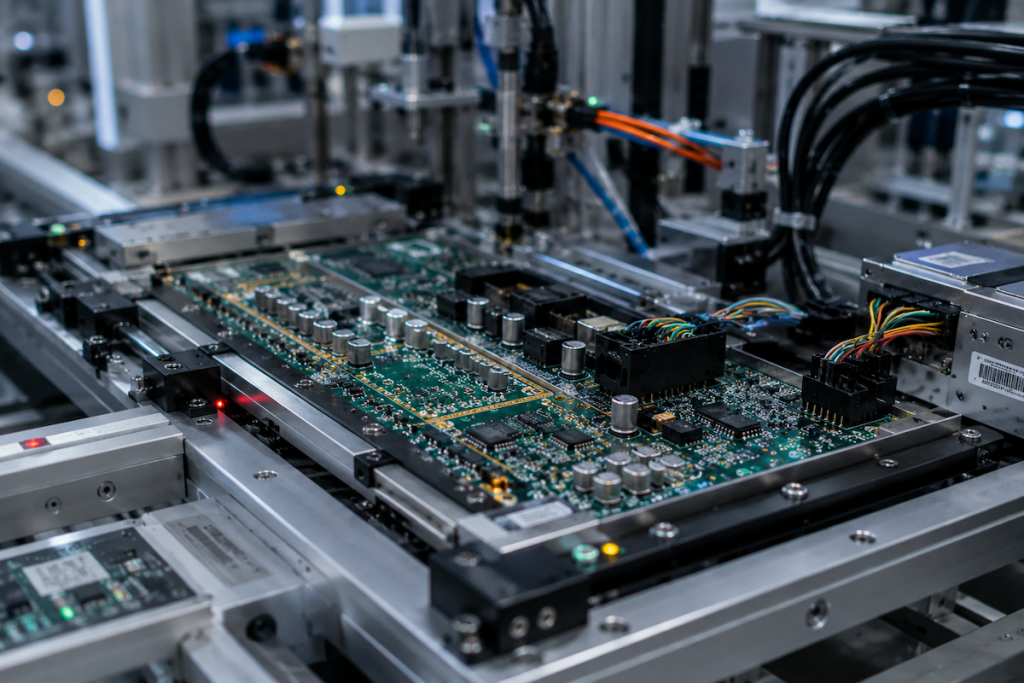
Electronics and motion qualification covers lifecycle risk, traceability, thermal and electromagnetic performance, testing, and multi-site supply authority.
Prodrive Technologies
Prodrive reported EUR 504 million in 2025 revenue across a business operating three automated manufacturing sites. Its Son base designs and manufactures electronics, software, power systems, and mechatronic products. For component, magnetic, thermal, enclosure, PCB, cable, or production-equipment suppliers, the decisive checks are business line, lifecycle stage, manufacturing location, and whether product, quality, or supply-chain leadership owns release.
Neways Electronics
Neways employs more than 3,000 professionals worldwide, including about 1,500 in the Netherlands. Its Son sites cover advanced applications, components, cabinet assembly, and circular solutions for mission-critical electronics. Infestos became majority shareholder in November 2021. Component availability, redesign, PCBAs, cables, cabinets, testing, and lifecycle services follow different routes depending on whether Son owns development, production, or a group category.
Magnetic Innovations
LinkedIn places Magnetic Innovations in the 11-50 employee band. The company produces direct-drive motors and actuators in Veldhoven. A 2018 company announcement listed 600 square meters of offices and 700 square meters of manufacturing and storage at the current address. Magnetic Innovations continues to describe the operation as an ISO 9001-certified production environment with ISO Class 6 cleanroom capability. Proposals work best when copper, magnets, laminations, bearings, sensors, vacuum materials, winding equipment, or test systems are tied to torque, force, thermal, vacuum, cleanliness, or lifetime performance.
Bakker Magnetics
More than 60 employees support Bakker Magnetics' Son headquarters, production, prototyping, testing, and laboratory operation. A Ningbo manufacturing joint venture with more than 500 employees extends that production footprint. Its published ISO 9001 and ISO 14001 certificates run through April 23, 2027. The company handles custom assemblies and stocked magnet products, so materials, coatings, adhesives, machining, fixtures, measurement, and logistics must be matched to local prototyping, Son production, inventory supply, or the joint-venture chain.
Prioritization should map one component family to design authority, manufacturing location, lifecycle exposure, and release evidence. Shortages and redesigns may create timing signals, but they do not prove open demand. Before outreach, check current product activity, role changes, and whether local teams influence a global component category.
How Suppliers Should Prioritize the First Prospect List
Large manufacturers often carry the longest qualification cycles. Suppliers with EUV-grade cleanliness, change control, and proven capacity may prioritize ASML, VDL ETG, NTS, or Frencken. Optical, metrology, polymer, or actuator specialists may find clearer technical entry at Anteryon, IBS, Axxicon, Morphotonics, or Magnetic Innovations.
Use three tiers. Tier one fits a named process and available proof. Tier two contains technical matches requiring facility or ownership verification. Tier three covers strategic OEMs with longer onboarding or category cycles. This keeps prominent names from displacing smaller companies with a direct use case.
A precision-cleaning provider might place ASML, NTS, VDL ETG, and Settels Savenije in different tiers according to cleanliness class and program access. An optical-coating supplier could begin with Anteryon or LouwersHanique before pursuing a complete-machine OEM. Electronics vendors should separate design-in support from production allocation, because those conversations often involve different teams and timelines.
What to Verify Before Outreach
Confirm the site, facility function, active product family, and purchasing level. Determine whether the local operation performs development, machining, assembly, testing, or production. Review current certificate scope and expiry dates.
Regulation (EU) 2023/1230 applies to machinery and related products within scope from January 20, 2027. Cyber Resilience Act reporting duties for actively exploited vulnerabilities and severe incidents apply from September 11, 2026, for products with digital elements; the main obligations apply from December 11, 2027. Controls, software, connected-component, and safety-hardware suppliers should establish product scope and required evidence.
Verify one use case, one technical owner, and one commercial influence path. Current hiring, facility investment, a product launch, or a certification change may justify additional research, but none confirms a purchase. Adapt the message to each operating model and avoid presenting public expansion signals as proof of an active sourcing event.
Turning Eindhoven Research Into a Futern Workflow
Futern helps B2B sales teams organize a broad market into workable groups. Teams separate OEMs, integrators, and specialists; enrich company records; compare scale and facility roles; review websites and LinkedIn profiles; and identify engineering, quality, operations, supply-chain, or procurement roles.
Begin with a supplier hypothesis, such as reducing vacuum contamination or improving actuator thermal performance. Build the relevant company group, verify which facilities perform that process, and shape outreach around path-specific evidence. Teams can update the list as ownership, certifications, product programs, and role assignments change. Futern supports research organization and prospecting preparation; final qualification depends on current evidence and direct confirmation.
Conclusion
Eindhoven's high-tech equipment market is a network of production responsibilities. Equipment builders manage system risk, integrators control interfaces and ramp-up, precision manufacturers protect process capability, optical specialists qualify material-level performance, and electronics companies manage component lifecycles.
Matching proof to those responsibilities produces a disciplined starting list based on facility role, scale, qualification burden, and decision influence.
Multi-Channel B2B Outreach: Why Coordination Matters More Than Channel Count
Pittsburgh Manufacturing Companies: Where Robotics and Automation Fit
Houston Petrochemical Plants: A Supplier Research Guide
Explore more company and industry insights here.