Minnesota Medical Device Manufacturers: Five Supplier Paths
by Yu T
A supplier-focused map of Minnesota medical device manufacturers and qualification paths.
Minnesota's medical device cluster gives suppliers an unusually dense mix of global OEMs, design-owning product companies, precision component manufacturers, electronics specialists, and contract manufacturing platforms. A broad company list still leaves the hardest questions unanswered: who controls the specification, where production occurs, which quality system applies, and whether supplier decisions sit with a Minnesota team or a global organization.
The state's position is supported by more than reputation. The Minnesota Department of Employment and Economic Development ranks Minnesota second in the United States for medical device manufacturing. The agency also places the state first in medical device patents per capita. For B2B sales teams, that concentration creates several qualification contexts to study, from early design influence to validated production, product transfer, final assembly, packaging, and lifecycle support.
This guide groups Minnesota medical device manufacturers into five supplier paths. The paths reflect how a supplier enters the decision process rather than five rigid product categories. Each company is presented as a research example that helps explain facility role, supplier fit, qualification logic, or outreach relevance.
Research information and company estimates were reviewed on July 21, 2026. The companies mentioned below are research examples based on public information, local relevance, operating model, company size, product categories, and possible use cases. Their inclusion does not indicate confirmed demand or purchasing intent. Sales teams should verify facility details, current operations, supplier requirements, and decision-maker roles before outreach.
Market Map: Where Minnesota Medtech Decisions Sit
Minnesota medtech activity is concentrated around the Twin Cities, yet the cluster contains several distinct geographic zones.
The northwest and western metro form one of Minnesota's main medtech manufacturing corridors. Maple Grove, Brooklyn Park, Plymouth, Golden Valley, Minnetonka, and Blaine bring together Boston Scientific, Integer, Nonin Medical, Inspire Medical Systems, Cirtec Medical, Biomerics, TE Connectivity, and Resonetics. The area combines global OEM campuses, engineering headquarters, cleanroom manufacturing, catheter production, electronics, and product-development operations. Suppliers should research the exact site because two facilities a few miles apart may perform entirely different functions.
The northern and northeastern metro contain established engineering and component operations. Fridley, Mounds View, Brooklyn Center, White Bear Lake, and nearby communities include Medtronic campuses and Heraeus Medevio operations. These locations point toward implantable systems, precision components, electrodes, tubing, sensors, and engineering collaboration. Corporate sourcing may set the vendor framework while plant and engineering teams influence technical acceptance.
Minneapolis, St. Paul, and the eastern metro connect headquarters with specialized production. Tactile Medical, Scanlan International, Kindeva Drug Delivery, Abbott, and Solventum illustrate a mix of final assembly, surgical instruments, drug-device combinations, R&D, pilot production, and corporate functions. Solventum's Eagan hub, opened in 2026, includes laboratories and a dedicated pilot factory, so sales teams should distinguish its product-industrialization role from high-volume manufacturing.
The southwest metro and Greater Minnesota broaden the map. Eden Prairie is home to Starkey and Surmodics, while Chaska supports Integer operations. Electromed manufactures in New Prague, Resonetics operates in Hutchinson, and Nortech runs medical manufacturing in Milaca alongside other Minnesota sites. These locations often place plant-level engineering and operations closer to qualification than a large corporate campus would.
The first prospect list should follow the proof a supplier already has. Medical-grade materials call for traceability and compatibility evidence. Precision manufacturing requires tolerance control and validation capability. Electronics suppliers must demonstrate integration and test reliability. Packaging and sterilization providers enter closer to validated production and final release.
Enterprise OEM Standards: Qualify for the System
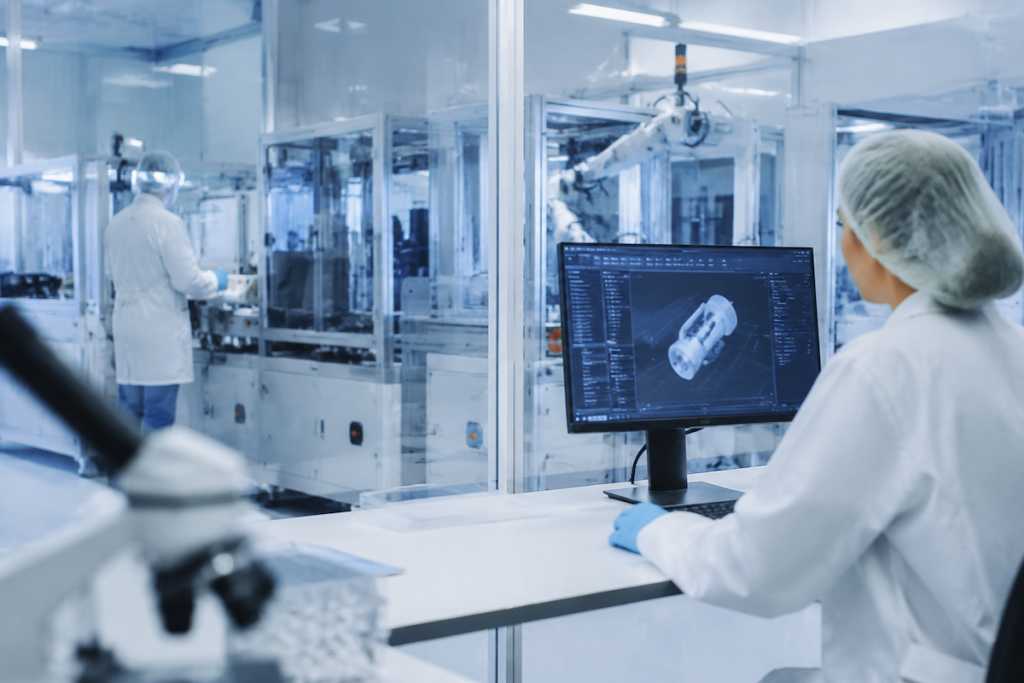
Large OEMs manage broad portfolios and regulated supplier networks. Qualification commonly involves strategic sourcing, supplier quality, engineering, regulatory documentation, and site-specific manufacturing teams. The potential scale is high, accompanied by long review cycles and established specifications.
Medtronic's current Minnesota location list includes Fridley, Mounds View, Brooklyn Center, and Brooklyn Park. With more than 95,000 full-time employees in fiscal 2026, these sites operate within a large global supplier system. Before approaching a facility, materials, electronics, automation, and cleanroom suppliers need to identify the relevant business unit, local process, and approved-vendor route.
Boston Scientific's Maple Grove campus functions as both a principal manufacturing facility and an R&D center, while Arden Hills supports additional manufacturing and technical work. The company reports more than 59,000 employees worldwide. Catheter materials, extrusion, coatings, precision components, packaging, and production equipment represent credible supplier angles, but local engineering influence does not necessarily mean local commercial approval.
At Abbott, a workforce of about 115,000 at the end of 2025 supports a highly distributed operating model. Former St. Jude Medical operations contribute cardiovascular, electrophysiology, catheter, and diagnostic capabilities in Minnesota. This profile illustrates how inherited facilities operate inside a larger corporate supply chain. Before outreach, confirm the business unit, process performed at the location, and ownership of supplier-quality decisions.
Solventum employed 20,584 people at the end of 2025, and the company states that around 2,000 employees live and work in Minnesota. Its Eagan headquarters emphasizes R&D, quality laboratories, prototyping, and pilot production rather than local high-volume manufacturing. Supplier fit is strongest around adhesives, films, filtration media, coatings, packaging, and product industrialization. Because responsibilities have evolved since the 2024 spinout from 3M, current onboarding and production ownership require direct verification.
Enterprise qualification depends on more than a recognizable customer list. Technical files, change-control discipline, quality history, capacity evidence, and business-unit relevance determine whether a supplier is ready for the system.
Precision and Implantable Technologies: Influence the Specification

Precision and implantable products place greater weight on material traceability, surface behavior, micromachining, validated special processes, and long-term design control. Supplier influence often begins with R&D, materials engineering, manufacturing engineering, or supplier quality before commercial purchasing becomes central.
Integer Holdings reported about 11,000 associates and roughly 400 contingent workers at the end of 2025. Its location directory lists Minnesota manufacturing sites in Brooklyn Park, Chaska, and Plymouth, with capabilities that include machining, extrusion, braiding, molding, assembly, coatings, and testing. A metals, polymer, tooling, or inspection supplier should match its evidence to one facility's process instead of treating Integer as a single purchasing environment.
In Eden Prairie, Surmodics remains an active surface-technology and medical-device business focused on hydrophilic and hemocompatible coatings, surface modification, and drug-device technologies. Its final standalone public filing listed 389 employees as of September 30, 2024. Biocoat, a GTCR portfolio company, acquired Surmodics in November 2025, and a post-acquisition headcount has not been published. Qualification research should reflect the new ownership and avoid treating the historical employee figure as a present-day total.
Inspire Medical Systems employed 1,333 people at the end of 2025. Its Golden Valley headquarters directs product development, quality, and supply-chain decisions for an implantable neurostimulation system while relying on third-party suppliers and contract manufacturers. This profile shows why a local design headquarters matters even without local high-volume production. Implantable electronics, batteries, leads, traceability, and supplier-risk management offer focused discussion areas.
At TE Connectivity's Plymouth medical operation, a facility of more than 100,000 square feet supports structural-heart and electrophysiology technologies, including catheter components, braiding, extrusion, coating, and cleanroom work. The parent organization reported 81,503 employees as of September 2025. This location belongs in the precision path because its process depth matters more than TE's broader electronics identity. Qualification research should determine whether approval sits with Plymouth technical teams, a regional commodity group, or global procurement.
Timing in this path follows design reviews, validation work, second-source programs, and product changes. Outreach gains credibility when it names the process risk being reduced and the evidence available to support qualification.
Electronics and Sensing: Prove Integration Reliability
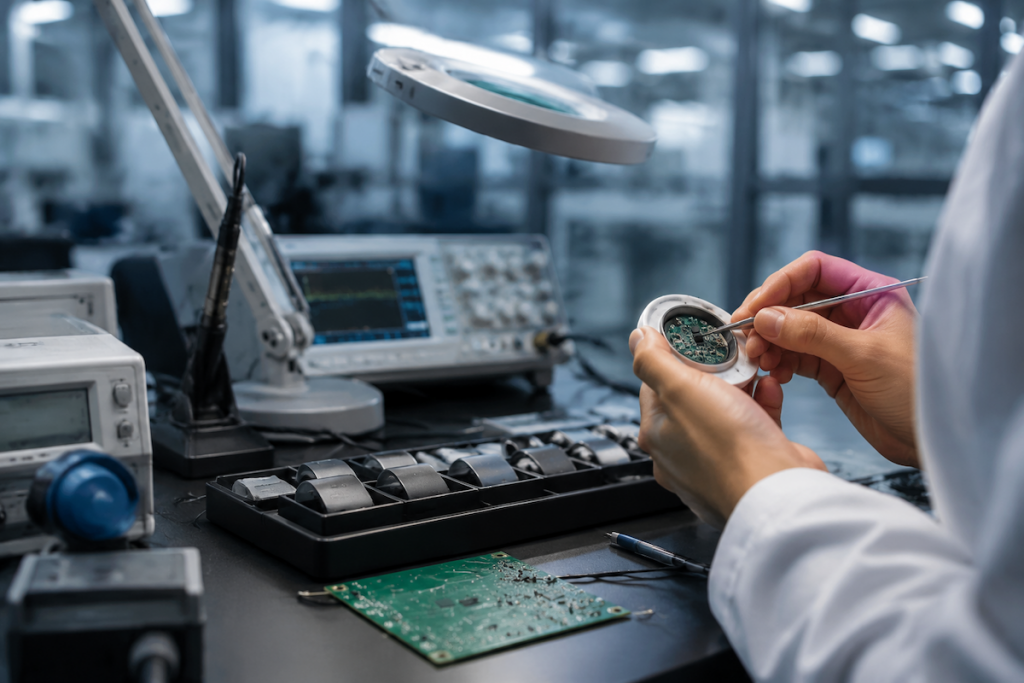
Connected and sensing devices combine hardware, firmware, calibration, miniaturization, cables, connectors, and system testing. The supplier conversation extends beyond component price because reliability data, design-for-manufacturing support, traceability, and controlled change management carry substantial weight.
Hearing-aid production at Starkey's Eden Prairie base combines microelectronics, sensors, wireless connectivity, miniature assemblies, and polymer housings. Starkey reports more than 5,000 employees across 29 facilities worldwide. Embedded electronics, microphones, batteries, precision molding, test systems, and automation are the clearest supplier angles. The local presence of corporate, engineering, and manufacturing leadership supports targeted role research.
Nonin Medical falls within the 201-500 employee range and maintains its global headquarters and manufacturing base in Plymouth. Its pulse oximeters, optical sensors, and patient-monitoring systems connect electronics production with calibration and regulated testing. Optical components, cable assemblies, PCBs, embedded systems, and verification tools align with visible product needs. A concentrated local operation often shortens the research path between R&D, manufacturing engineering, quality, and sourcing.
Nortech Systems' Milaca operation is an FDA-registered, ISO 13485-certified medical manufacturing site with an ISO Class 7 cleanroom, while Maple Grove houses corporate and engineering functions. At the end of 2025, Nortech employed 685 full-time workers plus 28 part-time and temporary workers. Suppliers of PCBs, wire assemblies, connectors, test equipment, and production services should match the offer to the Minnesota facility that performs the relevant process.
Heraeus Medevio employs more than 2,200 people worldwide and operates active Minnesota locations in Fridley and White Bear Lake. Their work includes electrodes, sensors, precision tubing, catheter components, engineering collaboration, and cleanroom assembly. Those capabilities place the business in the electronics and sensing path without relying on the much larger workforce of the parent Heraeus Group. Local technical influence and global sourcing authority still need to be researched separately.
Electronics outreach should identify the integration layer: component, subassembly, system, test process, or manufacturing service. That choice determines the technical evidence to present and whether engineering, quality, sourcing, or operations is the best first role.
Contract Manufacturing: Enter During Product Transfer

Contract manufacturers translate device designs into repeatable production. Their buying logic follows customer specifications, manufacturability, validation, capacity, yield, and delivery risk. They select some materials and equipment directly while requiring customer approval for critical substitutions.
Cretex Medical sits in the 1,001-5,000 employee range and maintains major operations in Elk River and Brooklyn Park. Its businesses span machining, molding, laser processing, assembly, cleanrooms, packaging, and sterilization. Production equipment, tooling, polymers, metals, inspection, and facility services are relevant supplier areas. Initial research should identify the Cretex business, site, and program that influences the process in question.
Brooklyn Park is Cirtec Medical's headquarters and a center for engineering, cleanroom manufacturing, microelectronics, hermetic assembly, laser welding, and testing for neuromodulation and active implantable devices. Cirtec sits in the 1,001-5,000 employee range and operates nine facilities totaling more than 300,000 square feet. Implantable-grade components and validated processes face detailed review from engineering and quality teams before commercial discussions advance.
Biomerics' 170,000-square-foot Brooklyn Park operation is a major manufacturing and engineering facility, while the corporate headquarters remains in Salt Lake City. Biomerics now reports more than 3,200 team members across 12 facilities. Catheter design, extrusion, balloon forming, braiding, laser processing, assembly, and testing point polymer, wire, tooling, and inspection suppliers toward specific process conversations. Product-transfer timing and customer-controlled specifications determine how much sourcing discretion the site holds.
With more than 3,000 employees across 20 current locations, Resonetics operates Minnesota facilities in Blaine and Hutchinson. Local capabilities include laser processing, nitinol work, precision machining, surface finishing, and catheter components. The March 2026 acquisition of Resolution Medical expanded Resonetics' integrated interventional and neuromodulation capabilities. Sales teams should check how the integration has affected facility responsibilities, approved suppliers, and sourcing coordination.
Contract manufacturing often reveals operating and qualification signals more clearly than early-stage OEM research. The deciding question is whether an input is selected by the manufacturer or mandated by its customer.
Focused Product and Drug-Device Manufacturers: Match a Specific Process Risk
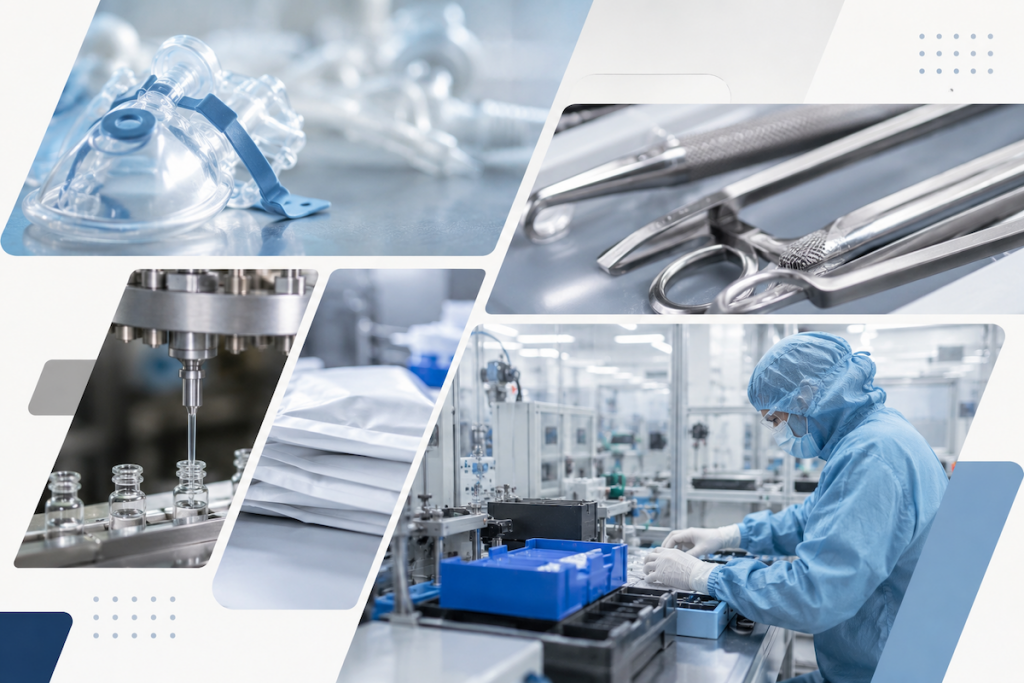
This path combines focused product manufacturers with specialized drug-device CDMOs whose product architecture creates a distinct qualification route. Priorities vary across packaging integrity, labeling, textiles, fluid paths, cleanliness, precision finishing, final testing, and regulated product changes. At this scale, local operating teams often sit closer to the conversation, while quality and documentation requirements remain demanding.
Local inspection, assembly, packaging, warehousing, and shipping at Tactile Medical support pneumatic compression and airway-clearance products, while outside suppliers produce many components. At the end of 2025, Tactile Medical employed 1,086 people, including 435 primarily based at its Minneapolis-area corporate and manufacturing locations. Electronics, textiles, garments, connectors, packaging, and test systems fit when tied to final-product reliability and supplier-control requirements.
Kindeva Drug Delivery operates in the 1,001-5,000 employee range, with company research placing its workforce near 1,500. Woodbury serves as the corporate headquarters and a 140,000-square-foot development, analytical, and cGMP clinical-manufacturing site, while the broader Minnesota footprint includes St. Paul drug-device operations. Inhalation devices, transdermal systems, analytical testing, cleanrooms, and combination-product manufacturing create distinct qualification demands. Packaging, valves, films, labeling, process equipment, and controlled-environment services must satisfy both device-quality and pharmaceutical controls.
Family-owned Scanlan International remains an active St. Paul surgical-instrument manufacturer in the 51-200 employee range. LinkedIn showed about 150 profiles associated with the business on the research date. Stainless steel, titanium, machining, polishing, passivation, dimensional control, instrument performance, and sterile packaging offer more precise research angles than a general medical-market pitch. Its concentrated local operation directs suppliers toward manufacturing, quality, and product-management roles.
Electromed reported 184 employees as of September 30, 2025 and continues to operate from New Prague. Its airway-clearance systems combine pneumatic components, electronics, textiles, assembly, testing, packaging, and distribution. The operating model gives specialized suppliers a relatively direct view of local operations, quality, and manufacturing engineering. Before outreach, teams should confirm which assemblies are completed internally and which arrive from approved outside partners.
These four profiles favor narrow outreach tied to a visible product, process, or control risk. They warrant early review by specialized suppliers, subject to verification of current programs and sourcing responsibility.
Match the First Prospect List to the Offer
The largest Minnesota medical device manufacturers belong on a strategic research list, yet supplier readiness should determine the first outreach group.
| Supplier offer | Strong starting path | Evidence to prepare | Likely influence roles |
| Medical-grade metals, polymers, coatings, or precision components | Precision and contract manufacturing | Traceability, tolerance capability, process validation, change control | Materials engineering, supplier quality, manufacturing engineering |
| Sensors, PCBs, cables, connectors, or embedded systems | Electronics and sensing | Reliability data, test coverage, lifecycle support, cybersecurity or EMC relevance | R&D, electrical engineering, sourcing, quality |
| Tooling, automation, inspection, and cleanroom equipment | Contract manufacturers and operating OEM campuses | Validation support, throughput evidence, service coverage, calibration | Operations, manufacturing engineering, facilities, quality |
| Sterile packaging, labeling, or sterilization services | Focused product and drug-device manufacturers, plus Solventum's pilot-production environment | Package validation, material compatibility, regulatory documentation | Packaging engineering, quality, regulatory affairs, supply chain |
| Product-development or manufacturing-transfer services | Design-owning OEMs and focused manufacturers | DFM capability, program governance, risk controls, comparable device work | R&D, program management, operations, strategic sourcing |
A newer supplier might begin by researching Nonin, Scanlan, Electromed, or a specific contract-manufacturing site where local process ownership is visible. Medtronic, Abbott, Boston Scientific, and Solventum better suit long-cycle development when the supplier already has regulated references and enough capacity to support formal qualification.
Verify the Site Before Outreach
Start with the Minnesota location and its actual function: headquarters, R&D center, pilot factory, manufacturing plant, cleanroom, warehouse, or engineering office. Confirm the product family and process performed there, then verify whether the relevant ISO certification or FDA registration applies to that specific site and capability.
Ownership and manufacturing responsibility also change the research route. Solventum has moved beyond its 3M spinout, Surmodics is now owned by Biocoat, and Resolution Medical has joined Resonetics. Inspire directs design and supplier quality while third parties manufacture its system. These distinctions affect company naming, contact selection, and local procurement relevance.
Finally, map who influences the decision. Strategic sourcing controls contracts, supplier quality controls approval, engineering controls specifications, and operations controls service performance. Outreach should address the risk and evidence relevant to the selected role.
Turning Minnesota Research Into a Futern Workflow
Futern helps sales teams organize this market by supplier path, facility function, company scale, and local relevance. Researchers use it to enrich company profiles, review websites and LinkedIn pages, separate parent companies from operating businesses, and identify likely roles in sourcing, engineering, quality, operations, packaging, and program management.
That structure turns broad research into a focused prospecting workflow: coatings suppliers prioritize precision-device companies, electronics partners isolate connected-device manufacturers and system integrators, and packaging providers focus on final-assembly and sterile-delivery environments. Futern organizes the research evidence; the sales team verifies the facility, use-case fit, operating context, and decision authority before contact.
Conclusion
Minnesota's medical device market offers substantial B2B research value because design ownership, manufacturing capability, supplier qualification, and local operations are concentrated within a connected regional cluster. A mixed list of famous brands and smaller manufacturers provides little prioritization value on its own.
The practical result is a prospect list organized around qualification logic, technical proof, facility role, company scale, and decision authority. Those criteria give suppliers a defensible basis for deciding which Minnesota companies deserve deeper research and which roles should receive the first outreach.
Northern Virginia Data Center Operators: Five Supplier Paths
Automotive Parts Manufacturers in Michigan: Five Supplier Gates
AI Vision Inspection Systems in Chicago: 8 Target Industries for B2B Sales Teams